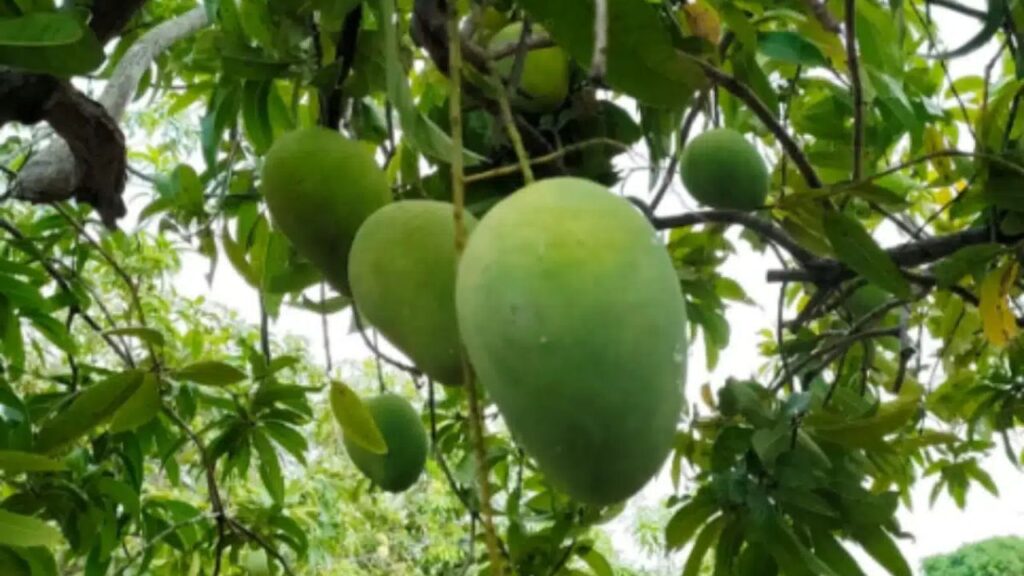

In a major achievement for India’s agricultural export sector, the Agricultural and Processed Food Products Export Development Authority (APEDA), operating under the Ministry of Commerce and Industry, has successfully facilitated the country’s first commercial sea shipment of premium Banganapalle mangoes to Singapore. The initiative was carried out in collaboration with the ICAR–Central Institute for Subtropical Horticulture (CISH), Lucknow, marking a significant step toward expanding global market access for Indian horticultural produce through sustainable and cost-effective logistics.
The landmark consignment, consisting of five metric tonnes of Banganapalle mangoes, was exported by Osum Food Solutions LLP on June 11 and reached Singapore on June 24. The successful completion of the shipment demonstrates the growing potential of sea freight as a reliable alternative to air transport for exporting fresh fruits while maintaining quality standards and reducing transportation costs.
The mangoes were sourced from orchards in Andhra Pradesh that are certified under Good Agricultural Practices (GAP), ensuring adherence to internationally accepted cultivation standards. The fruits were subsequently processed and packed at an APEDA-recognised facility in Karnataka before being shipped to Singapore. Throughout the export process, strict quality control and phytosanitary measures were followed to meet the import requirements of the destination market.
According to officials associated with the export programme, the shipment serves as an important example of how scientific post-harvest management and efficient cold-chain infrastructure can help preserve fruit quality during long-distance sea transportation. Maintaining proper temperature and handling conditions ensured that the mangoes arrived in excellent condition despite the extended transit period.
The importer, EC-Links Pte Ltd of Singapore, expressed satisfaction with the quality of the consignment upon arrival. The mangoes were praised for their sweetness, uniform ripening, appealing appearance, shelf life and compliance with phytosanitary standards. The positive feedback is expected to enhance confidence among international buyers and create new opportunities for Indian mango exporters in overseas markets.
Beyond market expansion, the export generated notable economic benefits for farmers. While Banganapalle mangoes were fetching approximately ₹25 to ₹26 per kilogram in domestic markets during the season, the export consignment realised nearly ₹50 per kilogram. The significant increase in returns highlights the value of connecting farmers to premium international markets and demonstrates how export-oriented agriculture can contribute to higher farm incomes.
Experts believe the success of this shipment could encourage wider adoption of sea freight for exporting fresh fruits and vegetables. Compared with air transport, maritime shipping offers lower costs and a smaller environmental footprint, making it an attractive option for large-scale agricultural exports. As cold-chain technology and logistics infrastructure continue to improve, sea transport is expected to play an increasingly important role in enhancing the competitiveness of Indian produce in global markets.
Banganapalle mangoes, among India’s most celebrated mango varieties, are known for their golden-yellow skin, rich sweetness, pleasant aroma and fibreless pulp. Their popularity extends beyond domestic consumers, with growing demand in international markets across Asia, the Middle East and other regions. Industry stakeholders see considerable potential for expanding exports of the variety through improved logistics and targeted market development initiatives.
APEDA has been actively working to strengthen India’s fresh produce export ecosystem through infrastructure support, exporter training programmes and initiatives aimed at meeting international quality benchmarks. The successful sea shipment to Singapore is viewed as a milestone in these efforts and a model for future horticultural exports.
The development aligns with the Government of India’s broader strategy of boosting agricultural exports, increasing farmers’ earnings and promoting sustainable trade practices. By combining scientific handling techniques, modern logistics and international market access, the initiative reinforces India’s position as a dependable supplier of premium-quality agricultural products to global consumers.
Also Read: APEDA’s BHARATI Programme Powers New Wave of Agri-Export Innovation

Author: Shivam
Shivam Dwivedi is a senior journalist with extensive experience in research-driven journalism, policy communication, and multi-platform storytelling. His areas of interest include international relations, defence, science & technology, education, urban development, agriculture, spirituality, and environmental sustainability. His work focuses on in-depth analysis, public discourse, and impactful narratives across governance and development sectors, with a strong commitment to the Sustainable Development Goals (SDGs). Contact: [email protected]