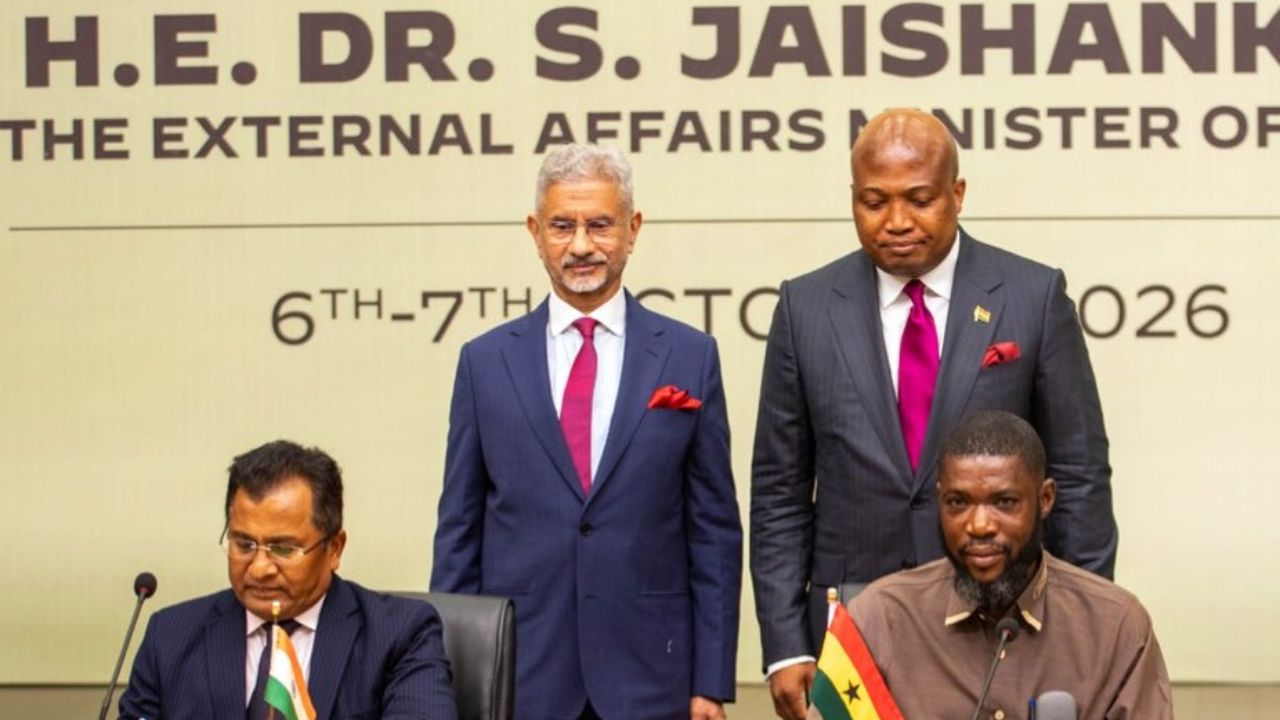

India and the Republic of Seychelles have strengthened their agricultural partnership by signing a Memorandum of Understanding (MoU) aimed at expanding cooperation in agricultural research, education, technology transfer and capacity building. The agreement was signed between the Indian Council of Agricultural Research (ICAR) under the Government of India and the Agriculture Department of the Ministry of Fisheries, Agriculture and Blue Economy of Seychelles during the official visit of the Prime Minister to the island nation.
The agreement marks another significant step in India’s efforts to deepen its agricultural engagement with partner countries, particularly in the Global South, while promoting sustainable farming practices and enhancing food and nutritional security.
Framework for Long-Term Agricultural Cooperation
The newly signed MoU establishes a comprehensive framework for collaboration between the two countries in several priority areas of agriculture. It is designed to facilitate joint research initiatives, academic exchanges and the transfer of agricultural technologies that can help address common challenges faced by both nations.
Under the agreement, scientists, researchers, technical experts and students from India and Seychelles will have opportunities to participate in exchange programmes, enabling them to share knowledge, develop innovative solutions and strengthen institutional partnerships.
The collaboration also seeks to promote the exchange of best agricultural practices and modern technologies that can improve farm productivity, enhance resilience against climate-related risks and support sustainable agricultural development.
Five-Year Work Plan Signed
To ensure effective implementation of the agreement, both countries have also signed a five-year Work Plan covering the period from 2026 to 2031. The roadmap outlines specific areas of cooperation and provides a structured mechanism for carrying out collaborative activities over the next five years.
The Work Plan identifies several strategic sectors that are expected to benefit from joint efforts. These include climate-smart agriculture, horticulture, post-harvest management, livestock development, and initiatives aimed at strengthening sustainable food and nutritional security.
By focusing on these areas, both countries intend to improve agricultural productivity while promoting environmentally sustainable farming systems capable of adapting to changing climatic conditions.
Focus on Climate Resilience and Food Security
Climate change continues to pose significant challenges to agriculture across the world, particularly for island nations such as Seychelles that are vulnerable to extreme weather events and changing environmental conditions. The partnership aims to develop climate-resilient agricultural practices that can help farmers adapt to these emerging challenges.
The cooperation will also focus on reducing post-harvest losses through improved storage, processing and supply chain management, thereby increasing the efficiency of agricultural production systems.
Livestock development is another important area under the Work Plan, with both countries expected to collaborate on improving animal health, breeding practices and sustainable livestock management.
In addition, the agreement places strong emphasis on ensuring food and nutritional security by encouraging scientific research, innovation and the adoption of modern agricultural technologies.
Strengthening Institutional Partnerships
The MoU is expected to strengthen institutional linkages between agricultural research organisations in India and Seychelles. Through collaborative research projects and knowledge-sharing initiatives, both countries aim to build technical expertise and develop solutions suited to local agricultural conditions.
Capacity-building programmes, including specialised training for researchers, extension professionals and students, will play an important role in enhancing scientific cooperation. Such initiatives are expected to contribute to the development of skilled human resources capable of addressing future agricultural challenges.
The exchange of scientific expertise is also likely to support innovation in crop production, resource management and sustainable farming practices.
Expanding India’s Global Agricultural Engagement
The agreement reflects India’s growing role in international agricultural cooperation. ICAR has established an extensive global network by signing more than 100 Memoranda of Understanding with agricultural institutions and organisations worldwide.
These partnerships have enabled collaborative research, technology sharing and academic exchanges across a wide range of agricultural disciplines. The latest agreement with Seychelles further expands this network while reinforcing India’s commitment to supporting sustainable agricultural development through international cooperation.
The partnership also aligns with India’s broader strategy of strengthening ties with countries in the Global South by promoting knowledge exchange, scientific collaboration and capacity building in critical sectors such as agriculture.
As both countries begin implementing the 2026–2031 Work Plan, the collaboration is expected to generate practical solutions for improving agricultural productivity, enhancing climate resilience and advancing food and nutritional security. The agreement highlights the importance of international partnerships in addressing shared agricultural challenges while fostering innovation and sustainable development for the benefit of farmers and communities in both nations.

Author: Shivam
Proficient Writer Contact: [email protected]