
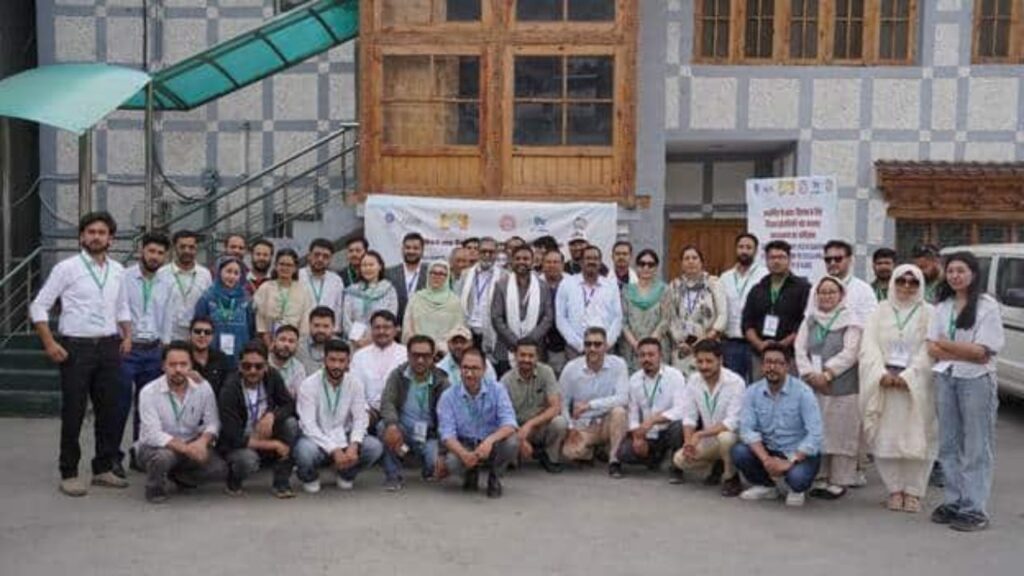

In a significant step towards promoting science and technology-driven rural development in Ladakh, the CSIR-National Institute of Science Communication and Policy Research (CSIR-NIScPR), in collaboration with Unnat Bharat Abhiyan (UBA), IIT Delhi, IIT Jammu, and Government Degree College (GDC) Kargil, organised a one-day consultation on “Science, Technology, and Innovation Need Identification for Sustainable Development of Kargil.”
The event, held at Government Degree College, Kargil, was conducted under the CSIR-NIScPR initiative “Leveraging CSIR Technologies for Rural Development: Expanding Initiatives and Identifying Opportunities.” Knowledge partners for the programme included CSIR-Central Food Technological Research Institute (CFTRI), Mysuru, and CSIR-National Institute for Interdisciplinary Science and Technology (NIIST), Thiruvananthapuram.
The consultation aimed to identify region-specific scientific and technological needs while exploring practical solutions that can support sustainable livelihoods, improve resource management, and strengthen climate resilience in the Kargil region.
Focus on Local Challenges and Opportunities
Kargil possesses considerable potential in sectors such as agriculture, horticulture, medicinal and aromatic plants, food processing, renewable energy, eco-tourism, and rural entrepreneurship. However, difficult terrain, extreme weather conditions, and limited access to modern technologies continue to restrict the region’s development.
Recognising these challenges, the organisers brought together scientists, researchers, policymakers, government officials, entrepreneurs, farmers, self-help groups (SHGs), students, and community representatives to discuss technology-based interventions suited to the unique conditions of the Himalayan region.
More than 100 participants attended the programme, making it an important platform for dialogue between scientific institutions and local stakeholders.
Science and Collaboration at the Core
The inaugural session featured representatives from CSIR-NIScPR, UBA-IIT Delhi, IIT Jammu, and Government Degree College, Kargil.
Principal of GDC Kargil, Ms. Disket Angmo, welcomed the participants, while CSIR-NIScPR Director Dr. Geetha Vani Rayasam highlighted the importance of science-led solutions and collaborative partnerships in achieving sustainable and inclusive regional development.
Other speakers, including Prof. Ranjana Aggarwal, Dr. Yogesh Suman, Prof. P.K. Singh, and Prof. Meenakshi Rajeev, stressed that effective collaboration among research institutions, academic organisations, and government agencies would be crucial for addressing Kargil’s developmental challenges.
The inaugural session concluded with a vote of thanks delivered by Dr. Shiv Narayan Nishad, Scientist-E, CSIR-NIScPR.
Experts Showcase Technologies for Mountain Regions
The first technical session focused on technologies that could be adapted for the Himalayan ecosystem.
Dr. R.S. Praveen Raj of CSIR-NIIST presented advanced agricultural innovations suitable for mountainous areas, including dehumidified drying technology for agricultural produce that can help reduce post-harvest losses.
Dr. Aashitosh Inamdar from CSIR-CFTRI discussed food processing and value-addition technologies that could create new income opportunities for local entrepreneurs while improving the marketability of agricultural products.
Dr. Ashok Yadav, Principal Scientist at ICAR, highlighted the growing importance of asafoetida (Heeng) cultivation in India. He shared updates on ongoing initiatives to expand domestic production and underlined the potential of scientific interventions to make Heeng cultivation a sustainable livelihood option for farmers in Kargil.
Funding and Institutional Support Discussed
The second technical session examined financial support, institutional partnerships, and technology adoption strategies.
Representatives from NABARD, the University of Ladakh, Krishi Vigyan Kendra Kargil, IIT Jammu, and Government Degree College Drass shared insights into funding opportunities, skill development initiatives, and collaborative programmes designed to strengthen rural development.
Speakers emphasised the need for greater coordination between research institutions, financial agencies, educational organisations, and local communities to ensure that scientific innovations translate into practical benefits on the ground.
Roadmap for Future Action
The programme concluded with an interactive consultation between scientists and stakeholders, during which participants identified several priority areas for future intervention. These included sustainable agriculture, protected cultivation, medicinal and aromatic plants, renewable energy, water resource management, food processing, climate-resilient farming, eco-tourism, rural entrepreneurship, and skill development.
Participants also recommended expanding technology demonstrations, pilot projects, and capacity-building programmes that address local needs while strengthening institutional partnerships.
The recommendations generated during the consultation will help prepare a roadmap for future collaborations involving CSIR laboratories, academic institutions, government agencies, financial organisations, and community groups.
Organisers said the initiative also increased awareness about indigenous technologies developed by CSIR laboratories and their potential to solve region-specific challenges. The successful event marked another milestone in CSIR-NIScPR’s ongoing partnership with Unnat Bharat Abhiyan to promote evidence-based policymaking, technology dissemination, and science-led rural development in India’s remote regions.

Author: Shivam
Proficient Writer Contact: [email protected]