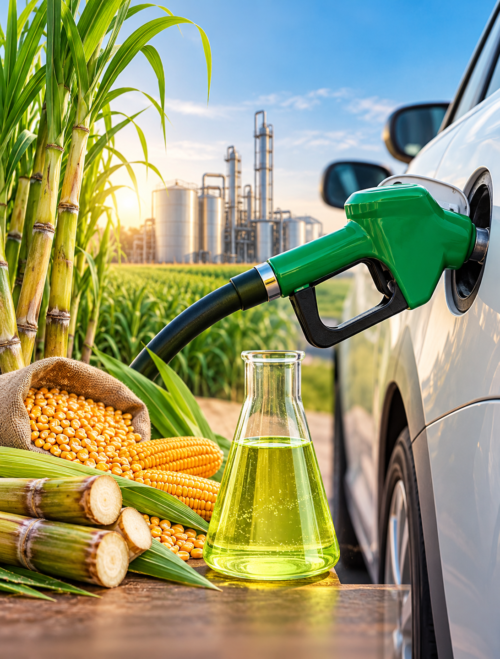
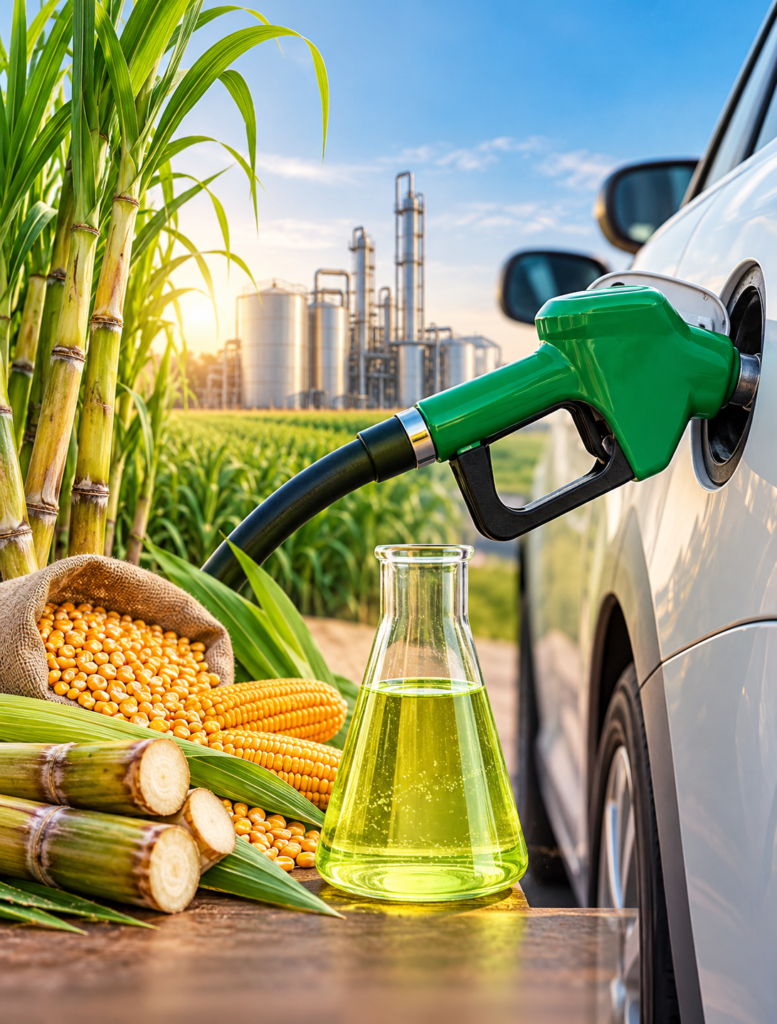

India has cleared the regulatory path for vehicles capable of running on 100% ethanol fuel, potentially creating new opportunities for the country’s sugarcane farmers, grain producers and biofuel industry. The Ministry of Road Transport and Highways notified an amendment to the Central Motor Vehicles Rules, 1989, on October 23, 2026, allowing E100 fuel in specially designed and certified flex-fuel vehicles.
The amendment incorporates E100 alongside E85 in the relevant vehicle emission standards, fuel specifications and testing requirements under Rule 115. The move is expected to support India’s ethanol adoption strategy, strengthen domestic biofuel production and reduce dependence on imported crude oil.
For the agriculture sector, the development is significant because ethanol is produced from agricultural feedstocks, including sugarcane and grains. Greater demand for ethanol could expand market opportunities for sugar mills, distilleries and grain-based ethanol producers, subject to fuel demand, procurement policies and production economics.
What Is E100 Ethanol Fuel?
E100 refers to fuel consisting predominantly of ethanol, designed for use in vehicles specifically engineered and certified for high-ethanol operation. Flex-fuel vehicles can run on different proportions of petrol and ethanol, depending on their approved design and fuel compatibility.
The new rules do not mean that E100 can be used in ordinary petrol cars. Only vehicles specifically designed and certified to operate on high-ethanol blends can use E85 or E100. Existing petrol and E20-compatible vehicles are not required to switch to these fuels or undergo modifications under the amendment.
The regulatory change provides automakers with a framework to develop, test and certify E100-compatible vehicles for the Indian market.
How E100 Fuel Could Benefit Sugarcane Farmers
India’s ethanol programme has created an additional industrial market for sugarcane-based products, particularly sugarcane juice, sugar syrup and molasses used in ethanol production. An expansion in high-ethanol fuel consumption could potentially strengthen demand for these agricultural feedstocks.
For sugar mills, higher ethanol demand may offer another revenue stream alongside sugar production. It could also support investments in distillation capacity and improve opportunities to diversify operations.
However, the impact on farmers will depend on how additional ethanol demand translates into feedstock procurement, sugarcane payments and farm-gate prices. Benefits will also depend on government pricing policies, the availability of water and agricultural inputs, and competition between sugar production and ethanol diversion.
Grain-Based Ethanol Industry May Also Gain
The policy development could create opportunities for India’s grain-based ethanol industry, which uses feedstocks such as maize and other eligible grains.
If E100-compatible vehicles gain market acceptance, higher fuel demand could encourage investment in ethanol production and procurement networks. This may offer additional markets for maize growers and other grain suppliers.
At the same time, increased industrial demand for maize and food grains needs to be balanced against food and feed requirements. The long-term benefits for farmers will depend on ethanol procurement prices, crop productivity, storage facilities and the economics of competing uses.
India Pushes Ahead With Ethanol Blending
The E100 framework builds on India’s Ethanol Blended Petrol (EBP) Programme, which aims to increase the use of domestically produced ethanol in transport fuel.
India has achieved its nationwide target of blending 20% ethanol with petrol ahead of the original 2030 deadline. According to the figures cited in the policy background, domestic ethanol production capacity is approaching 2,000 crore litres annually, while oil marketing companies have been issuing tenders exceeding 1,100 crore litres a year to support the E20 programme.
The country imports around 88% of its crude oil requirements, making alternative fuels an important part of its energy security strategy. Greater domestic ethanol use could help reduce fossil-fuel consumption and exposure to international crude oil price fluctuations.
Environmental Benefits and Challenges
Ethanol-blended fuels can reduce tailpipe emissions of carbon monoxide and certain hydrocarbons under suitable operating conditions. Ethanol can also offer a lower lifecycle fossil-carbon footprint than conventional petrol, depending on how the feedstock is cultivated, processed and transported.
However, wider adoption of E100 will require more than a regulatory amendment. Automakers will need to introduce compatible vehicles, while fuel suppliers will need to establish suitable distribution and retail infrastructure.
Vehicle affordability, fuel availability, engine performance, fuel economy and the overall cost of ethanol production will also influence consumer acceptance.
What Lies Ahead for India’s Agriculture Sector?
The introduction of E100-compatible vehicles could mark another step in connecting India’s agricultural production with its clean-energy ambitions. Sugarcane farmers, maize growers, sugar mills and grain-based ethanol producers may benefit if the policy leads to sustained growth in domestic ethanol demand.
The final impact will depend on the pace of vehicle launches, the expansion of E100 fuel availability and the commercial viability of high-ethanol blends.
For agriculture, the key question is whether expanding biofuel demand can create stable markets for farmers while maintaining a balance between food production, feed requirements, water use and energy security.
Conclusion: India’s decision to permit E100 fuel in certified flex-fuel vehicles strengthens the regulatory foundation for high-ethanol transport. It also opens the possibility of new demand for agricultural feedstocks, potentially supporting sugarcane and grain-based ethanol value chains. The benefits for farmers, however, will depend on effective implementation, viable procurement arrangements and the development of a reliable E100 vehicle and fuel ecosystem.