
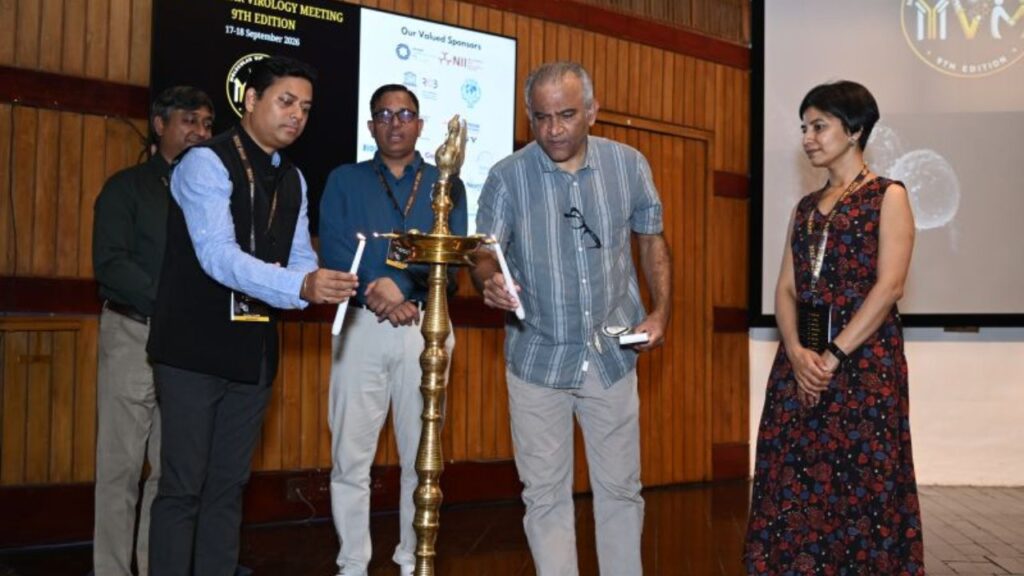

The 9th Molecular Virology Meeting (MVM 2026) concluded on September 18 at BRIC–National Institute of Immunology (BRIC–NII), New Delhi, bringing together nearly 200 clinicians, scientists, researchers and students from across India to discuss advances in viral biology and the translation of virology research into vaccines, therapeutics, diagnostics and public-health solutions.
Launched in 2009, the Molecular Virology Meeting has developed into an important annual platform for India’s virology research community. The forum brings together experts working on diverse aspects of viral science, including molecular mechanisms of infection, host–virus interactions, viral pathogenesis, immunity, evolution, immune evasion, epidemiology, clinical virology and translational research.
The 2026 edition was hosted by BRIC–NII with support from the International Centre for Genetic Engineering and Biotechnology (ICGEB) and the Regional Centre for Biotechnology (RCB). The two-day programme provided researchers from different institutions and disciplines an opportunity to share findings, explore emerging research questions and discuss ways to strengthen the conversion of laboratory discoveries into technologies relevant to public health.
The meeting began with a keynote address by Dr. Naveen Kumar, Director of ICMR–National Institute of Virology, Pune. His presentation, titled “Flip the Switch: Host Factors That Block or Boost Viruses,” highlighted the importance of understanding host factors that influence viral infection.
The scientific sessions covered a wide range of viral diseases and research areas. Scientists presented studies involving influenza, dengue, chikungunya, HIV, hepatitis E, West Nile virus, coronaviruses and respiratory syncytial virus. Discussions examined viral entry and replication, host responses, immune regulation, viral adaptation and the molecular basis of disease development.
A major component of MVM 2026 focused on translating fundamental discoveries into practical applications. The session on Translational Virology: Vaccines & Therapeutics featured research on antiviral treatments, antibody discovery and theranostics, along with studies exploring viral evolution and epidemiological trends.
The meeting also addressed the broader requirements for developing a robust national virology innovation and preparedness ecosystem. A panel discussion titled “Future of Virology Research and its Contribution in BioE3 Policy: Advancing Towards Viksit Bharat” brought together experts from academia, research institutions and industry.
Moderated by Dr. Nimesh Gupta of BRIC–NII, the panel included Dr. Naveen Kumar, Prof. Saumitra Das of IISc, Dr. Sudhanshu Vrati of RCB, Prof. Sanjeev Galande of Shiv Nadar University and Dr. Subeer Mazumdar of Sun Pharma Science Foundation.
The discussion examined how India can connect scientific discovery with validation, scale-up and product development. Panelists discussed the importance of platform technologies for vaccines, therapeutics and diagnostics, stronger funding support for translational research, closer academia–industry–government collaboration and improved capabilities for viral surveillance and health security.
The discussions underscored the contribution that virology can make to the broader objectives associated with BioE3 and the development of a more resilient public-health system.
MVM 2026 featured seven scientific sessions, spotlight presentations, poster sessions and the panel discussion, followed by an award ceremony and concluding session. The participation of basic scientists, clinicians, translational researchers, funding organisations and industry representatives highlighted the increasingly collaborative nature of modern virology.
For students and early-career researchers, the meeting also provided opportunities to interact with established scientists and learn about emerging areas of research. Bhavya Ahuja, a PhD Scholar at BRIC–NII, described the event as a valuable learning experience and said that participating in its organisation offered insights into how scientific discussions, ideas and collaborations contribute to building a vibrant research community.
The successful conclusion of MVM 2026 highlighted the growing need for collaboration across disciplines to strengthen India’s ability to respond to emerging and evolving viral threats.
Also Read: CSIR-CRRI to Support Scientific Road Development and Safety Upgrades in Visakhapatnam

Author: Shivam
Proficient Writer Contact: [email protected]