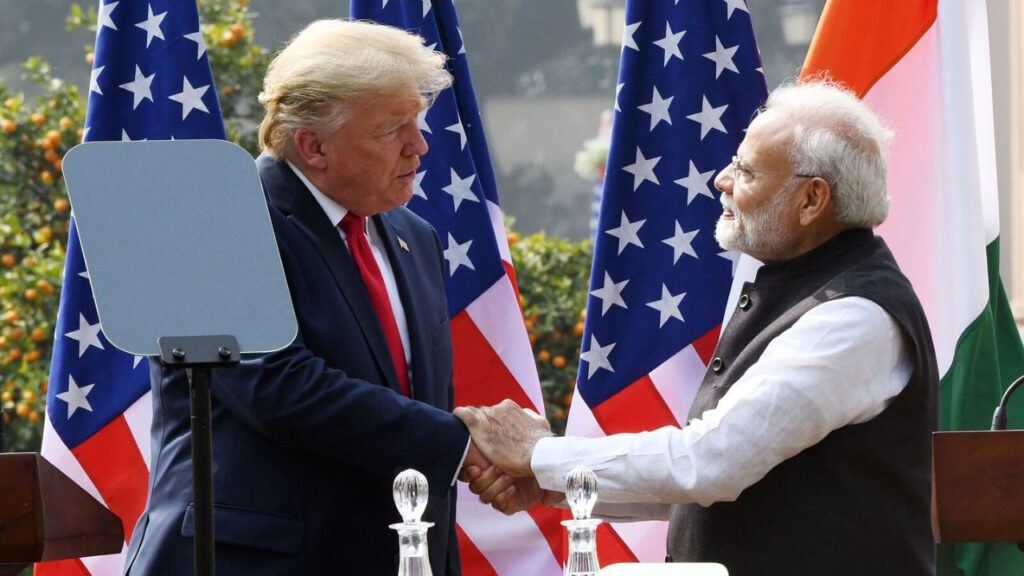

India and the United States are set to intensify negotiations on a proposed Interim Trade Agreement as officials from both countries prepare for another round of high-level discussions in New Delhi from June 1 to 4, 2026. The talks are part of a broader effort to strengthen bilateral economic ties and pave the way for a comprehensive India-U.S. Bilateral Trade Agreement (BTA).
The upcoming negotiations follow the Joint Statement issued by India and the United States on February 7, 2026, in which both nations agreed on a framework for an interim arrangement focused on reciprocal and mutually beneficial trade. The framework also reaffirmed their shared commitment to pursuing a broader and more ambitious trade partnership.
As part of the ongoing engagement process, an Indian delegation visited Washington D.C. from April 20 to 23, 2026, for in-person discussions with U.S. counterparts. The meetings focused on identifying areas of convergence and addressing pending concerns related to trade and investment. Officials from both sides described the discussions as constructive and forward-looking.
The next phase of negotiations will see the U.S. delegation, led by its Chief Negotiator, visiting India to continue deliberations on the proposed interim agreement. The four-day engagement is expected to play a crucial role in finalizing key details of the arrangement while simultaneously advancing talks under the broader BTA framework.
According to officials familiar with the discussions, negotiations are covering a wide range of strategic areas, including market access, non-tariff measures, customs procedures, trade facilitation, investment promotion, and economic security alignment. Both countries are working to reduce trade barriers and create a more predictable and transparent framework for businesses and investors.
Market access remains one of the central pillars of the negotiations. India and the United States are exploring ways to improve access for goods and services in sectors of mutual interest while safeguarding domestic economic priorities. Discussions are also focusing on simplifying regulatory processes and resolving long-standing trade irritants that have affected businesses on both sides.
Another important area under consideration is non-tariff measures, which often impact the movement of goods despite reductions in tariffs. Officials are examining mechanisms to enhance standards cooperation, improve regulatory transparency, and streamline compliance procedures to facilitate smoother trade flows.
Customs and trade facilitation measures are also expected to receive significant attention during the talks. Both countries are seeking to modernize customs procedures, reduce transaction costs, and improve supply chain efficiency. Such measures are considered essential for strengthening commercial connectivity and enhancing the ease of doing business.
Investment promotion forms another major component of the proposed agreement. India and the United States are looking to encourage greater cross-border investments in sectors such as technology, manufacturing, energy, and digital infrastructure. Enhanced investment cooperation is expected to contribute to job creation, innovation, and economic growth in both economies.
The negotiations are also taking place against the backdrop of evolving global economic and geopolitical challenges. Economic security alignment has emerged as an important focus area, particularly in relation to resilient supply chains, trusted technology partnerships, and strategic industrial cooperation. Both nations are increasingly emphasizing collaboration in critical and emerging sectors to reduce vulnerabilities and strengthen long-term economic resilience.
Trade relations between India and the United States have expanded significantly in recent years, making the U.S. one of India’s largest trading partners. Policymakers from both sides believe that a successful interim agreement could create momentum for a more comprehensive bilateral trade pact in the future.
The June negotiations in New Delhi are therefore being closely watched by industry stakeholders and policymakers alike. A positive outcome could mark a significant step toward deepening economic cooperation between the world’s two largest democracies and further strengthening their strategic partnership in the years ahead.

Author: Shivam
Shivam Dwivedi is a senior journalist with extensive experience in research-driven journalism, policy communication, and multi-platform storytelling. His areas of interest include international relations, defence, science & technology, education, urban development, agriculture, spirituality, and environmental sustainability. His work focuses on in-depth analysis, public discourse, and impactful narratives across governance and development sectors, with a strong commitment to the Sustainable Development Goals (SDGs). Contact: [email protected]