
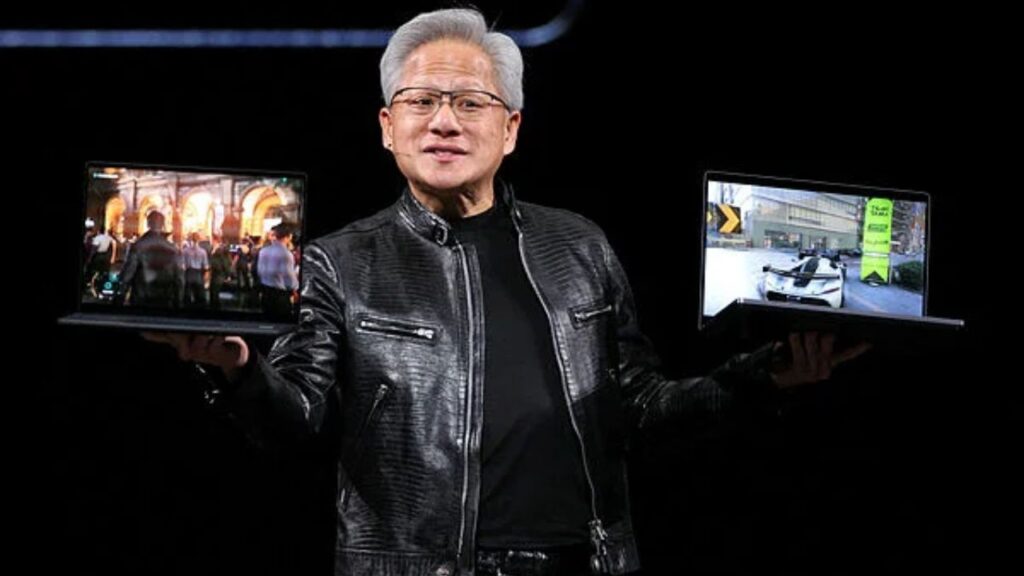

Chipmaking giant Nvidia has announced a major step into the consumer artificial intelligence (AI) computing market with the launch of its new RTX Spark chip, designed specifically for next-generation personal computers. The announcement was made by Nvidia CEO Jensen Huang during his keynote address ahead of the opening of the Computex technology exhibition in Taipei, Taiwan.
The RTX Spark chip represents Nvidia’s latest effort to bring advanced AI capabilities directly to personal computers. According to the company, the new processor is engineered to support AI-powered applications and personal AI assistants, transforming traditional PCs into intelligent computing platforms capable of handling sophisticated AI workloads locally.
Speaking at the event, Huang described the development as a transformative moment for the technology industry. He compared the shift toward AI-powered computers to the evolution of mobile phones into smartphones, emphasizing that the change could redefine how people interact with technology in their daily lives.
Nvidia stated that RTX Spark is a “new superchip” designed for the emerging era of personal AI agents. The company envisions a future where computers function not only as productivity tools but also as intelligent digital teammates capable of understanding, assisting, and automating various tasks for users.
The new chip will power a range of Windows-based AI PCs from several leading manufacturers. Major technology brands, including Lenovo, HP, Dell Technologies, Microsoft Surface, ASUS and MSI, are expected to launch RTX Spark-powered devices later this year. Additional models from Acer and Gigabyte are also planned for release after the initial rollout.
Industry observers view the launch as a direct challenge to established players in the personal computer market, including Apple and Intel. The AI-focused PC segment is becoming increasingly competitive as technology companies race to integrate generative AI capabilities into consumer devices.
According to market research data, Lenovo, HP, Dell and Apple collectively accounted for nearly three-quarters of global PC shipments during the first quarter of the year. Nvidia’s entry into this segment could significantly influence future product development across the industry as demand for AI-enabled computing continues to grow.
The company’s latest move comes at a time when Nvidia is experiencing unprecedented success driven by the global AI boom. Demand for its powerful graphics processing units (GPUs), widely used in AI data centres, has helped propel the company to become the world’s most valuable publicly traded firm. Nvidia’s market valuation recently surpassed $5 trillion, reflecting investor confidence in the company’s central role in the AI revolution.
However, the announcement also coincides with growing geopolitical tensions surrounding advanced semiconductor technology. On Sunday, the United States government introduced stricter measures aimed at limiting access to cutting-edge AI chips by Chinese companies.
The new guidance issued by the U.S. Department of Commerce’s Bureau of Industry and Security clarified that exports of the most advanced AI processors to overseas subsidiaries of Chinese firms will require government approval. The move is intended to prevent potential circumvention of existing export controls.
Washington has increasingly tightened restrictions on advanced semiconductor exports in recent years, citing national security concerns and efforts to maintain technological leadership in critical AI sectors. The latest regulations could impact the global distribution of high-performance chips, including Nvidia’s advanced Blackwell processors.
Despite these challenges, Nvidia remains focused on expanding its AI ecosystem. With the introduction of RTX Spark, the company is betting that AI-powered personal computers will become the next major evolution in consumer technology, bringing advanced artificial intelligence capabilities directly into homes and workplaces around the world.

Author: Shivam
Proficient Writer Contact: [email protected]