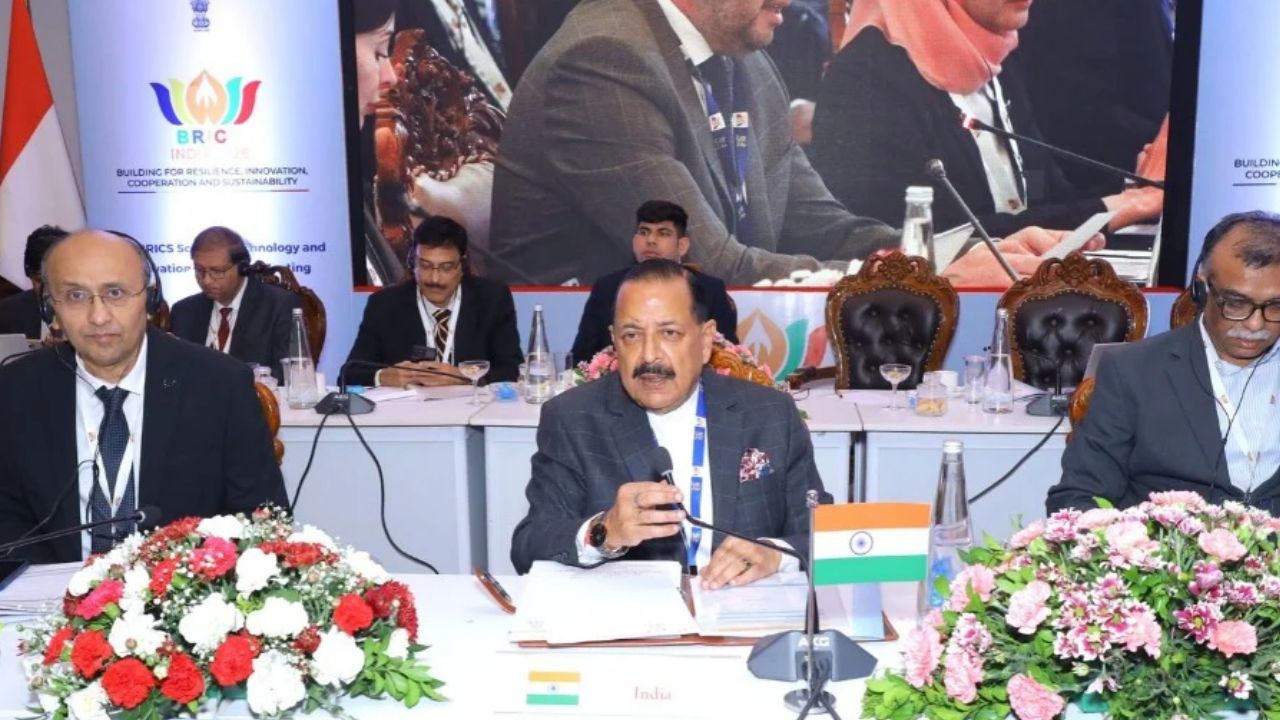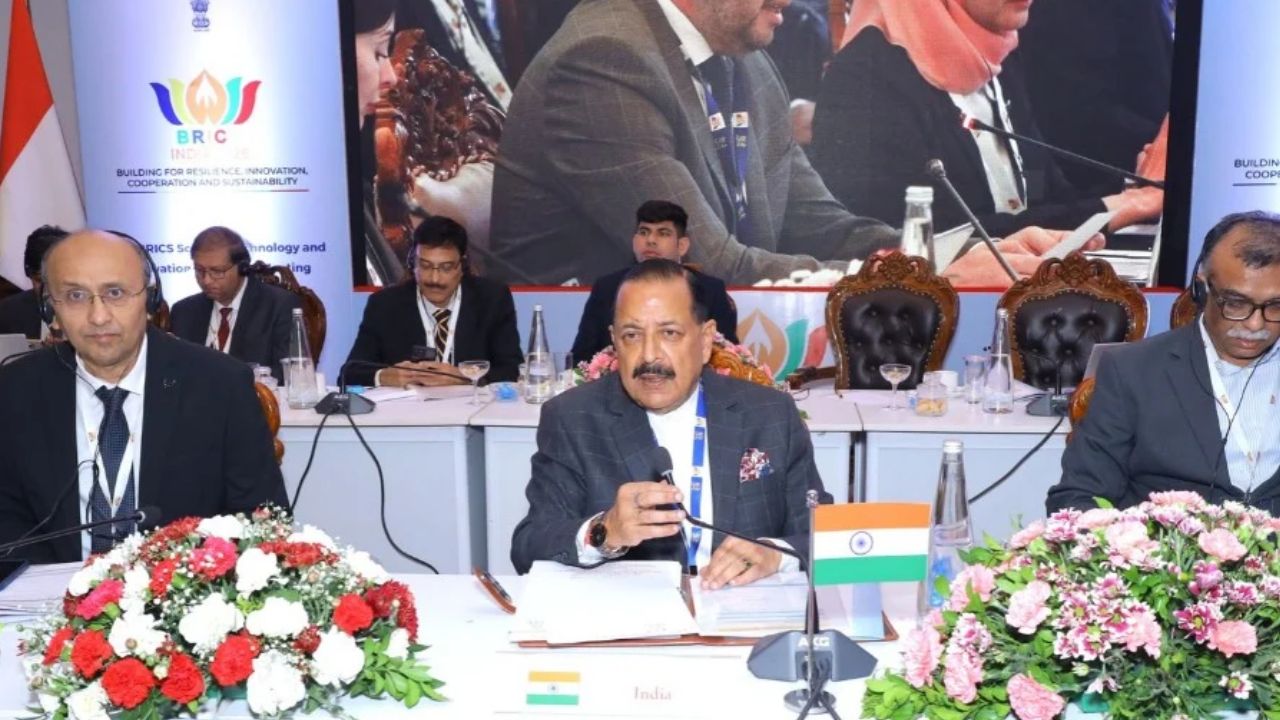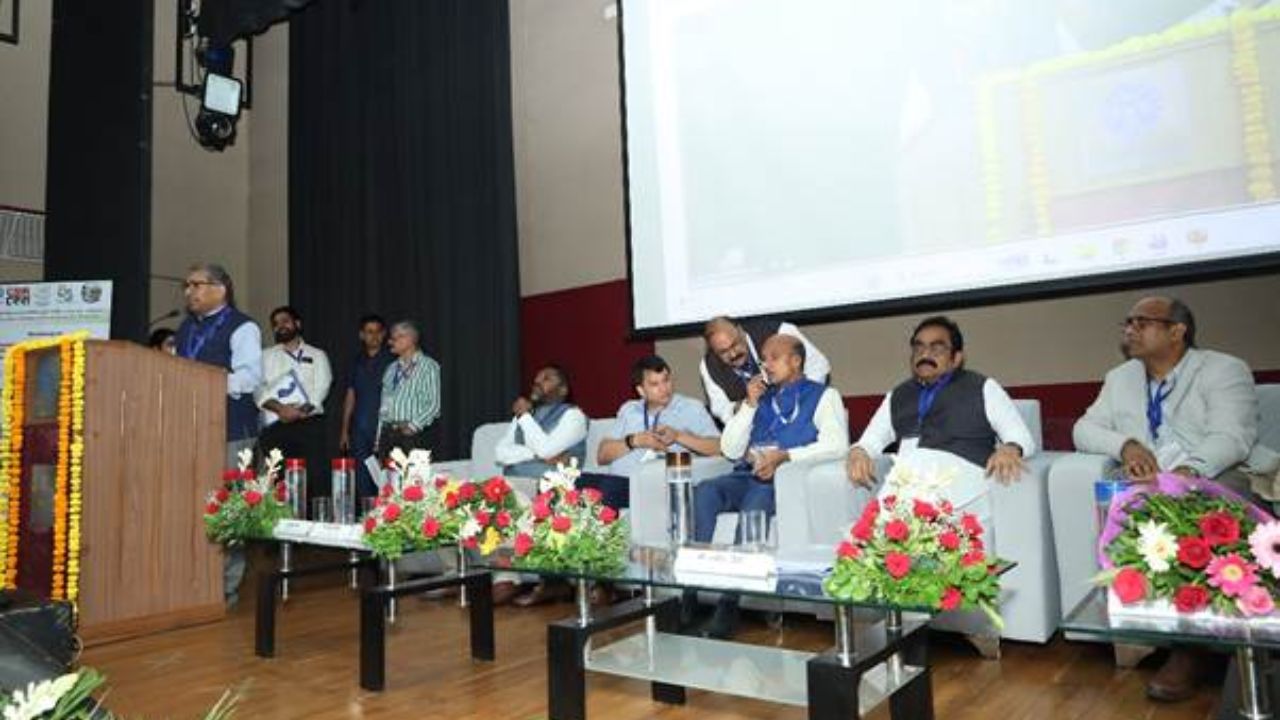
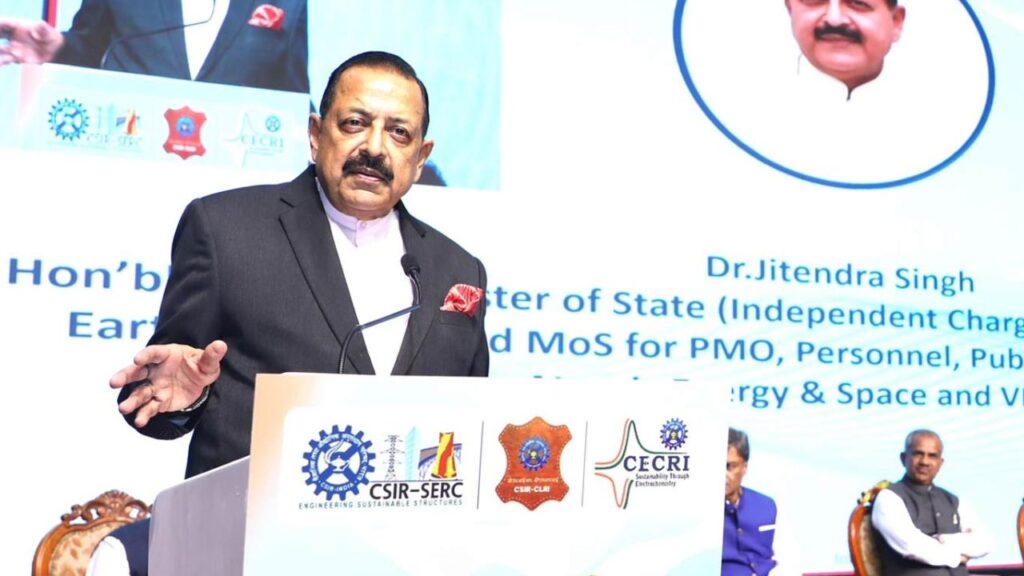

Union Minister of State (Independent Charge) for Science and Technology, Earth Sciences, and Minister of State for the Prime Minister’s Office, Personnel, Public Grievances, Pensions, Atomic Energy and Space, Dr. Jitendra Singh, on Tuesday stressed the need for stronger collaboration between scientific institutions and industry to accelerate innovation and unlock the untapped economic potential of India’s agriculture sector.
Speaking after inaugurating four advanced research and development facilities at the CSIR–Indian Institute of Chemical Technology (CSIR-IICT) in Hyderabad, the Minister said India’s next phase of economic growth will be driven by scientific innovation that creates value from agricultural resources, particularly by converting farm waste into commercially useful products.
Dr. Singh noted that under the leadership of Prime Minister Narendra Modi, the country’s scientific priorities have expanded beyond improving crop productivity to developing technologies that transform agricultural residues into reusable and value-added materials. Such innovations, he said, can generate new income opportunities for farmers, promote rural entrepreneurship and strengthen sustainable industrial development.
Four New Research Facilities Inaugurated
During the event, the Minister inaugurated the Advanced R&D Facility for Fluorochemicals and virtually dedicated three other major infrastructure projects to the nation—the 500 KLD Decentralized Effluent Treatment Plant for the Siripuram Handloom Cluster, the Continuous Processing Platform for Industrial Chemicals, and the Sustainable Engineering Complex (SustEC).
He also laid the foundation stone for a modern hostel complex worth ₹44.46 crore that will accommodate 200 students and researchers, enhancing residential infrastructure for young scientists.
The programme witnessed the participation of researchers, industry representatives, startups, technology partners and students, reflecting the growing emphasis on translating laboratory research into commercially viable technologies.
Bridging Research and Industry
Addressing scientists and stakeholders, Dr. Singh underlined that research institutions can no longer operate in isolation. He said closer engagement with industries, micro, small and medium enterprises (MSMEs), startups and technology partners is essential for ensuring that scientific discoveries reach the marketplace.
According to the Minister, scientific research across the agricultural value chain—from developing advanced farming technologies to utilising agricultural waste—can create significant opportunities for value addition while supporting sustainable industrial growth.
He observed that India is steadily transitioning from being a technology adopter to becoming a technology developer, with science playing a central role in economic expansion, strategic self-reliance and global competitiveness.
Focus on Clean Energy and Circular Economy
Highlighting recent achievements of the Council of Scientific and Industrial Research (CSIR), Dr. Singh referred to technologies developed for producing compressed biogas from food and agricultural waste as well as converting captured carbon dioxide into Dimethyl Ether.
He said these innovations demonstrate India’s growing commitment to clean energy, environmental sustainability and the circular economy by transforming waste into valuable resources. Such technologies, he added, contribute to both energy security and industrial development.
The Minister described the newly inaugurated Advanced R&D Facility for Fluorochemicals as a strategic national asset that will strengthen indigenous capabilities in fluorination technologies. The facility is expected to support the development of pharmaceuticals, agrochemicals, specialty chemicals, refrigerants, advanced materials and electronic chemicals while reducing dependence on imports.
He added that the facility would also benefit key sectors such as defence, electronics and space by enhancing technological self-reliance.
Sustainable Technologies for Industry
Dr. Singh also praised the 500 KLD Decentralized Effluent Treatment Plant established for the Siripuram handloom cluster with support from the Department of Science and Technology. He said the indigenous low-energy treatment system would reduce pollution, enable water reuse and promote environmentally sustainable textile production.
Speaking about the Continuous Processing Platform, the Minister noted that continuous manufacturing represents the future of the chemical and pharmaceutical industries by improving efficiency, safety, product quality and environmental performance.
He further described the Sustainable Engineering Complex (SustEC) as one of the most forward-looking initiatives, designed to convert waste plastics, biomass, agricultural residues and industrial by-products into fuels, hydrogen and advanced materials. The project, he said, supports India’s broader objective of achieving Net Zero emissions through indigenous technologies.
Investing in Scientific Talent
Welcoming the recruitment of nearly 90 permanent personnel, including around 70 scientists and technical professionals, at CSIR-IICT, Dr. Singh said investment in skilled researchers must be complemented by world-class infrastructure. He noted that the new hostel complex would help create an environment that encourages innovation and collaboration among young scientists.
The Minister also highlighted government initiatives such as the Anusandhan National Research Foundation, which aim to foster stronger partnerships among research institutions, academia, startups and industry for developing globally competitive technologies.
Concluding his address, Dr. Singh urged scientists to deepen engagement with industry, mentor emerging entrepreneurs and ensure that promising laboratory innovations are successfully commercialised. He expressed confidence that CSIR-IICT would continue to play a leading role in transforming scientific research into economic growth, industrial development and improved quality of life while strengthening India’s position as a global leader in science and innovation.

Author: Shivam
Shivam Dwivedi is a senior journalist with extensive experience in research-driven journalism, policy communication, and multi-platform storytelling. His areas of interest include international relations, defence, science & technology, education, urban development, agriculture, spirituality, and environmental sustainability. His work focuses on in-depth analysis, public discourse, and impactful narratives across governance and development sectors, with a strong commitment to the Sustainable Development Goals (SDGs). Contact: [email protected]