
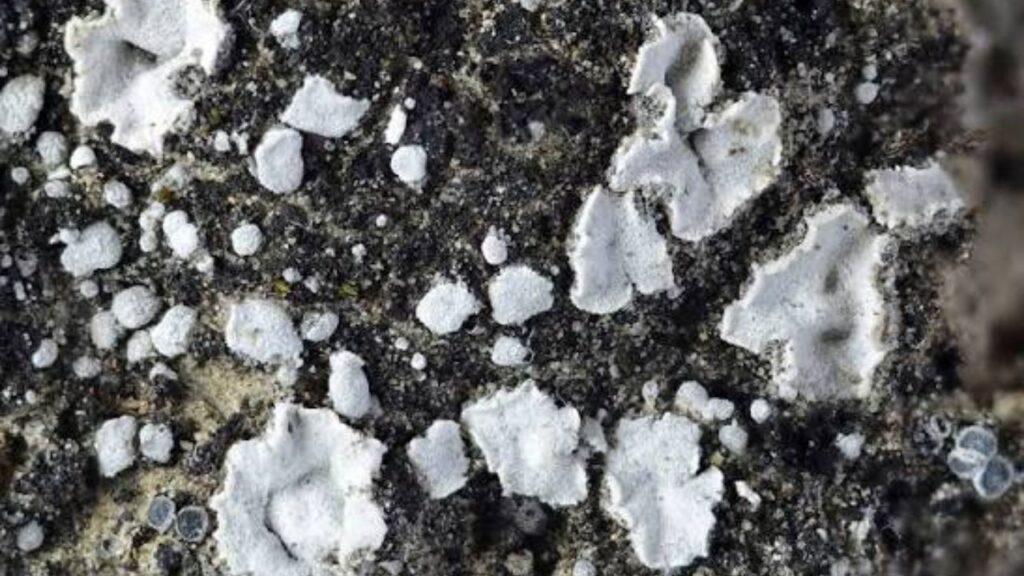

A team of Indian researchers has discovered five new species of lichen-forming fungi from the biodiversity-rich Western Ghats, opening new avenues for understanding forest ecosystems, environmental monitoring, and conservation planning. The newly identified species belong to the genus Allographa, a group of script lichens known for their sensitivity to pollution and changes in habitat conditions, making them valuable indicators of ecological health.
The discovery is expected to support efforts to identify environmentally sensitive regions, strengthen biodiversity assessments, and develop scientific strategies for the sustainable management of forest ecosystems.
Western Ghats Emerge as a Key Centre of Lichen Diversity
The Western Ghats, recognized as one of the world’s important biodiversity hotspots, host a wide range of unique plant, animal, and fungal species. However, several groups of organisms, including lichens, remain poorly documented due to limited molecular studies.
Allographa is a genus of script lichens belonging to the family Graphidaceae. These lichen-forming fungi establish symbiotic relationships with algae or cyanobacteria, creating composite organisms capable of surviving in diverse environments. The genus contains more than 200 known species globally, but molecular information on Indian Allographa species, particularly those from the Western Ghats, has remained limited.
Traditionally, species identification in this group has relied mainly on physical characteristics. However, researchers are increasingly combining traditional taxonomy with genetic techniques to better understand species diversity, evolutionary connections, and the complex relationships involved in lichen formation.
Study Combines Traditional Taxonomy with Advanced Genetic Analysis
The research was conducted by scientists from the MACS Agharkar Research Institute (ARI), Pune, an autonomous institute under the Department of Science and Technology (DST), Government of India.
The team was led by Rajeshkumar K. C., Scientist E and Principal Investigator, along with doctoral researcher Ansil P. A., CSIR-SRF, and Dr Bharati Sharma, Technical Officer and Co-Principal Investigator.
Researchers carried out extensive field surveys across different regions of the Western Ghats, collecting numerous lichen specimens from tropical forest habitats. These samples were carefully examined using detailed morphological and chemical analyses.
To establish accurate species relationships, the scientists also conducted multi-locus DNA sequencing using three genetic markers — mitochondrial small subunit ribosomal RNA (mtSSU), nuclear large subunit ribosomal RNA (nrLSU), and RPB2. This combination of traditional observation and molecular phylogenetic analysis enabled the researchers to determine species boundaries more precisely.
Five New Species Identified
The study resulted in the description of five previously unknown species of Allographa. The newly discovered species include:
- Allographa keralensis, named after Kerala, where it was identified.
- Allographa nayakae, named in honour of Indian lichenologist Dr. Sanjeeva Nayaka.
- Allographa paraconsanguinea
- Allographa persistinspersa
- Allographa semicarbonisata
Along with these discoveries, researchers generated new molecular data for several already known species, including A. calcea, A. macella, A. aquilonia, A. rimulosa, and A. effusosoredica.
Genetic Evidence Improves Understanding of Species Evolution
The phylogenetic analysis revealed that species with similar physical appearances are not always closely related from an evolutionary perspective. This finding highlights the limitations of identifying lichen species solely through visible characteristics.
By incorporating genetic evidence, researchers were able to clarify relationships among newly discovered and previously known species, creating a stronger scientific framework for studying diversity within the Graphidaceae family.
The findings also indicate the need for further molecular studies and wider sampling efforts to uncover additional hidden diversity among tropical lichens.
Contribution to Conservation and Future Biodiversity Studies
Published in the journal Mycological Progress, the research significantly expands scientific knowledge about Allographa diversity in India. It provides important molecular reference data that can support future taxonomic studies, evolutionary research, and biodiversity assessments.
The researchers also prepared an updated checklist of Allographa species reported from the Western Ghats, including details about available genetic sequence information. This database will serve as a valuable resource for future ecological studies and conservation initiatives.
The discovery reinforces the importance of the Western Ghats as a reservoir of undocumented fungal diversity and highlights the role of lichens as indicators of ecosystem quality. By combining classical taxonomy with modern molecular approaches, the study provides a more accurate understanding of biodiversity and strengthens scientific efforts to protect fragile forest ecosystems.

Author: Shivam
Proficient Writer Contact: [email protected]