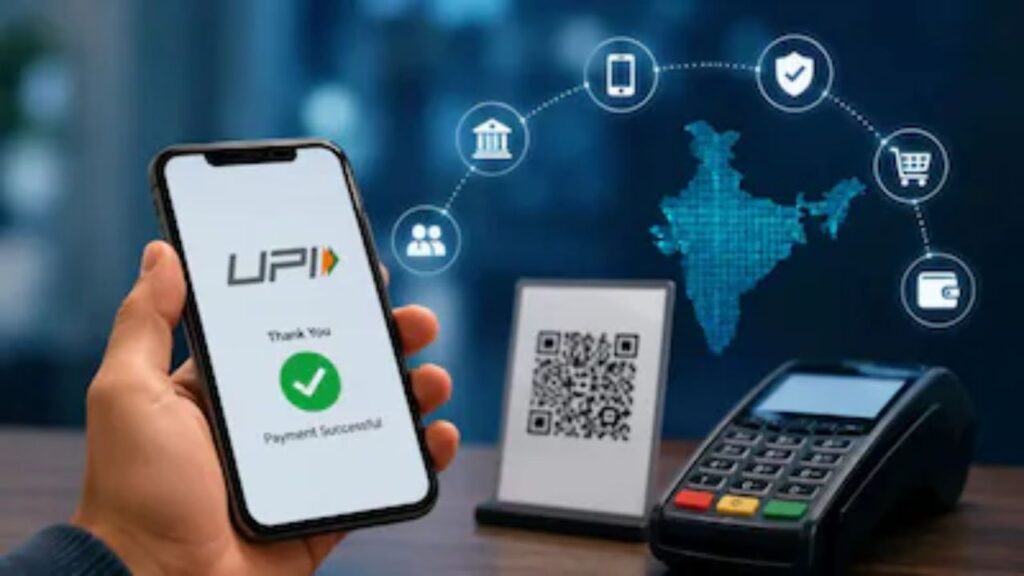

New changes to the Unified Payments Interface (UPI) payment framework will not affect person-to-person (P2P) transactions, with users continuing to make transfers free of transaction, platform or other charges regardless of the amount involved.
The framework also retains zero Merchant Discount Rate (MDR) for person-to-merchant (P2M) payments of up to ₹2,000. Small merchants covered under the existing zero-MDR arrangement will similarly remain protected from additional payment costs. According to the framework’s assessment, nearly 96 per cent of merchant transactions will therefore remain outside the scope of MDR.
MDR is a fee associated with merchant payments and is not a tax imposed or collected by the government or the National Payments Corporation of India (NPCI). The amount is distributed among participants in the digital payments ecosystem, including banks, payment service providers and UPI application providers, to support payment infrastructure and the continued expansion of UPI.
P2P UPI Payments to Remain Free
Under the new framework, all P2P UPI transactions will continue to be free, irrespective of the value transferred. Individuals sending or receiving money through UPI will not be charged a transaction fee, platform fee or similar payment.
P2P transactions account for around 70 per cent of the total value of UPI transactions and will remain completely outside the MDR mechanism. Users will also continue to have unlimited free access without monthly quotas, transaction-volume restrictions or tiered limits on free usage.
Daily transaction limits set by banks and NPCI, which generally vary between ₹1 lakh and ₹5 lakh depending on the category of transaction, are intended for security and risk-management purposes and do not represent charging thresholds.
Merchant Payments Up to ₹2,000 Remain Free
Consumers will not have to pay MDR when making P2M UPI payments of up to ₹2,000. This provision is expected to keep the vast majority of everyday digital payments free for consumers.
Small businesses will also continue to benefit from zero MDR provisions. Small merchants, including street vendors and neighbourhood shops, receiving up to ₹1 lakh per month through UPI QR codes under the Person-to-Person-Merchant (P2PM) category will remain eligible for zero MDR on their transactions.
MDR for Select Higher-Value Payments
A nominal MDR of 0.4 per cent will apply to specified P2M transactions above ₹2,000. The fee will be shared among eligible participants in the payments ecosystem rather than being collected by the government as a tax. For transactions valued at ₹75,000 or more, the MDR will be capped at ₹300 per transaction.
Certain essential and thin-margin sectors will follow a separate flat-rate structure. Transactions above ₹2,000 involving sectors such as railways, telecommunications, insurance, fuel and agricultural inputs will attract an MDR of ₹5 per transaction.
A lower MDR of 0.02 per cent, capped at ₹300 per transaction, will apply to specified capital-market payments involving mutual funds, securities, stockbrokers and dealers.
CA Aditya Sesh, Founder, Besiz Fund Services Ltd., said that public discussion around UPI charges should be based on a clear understanding of different types of digital transactions.
“People need to distinguish between a normal person-to-person UPI transfer and a merchant transaction. If you are paying your maid ₹5,000 directly from your bank account, it is not the same as making a commercial merchant payment. The public should understand the transaction category before assuming that an additional charge will apply.”
Sesh said that the larger benefit of digital payments lies in improving transparency and reducing excessive dependence on cash.
“Digital payments create a transaction trail and can contribute to greater accountability, transparency and the formalisation of economic activity. The objective should be to build confidence in digital payments while ensuring that consumers and merchants clearly understand when a charge applies and who bears that cost.”
He also highlighted the potential benefits for merchants as consumers increasingly move towards formal digital payment channels.
“For businesses, digital payments can create opportunities beyond the immediate transaction. Consumers using digital payment systems may also have access to structured financing or EMI facilities, depending on the product and lender. This can potentially create incremental business opportunities that may not have existed with a purely cash-based transaction.”
Customers Will Not Bear MDR
The framework makes a distinction between MDR and charges paid by customers. MDR is an ecosystem-level merchant payment charge and is not intended to become an additional cost for consumers.
Banks have been advised to ensure that merchants do not transfer MDR costs to customers. UPI application providers are also prohibited from imposing platform fees or undisclosed charges on users.
Focus on Small Merchants and UPI Expansion
The framework also proposes a dedicated fund to encourage UPI adoption among small merchants. An amount equivalent to 5 per cent of total MDR collections will be contributed to the fund, which is intended to support wider acceptance, sustained usage and greater participation of small businesses in digital payments.
The new arrangement has been introduced under the Payment and Settlement Systems Act, 2007, following deliberations by the UPI Steering Committee on rates, operational mechanisms and consumer safeguards.
The framework is aimed at creating a sustainable revenue mechanism for the UPI ecosystem while preserving free digital payments for individuals and protecting micro and small merchants. Revenue from specified larger merchant transactions is expected to help payment ecosystem participants maintain and expand infrastructure, including in rural and semi-urban areas.
The approach also aligns with the recommendation of the Standing Committee on Finance in its 32nd Report, which highlighted the importance of ensuring a viable revenue model for the digital payments ecosystem.
Also Read: DRI Seizes Over 362 Tonnes of Pakistan-Origin Dry Dates in Major Import Crackdown

Author: Shivam
Shivam Dwivedi is a senior journalist with extensive experience in research-driven journalism, policy communication, and multi-platform storytelling. His areas of interest include international relations, defence, science & technology, education, urban development, agriculture, spirituality, and environmental sustainability. His work focuses on in-depth analysis, public discourse, and impactful narratives across governance and development sectors, with a strong commitment to the Sustainable Development Goals (SDGs). Contact: [email protected]