
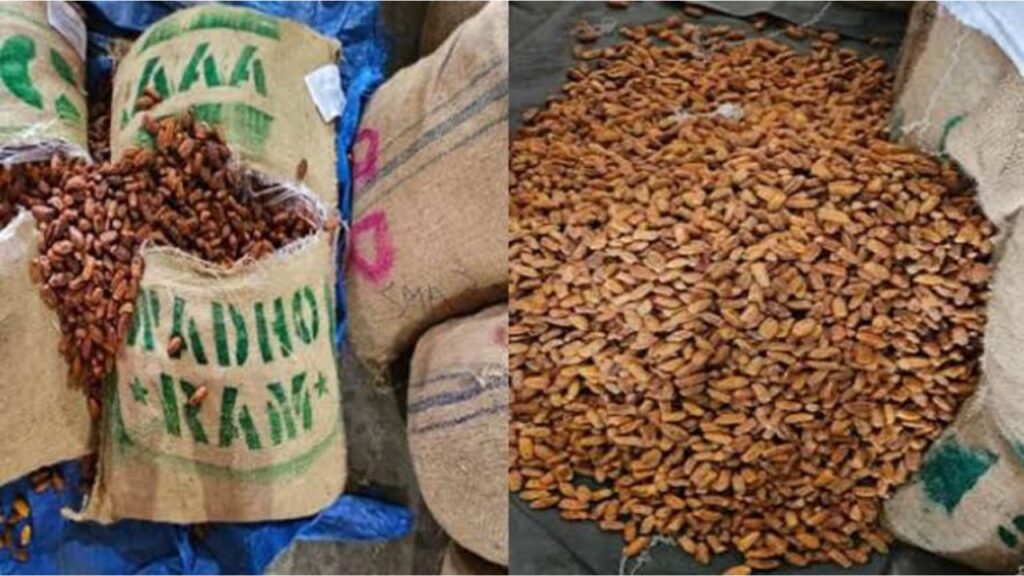

The Directorate of Revenue Intelligence (DRI) has seized more than 362 metric tonnes of dry dates originating from Pakistan in a major enforcement action aimed at preventing attempts to bypass India’s restrictions on imports from the neighbouring country.
The seizure followed specific intelligence inputs regarding the suspected diversion of Pakistan-origin goods into India through a third country. Acting on the information, DRI officers intercepted 13 containers carrying dry dates at the Container Freight Station (CFS) in Ambad, Nashik. The shipment had arrived from Jebel Ali in the United Arab Emirates (UAE), while the import documentation identified the UAE as the country of origin.
Investigators subsequently uncovered a suspected transshipment arrangement allegedly designed to conceal the actual Pakistani origin of the consignment. According to the preliminary findings, the dry dates had originally been shipped from Karachi Port in Pakistan to Jebel Ali Port in the UAE.
After reaching Jebel Ali, the goods were reportedly transferred from their original containers into another set of containers. They were then loaded onto a different vessel for transportation to India. The investigation also indicated the involvement of entities operated by Pakistani nationals in facilitating the onward movement of the consignments.
The case assumes significance in view of India’s restrictions on trade with Pakistan introduced on national security grounds. Following the Pahalgam terror attack, the Government of India imposed a complete prohibition on the direct or indirect import or transit of goods originating in or exported from Pakistan.
The prohibition came into effect on May 2, 2025, through Directorate General of Foreign Trade (DGFT) Notification No. 06/2025-26. The measure covers goods attempting to enter India either directly from Pakistan or through third-country routes.
Since the restrictions were introduced, the DRI has intensified its efforts to identify consignments suspected of being Pakistan-origin goods that are routed through other countries to evade the prohibition. These enforcement activities are being undertaken under “Operation Deep Manifest”, through which the agency has been tracking suspicious trade patterns, examining shipping and customs documentation, and intercepting consignments suspected of violating the import restrictions.
The latest seizure highlights the challenges posed by sophisticated trade-evasion mechanisms involving transshipment, changes in containers and vessels, and alleged misrepresentation of the country of origin. Such practices can make it difficult to establish the actual source of imported goods unless customs and intelligence agencies examine the movement of consignments across multiple stages of the international supply chain.
The DRI’s investigation into the seized dry dates is continuing. Authorities are examining the documentation, shipping records, entities involved in the transactions and other available evidence to establish the complete chain through which the goods were routed into India.
The enforcement action also demonstrates the importance of monitoring third-country trade routes to ensure compliance with India’s import restrictions. Merely declaring an intermediary country as the origin of goods does not necessarily establish their true origin when evidence indicates that the goods were manufactured, produced or exported from a prohibited source.
The seizure of the 13 containers reinforces the DRI’s focus on detecting attempts to circumvent trade prohibitions through misdeclaration and complex transshipment arrangements. It also reflects the agency’s broader efforts to protect the integrity of India’s customs and supply-chain systems while ensuring that national security-related trade restrictions are effectively enforced.
Through continued intelligence-led operations, the DRI aims to identify and disrupt networks involved in concealing the origin of prohibited goods and attempting to introduce them into the Indian market through indirect routes.
Also Read: CAZRI Moth Bean Varieties Show Strong Resilience During Prolonged Dry Spell in Rajasthan

Author: Shivam
Proficient Writer Contact: [email protected]