
India-US trade deal: Farmers’ organisations warn that allowing greater access to American dairy products could affect milk prices, domestic producers and India’s agricultural sector. Soybean, maize, cotton and fruit growers may also face increased competition.
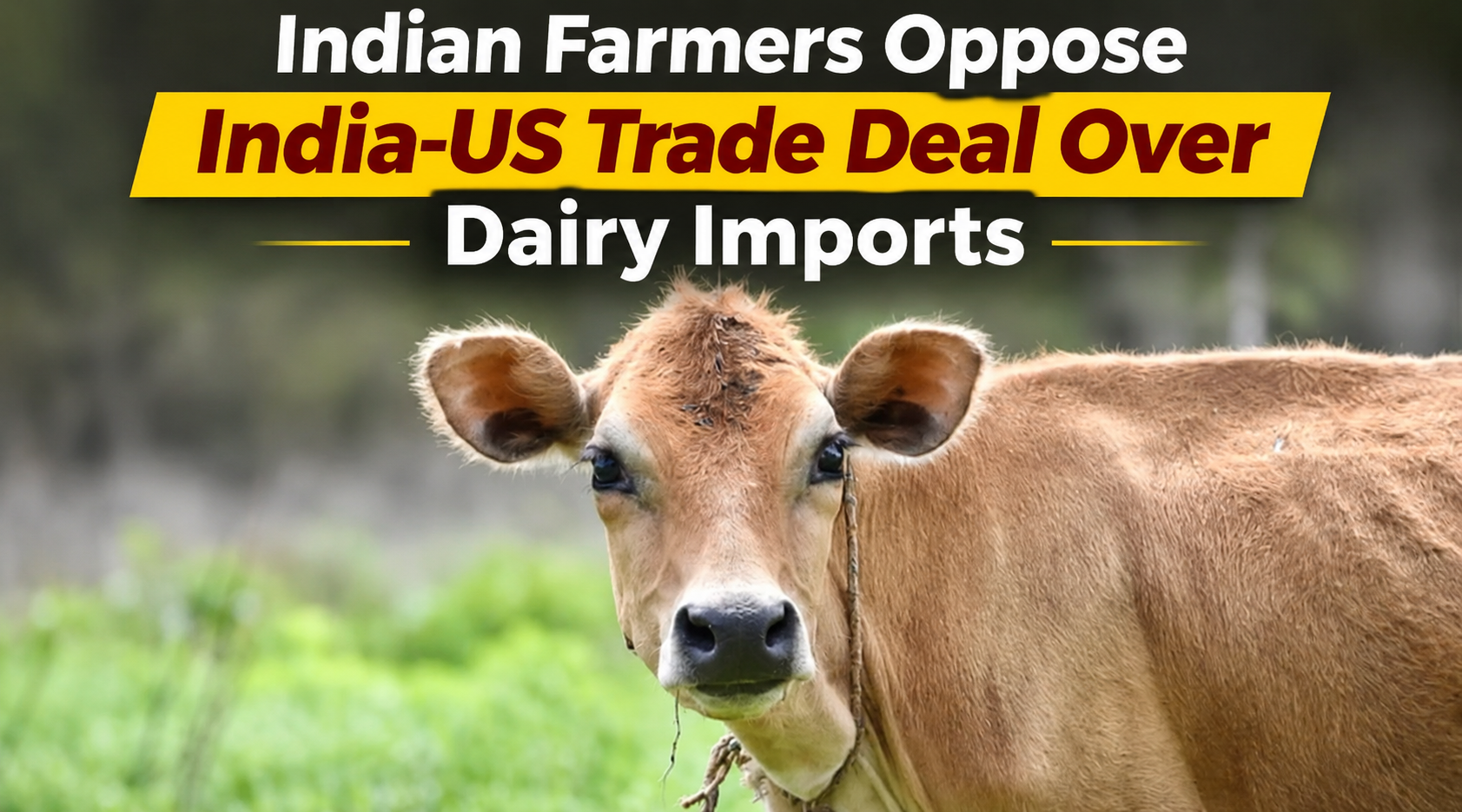
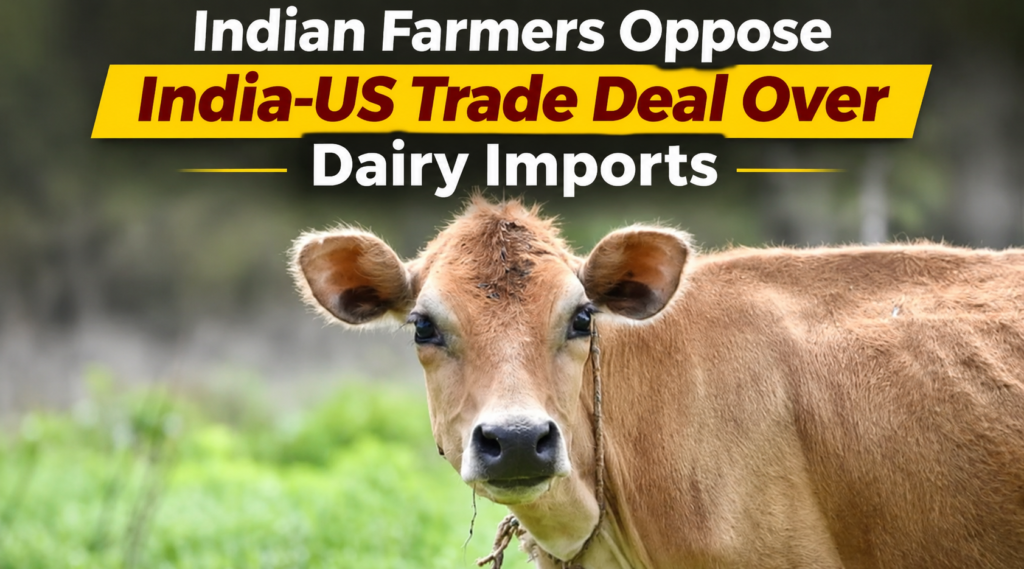
India-US trade deal: Indian farmers’ organisations have raised strong objections to the proposed India-US trade agreement, warning that opening India’s dairy market to American products could put millions of domestic milk producers at risk.
The All India Kisan Sabha (AIKS) has warned the government that farmers will launch protests if the agreement allows greater entry of US dairy products into India. The concern comes as both countries move closer to finalising the trade deal.
Union Commerce Minister Piyush Goyal has indicated that the agreement has reached its final stage of legal drafting. US Secretary of State Marco Rubio has also described the deal as being close to completion. However, access to India’s dairy market remains one of the major issues under discussion.
AIKS General Secretary Vijoo Krishnan said that allowing subsidised American dairy products into India could put pressure on domestic milk procurement prices. He warned that this could directly affect the income of Indian dairy farmers.
The farmers’ organisation also believes that opening the market to large international companies could increase corporate control over India’s agriculture and dairy sectors. AIKS has asked its state-level units to prepare for a long-term farmers’ movement against any decision that harms domestic producers.
Dairy Farmers Fear Pressure on Milk Prices
India has a large dairy sector, with millions of rural households depending on milk production for their livelihoods. Farmers’ organisations fear that cheaper imported dairy products could create competition for Indian milk producers.
According to AIKS, American dairy producers receive significant government support, making it difficult for Indian farmers to compete with them on price.
The organisation believes that any trade agreement should protect the interests of small and marginal farmers rather than create additional challenges for the domestic dairy industry.
Soybean, Maize and Fruit Growers Also Concerned
The farmers’ concerns are not limited to dairy. AIKS has also highlighted the possible impact of the trade agreement on soybean, maize, sorghum, cotton, almonds, walnuts and apples.
These crops could face increased competition if the agreement provides greater market access to American agricultural products.
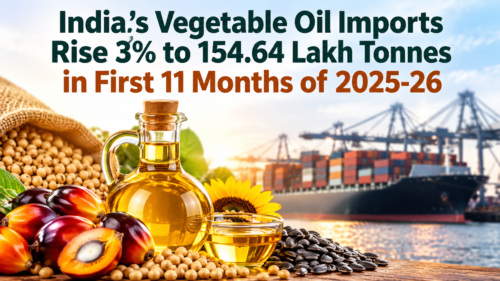
The organisation has particularly raised concerns over the government’s September decision to reduce the basic customs duty on crude soybean and palm oil from 10% to 5%. Duties on refined edible oils were also reduced.
The timing of these changes was a concern for soybean growers, as they came around the beginning of the kharif harvesting season.
Vijoo Krishnan said Indian soybean farmers would find it difficult to compete with large American producers who benefit from government subsidies and industrial-scale farming.
Farmers Demand Agriculture Be Protected in Trade Talks
The debate over the India-US trade agreement comes after several rounds of protests by farmers’ organisations. Earlier this year, a farmers’ coalition organised demonstrations near the Punjab-Haryana border, demanding that agriculture be kept outside the trade agreement.
Farmers also demanded that the government make the details of trade negotiations public before signing any agreement.
The government, meanwhile, has maintained that agriculture remains a sensitive area in the negotiations. Officials have indicated that India will sign an agreement only if it provides clear benefits to the country’s economy and exporters.
Trade Deal May Move Faster After US Elections
The proposed agreement has also attracted attention following the November 3 US midterm elections, in which the Democratic Party won control of Congress.
Ajay Srivastava, founder of the Global Trade Research Initiative (GTRI), believes the election results could encourage the Trump administration to speed up the trade negotiations. He has estimated that the agreement could be concluded within approximately two months.
However, Srivastava has also raised concerns about whether some provisions being discussed could create challenges for India’s existing commitments under World Trade Organization (WTO) rules.
He also pointed out that the broader protectionist approach of the United States may continue even after the agreement is signed.
Protection of Indian Farmers Remains a Key Issue
The proposed India-US trade agreement could create new opportunities for businesses and exporters, but its agricultural provisions remain a major concern for farmers’ organisations.
The dairy, edible oil and crop sectors are particularly sensitive because they support millions of rural livelihoods.
Farmers’ organisations want the government to ensure that trade benefits do not come at the cost of domestic producers. The final agreement will therefore be closely watched by India’s agricultural and dairy industries.
Read More..Fertilizer News: ICRISAT Study Finds Crops Can Grow with 50 % Less Fertilizer