
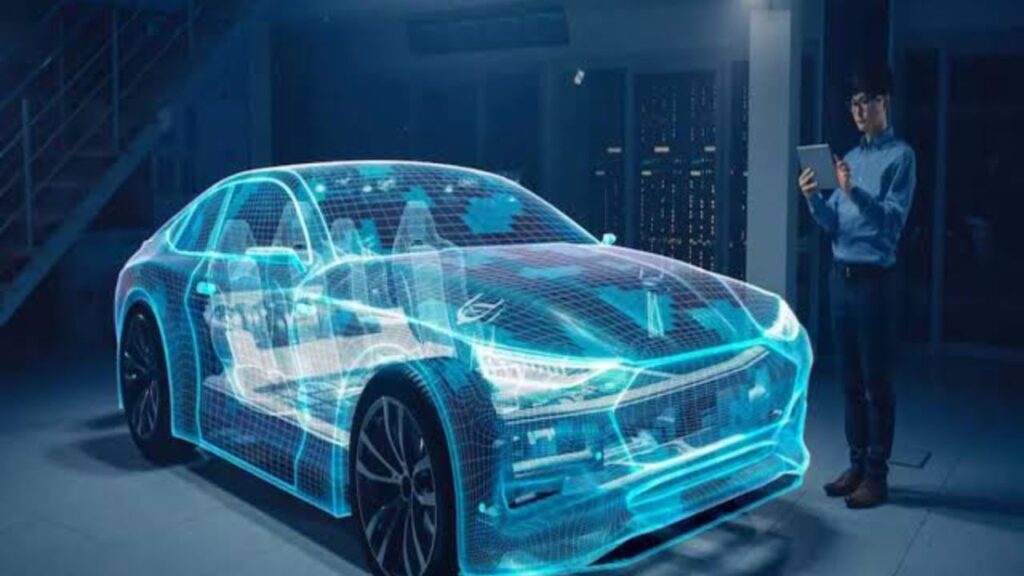

India’s rapidly expanding automotive industry is generating unprecedented volumes of data as connected vehicles and electric vehicles (EVs) become increasingly common on the country’s roads. Industry experts say the shift is creating an urgent need for advanced storage infrastructure capable of handling massive real-time data streams while supporting the next generation of connected mobility services.
Connected Vehicles Fuel Data Explosion
India’s EV market reached a significant milestone in 2025, with approximately 2.3 million electric vehicles sold, representing around 8% of the country’s 28 million new vehicle registrations. Alongside this growth, connected vehicles are emerging as powerful data generators, producing an estimated 25 gigabytes of information every hour through a network of sensors and onboard systems.
These vehicles continuously collect data on a wide range of parameters, including tyre pressure, road conditions, vehicle performance, battery health, navigation, driver behaviour, and safety systems. As the number of connected vehicles grows, the volume of automotive data is increasing at an exponential rate, transforming how manufacturers, fleet operators, insurers, and mobility service providers operate.
Data Reshaping the Automotive Value Chain
The surge in vehicle-generated data is influencing nearly every stage of the automotive lifecycle. During manufacturing, data analytics helps improve production efficiency and quality control. Once vehicles are on the road, real-time information supports predictive maintenance, fleet optimisation, enhanced customer experiences, and advanced safety features.
Government initiatives such as the AIS-140 vehicle tracking mandate have further accelerated telematics adoption across commercial fleets. What began as basic GPS-based tracking has evolved into sophisticated fleet management systems capable of monitoring vehicle health, fuel efficiency, route optimisation, driver performance, and regulatory compliance.
Industry observers note that India’s rapid adoption of connected mobility technologies is placing the country among the leading markets undergoing digital transformation in transportation.
Traditional Storage Systems Face New Challenges
While data has become one of the automotive industry’s most valuable assets, conventional storage infrastructure is struggling to keep pace with its scale and complexity.
Unlike traditional enterprise workloads, automotive data is generated continuously through high-frequency sensors and requires constant writing, processing, and retrieval. Existing storage systems often lack the endurance, speed, and reliability needed to manage these demanding workloads efficiently.
Experts point out that automotive environments present additional challenges. Storage devices installed inside vehicles must operate reliably under extreme temperatures, continuous vibrations, sudden power interruptions, and harsh road conditions without compromising performance.
Hybrid Storage Model Gains Importance
To address these challenges, the automotive sector is increasingly adopting a hybrid data architecture that combines edge computing with cloud-based storage.
Critical safety applications—including collision avoidance systems, automatic emergency braking, sensor fusion, and Advanced Driver Assistance Systems (ADAS)—require immediate processing within the vehicle itself. These functions rely on edge storage capable of delivering ultra-low latency and rapid data access without depending on external networks.
Meanwhile, less time-sensitive information such as vehicle diagnostics, predictive maintenance logs, anonymised usage statistics, and driving pattern analysis can be transmitted to cloud platforms for long-term storage and advanced analytics.
This combination enables manufacturers and service providers to balance real-time responsiveness with large-scale data intelligence.
Automotive-Grade Storage Becomes Strategic
Industry specialists believe that the success of this hybrid model depends heavily on the quality of onboard storage technology. Automotive-grade flash storage is increasingly viewed as a critical component of connected mobility infrastructure due to its durability, high endurance, and ability to support continuous data writing from multiple sensors.
Modern storage solutions are also expected to provide sufficient capacity for increasingly software-defined vehicles, which regularly receive over-the-air updates, new digital features, and cybersecurity enhancements throughout their operational life.
As vehicles become more autonomous and software-driven, storage technology will play a central role in ensuring consistent performance and system reliability.
Supporting India’s Next Mobility Revolution
With connected vehicles, EVs, and intelligent transportation systems becoming integral to India’s mobility landscape, the importance of robust data infrastructure is expected to grow significantly.
Industry experts emphasise that the future of automotive innovation will depend not only on the ability to generate data but also on storing, processing, and analysing it efficiently. High-performance automotive storage solutions are therefore emerging as a foundational technology that can convert vast volumes of raw vehicle data into actionable intelligence.
As India’s automotive ecosystem continues its digital transformation, resilient storage infrastructure is likely to become a key enabler of safer, smarter, and more connected mobility, supporting the country’s ambitions to build a future-ready transportation network.