
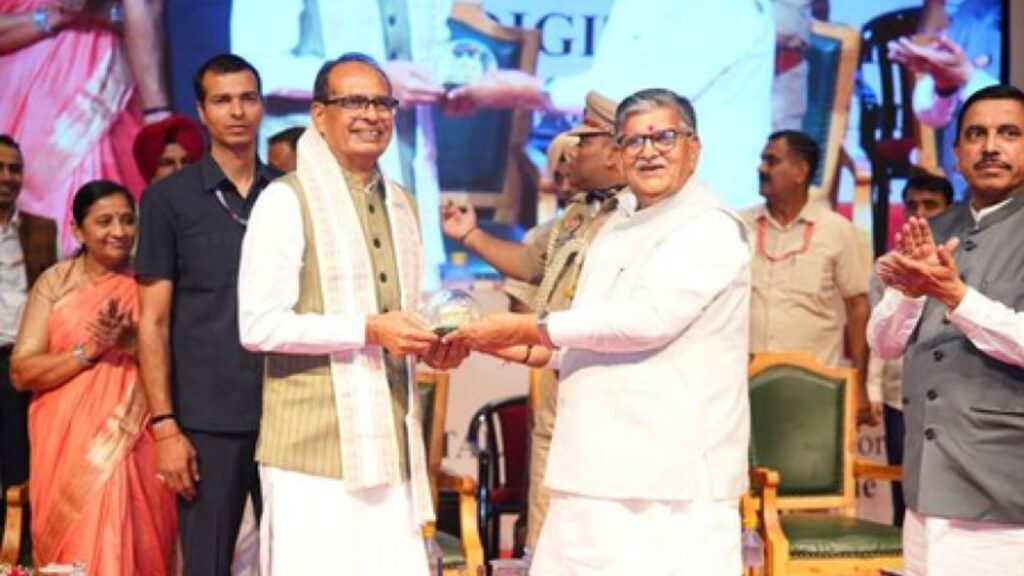

Union Minister for Agriculture and Farmers’ Welfare and Rural Development Shri Shivraj Singh Chouhan on Friday launched a Central Bank Digital Currency (CBDC)-based Direct Benefit Transfer (DBT) system in Chandigarh, marking a significant step towards modernising India’s Public Distribution System (PDS). The initiative aims to ensure that food subsidies reach beneficiaries in a secure, transparent and targeted manner.
The launch event, held at Tagore Theatre in Chandigarh, was chaired by Punjab Governor Shri Gulab Chand Kataria. Union Minister for Education, Consumer Affairs, Food and Public Distribution, and New and Renewable Energy Shri Pralhad Joshi, along with Union Minister of State for Food and Public Distribution Smt. Nimuben Jayantibhai Bambhaniya, attended as special guests.
Speaking at the event, Shri Shivraj Singh Chouhan described the CBDC-based DBT system as a major technological innovation designed to strengthen trust in welfare delivery. He said the initiative reflects the government’s commitment to ensuring that public benefits reach intended recipients without leakages or misuse.
Technology to Improve Welfare Delivery
Under the newly launched system, beneficiaries will receive digital benefits through the Central Bank Digital Currency platform, enabling them to purchase foodgrains and essential commodities directly. Unlike conventional cash transfers, the CBDC framework incorporates technological safeguards that restrict the use of funds exclusively for food-related purchases.
According to the government, the system has been designed to prevent diversion of subsidies while also giving beneficiaries greater flexibility. In addition to staple grains such as wheat and rice, eligible families may choose pulses and other essential commodities based on their requirements.
Shri Chouhan said the Chandigarh pilot project would serve as a model for wider implementation across the country if found successful. He praised officials and departmental teams for developing the innovative mechanism and called it an important milestone in India’s journey towards digital governance.
Focus on Farmers and Food Security
Reiterating the government’s commitment to farmers, Shri Chouhan stated that there would be no compromise on agricultural interests and food security. He said that all policy decisions and international agreements related to agriculture are guided by national priorities and the welfare of farmers.
Highlighting India’s strong foodgrain reserves, the Minister noted that the country is capable of meeting domestic demand while also exporting agricultural produce when necessary. He added that welfare schemes such as PM-KISAN Samman Nidhi and food subsidy programmes would continue to benefit millions of citizens through transparent and efficient delivery systems.
Strengthening Social Security
The Minister also underscored the importance of the Pradhan Mantri Garib Kalyan Anna Yojana, under which free foodgrains are provided to more than 80 crore people. He said the scheme not only ensures food security but also reduces household expenditure, allowing families to spend more on education, healthcare and other essential needs.
Shri Chouhan observed that Direct Benefit Transfer mechanisms have significantly reduced the role of intermediaries in welfare delivery. However, he pointed out that unrestricted cash transfers can sometimes be used for purposes other than those intended. The CBDC-based model addresses this concern by ensuring that subsidies are utilised only for essential food purchases.
Chandigarh as a National Model
Praising Chandigarh’s civic culture and administrative efficiency, Shri Chouhan expressed confidence that the city would successfully demonstrate the effectiveness of the new system. He urged officials to resolve operational challenges and prepare for future expansion to other parts of the country.
The Minister also paid tribute to freedom fighters and appealed to citizens to participate in the “Har Ghar Tiranga” campaign. He called upon people to contribute to nation-building through responsible citizenship and environmental initiatives such as tree plantation.
Emphasising Prime Minister Narendra Modi’s vision of citizen-centric governance, Shri Chouhan said the government’s objective is to ensure that policies are not confined to official records but bring visible improvements in the everyday lives of people. The launch of the CBDC-based DBT system, he said, is an example of technology being harnessed to make welfare schemes more efficient, transparent and inclusive.

Author: Shivam
Proficient Writer Contact: [email protected]