
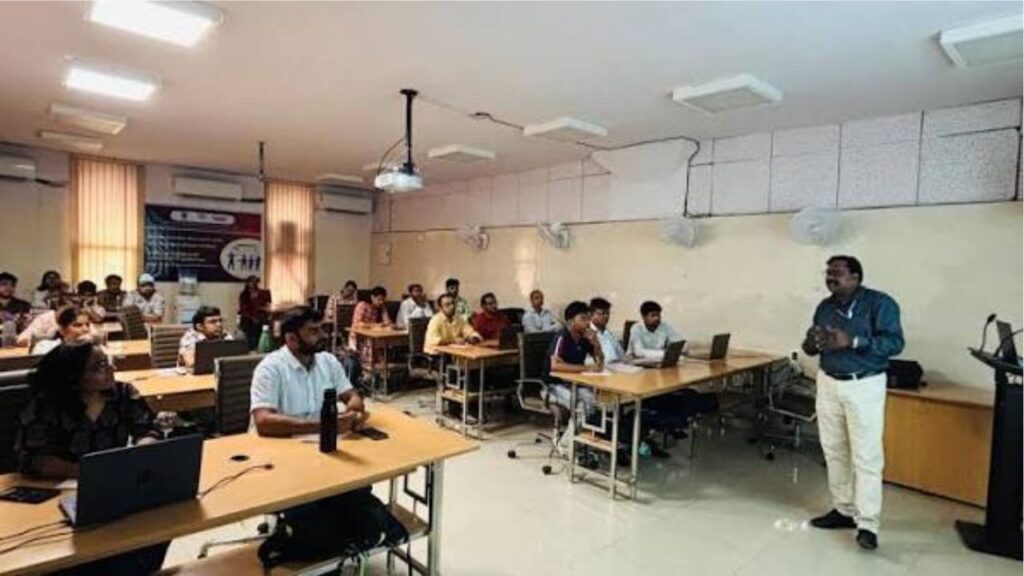

The CSIR-National Institute of Science Communication and Policy Research (CSIR-NIScPR) successfully organised a two-day skill development programme on “Science Communication and Emerging Trends” on 4–5 August 2026 under the CSIR Integrated Skill Initiative (Phase III). The training programme aimed to enhance the capabilities of professionals and researchers in communicating scientific knowledge effectively in the rapidly evolving digital era.
Organised by the Training Division of CSIR-NIScPR, New Delhi, the programme brought together 30 participants representing universities, research organisations, academic institutions, media houses, and industry from different parts of the country. The course was designed to provide participants with practical exposure to contemporary science communication methods through a combination of expert interactions, discussions, and hands-on learning activities.
The programme focused on strengthening the connection between scientific research and society by equipping participants with modern communication tools and techniques. With the growing influence of digital platforms and emerging technologies, the training highlighted the need for accurate, ethical, and engaging communication of scientific information among diverse audiences.
During the inaugural session, Dr. Geetha Vani Rayasam, Director, CSIR-NIScPR, welcomed the participants and emphasised the importance of promoting scientific temper through effective communication. She highlighted the institute’s continued efforts towards advancing science communication in India and stressed that responsible use of digital technologies and artificial intelligence can help make scientific knowledge more accessible, trustworthy, and impactful.
Mr. Mukesh A. Pund, Head of the Training Division at CSIR-NIScPR, delivered the welcome address and underlined the increasing role of science communication in reducing the gap between scientific developments and public understanding. Ms. Meetali Bharti, Nodal Principal Investigator of the programme, introduced the objectives and coordinated various activities throughout the training. Dr. Paramananda Barman, Course Coordinator, presented the structure of the programme and conducted several academic sessions.
The two-day course covered a wide range of subjects related to modern science communication practices. Participants were introduced to the fundamentals and different formats of science communication, including strategies for reaching specific audiences and understanding behavioural aspects influencing public engagement with science.
The sessions also focused on emerging areas such as social media management, podcast creation, infographic development, short video production, and the application of artificial intelligence-based tools in science communication. Discussions on ethics, professional responsibilities, and career opportunities in the field helped participants understand the broader scope and future potential of science communication.
Several experts from reputed institutions contributed to the training programme. Dr. Hemansi and Ms. Priyanka from Ashoka University shared their expertise on science communication approaches. Other resource persons included Dr. V. V. Binoy from the National Institute of Advanced Studies, Dr. H. S. Sudhira, Director of Gubbi Labs, Dr. Paramananda Barman, Dr. Meher Wan, and faculty members of CSIR-NIScPR.
To evaluate the effectiveness of the training, pre- and post-programme surveys were conducted. These assessments helped measure participants’ expectations, knowledge enhancement, learning outcomes, and changes in their understanding of science communication practices after completing the course.
The programme concluded with a valedictory session addressed by Mr. Mukesh A. Pund and Ms. Meetali Bharti. They congratulated the participants for successfully completing the training and encouraged them to utilise the acquired skills in their respective organisations to promote evidence-based and responsible science communication.
Mr. Salim Ansari, Co-Principal Investigator of the CSIR Integrated Skill Initiative, played a key role in coordinating the programme. Certificates were presented to all successful participants in recognition of their active involvement and completion of the training.
The initiative reflects CSIR-NIScPR’s commitment to developing skilled professionals who can effectively communicate scientific advancements and contribute towards building a scientifically aware society. By integrating traditional communication methods with digital innovations and artificial intelligence tools, such programmes are expected to play an important role in shaping the future landscape of science outreach in India.

Author: Shivam
Proficient Writer Contact: [email protected]