
El Niño impact on Indian agriculture:- India’s agriculture sector is facing growing concerns over weak rainfall, falling water levels and rising temperatures linked to El Niño. Farmers in Maharashtra, Bihar, Rajasthan and southern states are already reporting crop damage. Experts warn that a second El Niño event could put additional pressure on food production, farmer incomes and food prices.
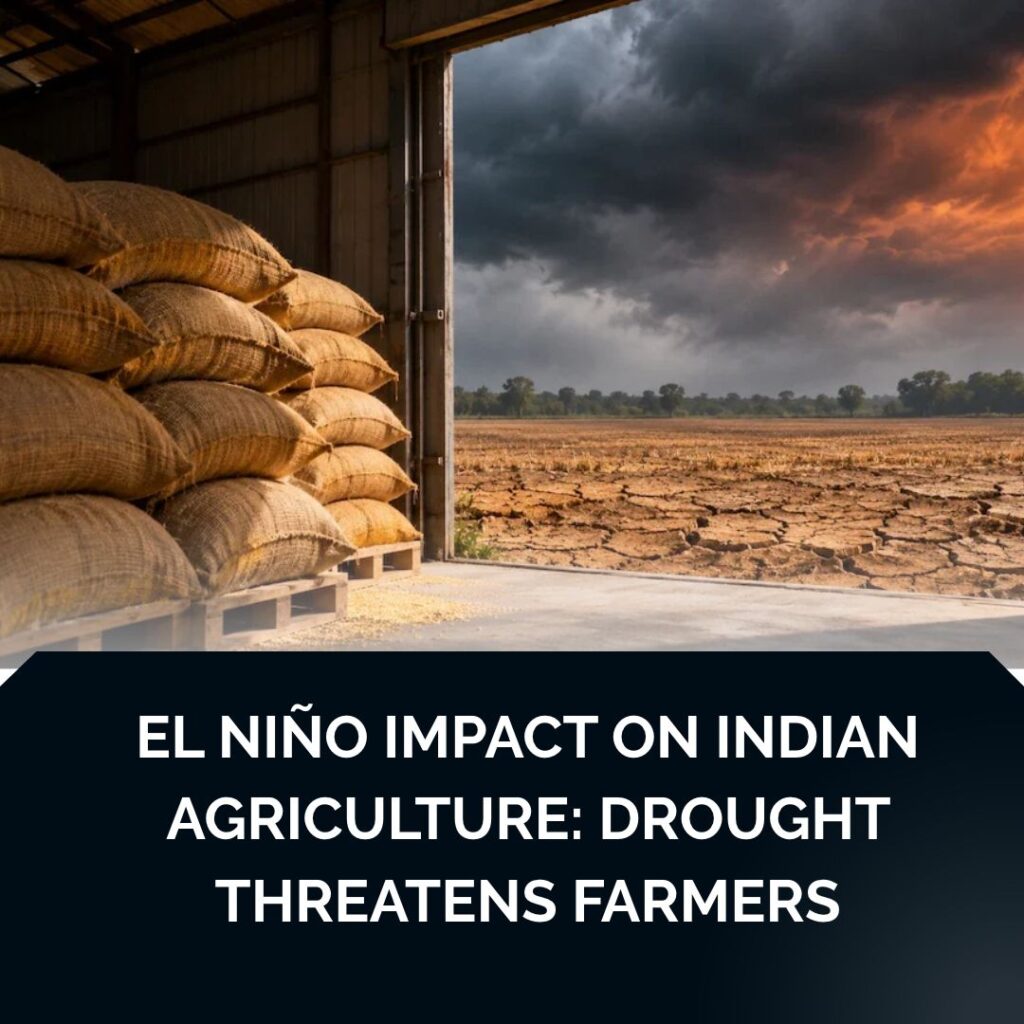
El Niño impact on Indian agriculture:- India’s farming sector may face a difficult period as the effects of El Niño increase the risk of drought, water shortages and lower crop production across several states. Farmers are already dealing with uncertain weather, poor soil conditions and declining water availability, raising concerns about the coming harvest seasons.
Maharashtra, Bihar, Rajasthan and Karnataka are among the states facing serious agricultural challenges. In several areas, rainfall shortages and unusual weather patterns have affected crop growth and farming activities.
Experts believe that if high temperatures and weak rainfall continue, wheat, pulses, millets, oilseeds and other important crops could see lower production.
El Niño is a natural climate phenomenon that develops when sea surface temperatures rise in the central and eastern Pacific Ocean. It affects weather patterns across the world and can weaken India’s southwest monsoon, increasing the possibility of drought.
El Niño impact on Indian agriculture:- Farmers Face Crop Losses in Several States
El Niño impact on Indian agriculture:- The impact of changing weather conditions is already visible in different parts of the country.
In Bihar, unexpected flooding towards the end of the monsoon season has left many agricultural fields waterlogged. This could delay the sowing of rabi crops, particularly wheat.
Farmers fear that delayed sowing and rising temperatures could reduce crop production. According to farmer Jan Gopal Singh, wheat production could fall significantly if weather conditions do not improve.
He believes that even under less severe conditions, wheat yields could decline by 10% to 15%. Higher temperatures during February may also affect grain development, resulting in smaller and poorer-quality wheat grains.
Rajasthan is also facing serious agricultural difficulties. The kharif season has affected crops such as moong and bajra. Agricultural expert Dr L.N. Harsh said moong production has been particularly badly affected.
Water shortages have made irrigation more difficult. Several canals are drying up, while high soil temperatures and increasing water salinity are creating additional problems for farmers.
Lower production has also pushed up crop prices. According to HSBC Research, moong prices have increased by around 24% year-on-year, while bajra prices have risen by 8%.
El Niño impact on Indian agriculture:- Southern States Face Serious Water Shortages
El Niño impact on Indian agriculture:- The drought situation is not limited to northern and western India. Southern states are also facing significant rainfall shortages and declining reservoir levels.
According to HSBC Research, southern India recorded a 24% rainfall deficit compared with its long-period average during the monsoon season. Reservoir water levels in the region were also around 46% below the 10-year average.
Karnataka has declared drought conditions in 226 out of its 240 taluks, highlighting the seriousness of the situation.
In Telangana, Chief Minister Revanth Reddy advised farmers to avoid growing one crop this season because of increasing pressure on water and electricity supplies.
Maharashtra is also facing widespread drought conditions, with around 85% of its talukas reportedly affected.
Agriculture experts say the combination of climate change and El Niño is making farming more difficult. Even crops considered relatively resistant to dry conditions, such as millets and pulses, are facing stress.
Soybean, sugarcane and groundnut production could also be affected if water shortages and high temperatures continue.
Oilseed prices have seen a particularly sharp increase. Soybean prices have reportedly climbed nearly 70% since October 2025.
El Niño impact on Indian agriculture:- India Has Faced El Niño Challenges Before
El Niño is not a new challenge for Indian agriculture. Historical weather records show that 16 of the 22 El Niño events recorded since 1901 were associated with drought-like conditions in India.
The 2023 El Niño event affected agricultural production, particularly wheat and rice. Lower rainfall during August also created problems for rice-growing regions.
Agriculture experts fear that similar conditions could affect crop production again.
Delayed wheat sowing is another major concern. Wheat planted after the middle of November may face lower productivity, particularly if temperatures rise during the crop’s growing period.
Other countries in Southeast Asia are also preparing for possible food supply disruptions. Malaysia, for example, has strengthened its food security preparations by maintaining rice reserves and ensuring adequate fish supplies.
India currently has stronger food grain reserves than in previous drought periods. However, experts warn that continued crop losses could put pressure on government stocks and food distribution programmes.
El Niño impact on Indian agriculture:- Can India’s Food Grain Stocks Handle Another El Niño?
El Niño impact on Indian agriculture:- India has a significant quantity of wheat and rice in its central food grain pool. These stocks help the government supply food grains through welfare schemes and manage shortages during difficult agricultural seasons.
According to Dr Ritu Srivastava, Associate Professor of Economics at K J Somaiya Institute of Management, the central pool holds around 87 million tonnes of food grains, compared with the required minimum stock of approximately 30.77 million tonnes.
However, government procurement, food distribution programmes and open-market sales continue to reduce these reserves.
She estimates that if annual stock losses remain between 15 million and 25 million tonnes, the additional grain reserves could decline considerably within two to three years.
A second El Niño event in 2028 could make the situation more difficult. The government may then have to reconsider export restrictions, increase food grain imports and reduce open-market sales to maintain domestic supplies.
Such developments could also increase cereal prices and create additional pressure on food security programmes.
Why Two Consecutive El Niño Events Could Be More Dangerous
One difficult agricultural year may be manageable for India because of its existing food grain reserves and government support programmes.
However, two successive El Niño-related disruptions could create a much bigger challenge.
A poor monsoon can reduce kharif production, while high temperatures and delayed sowing can affect the following rabi season. If similar weather conditions continue into the next agricultural cycle, farmers may face repeated crop losses.
This could affect wheat, rice, pulses, oilseeds and other essential food crops.
Food policy analyst Devinder Sharma believes that the combination of climate change and El Niño could widen the gap between rural and urban economic conditions.
Small and marginal farmers are likely to face the greatest financial pressure because lower crop production directly affects their household income.
El Niño impact on Indian agriculture:- What Should Farmers and Consumers Watch?
El Niño impact on Indian agriculture:- Agriculture experts believe that farmers and policymakers need to closely monitor weather conditions, water availability and crop production in the coming months.
The early 2027 wheat harvest will be an important indicator of how much damage has been caused by the current weather conditions.
Farmers and policymakers should also pay attention to reservoir levels before the 2027 kharif sowing season and changes in government food grain stocks.
For small farmers, the immediate priority should be protecting their income, managing water resources and choosing crops according to local weather and soil conditions.
Urban consumers may not face an immediate food shortage because India currently has substantial food grain reserves. However, continued production losses could eventually increase food prices.
India’s agricultural strength depends heavily on the monsoon, water availability and the ability of farmers to manage changing weather conditions. While the country has sufficient food grain reserves to deal with a short-term disruption, repeated drought conditions could put that security under pressure.
The biggest concern is not just one poor harvest but the possibility of consecutive difficult agricultural seasons. If another strong El Niño develops in the coming years, protecting farmers, maintaining food grain stocks and ensuring stable food prices will become major challenges for India.
Read more:- India Horticulture Production to Reach Record 386.9 Million Tonnes in 2025-26