
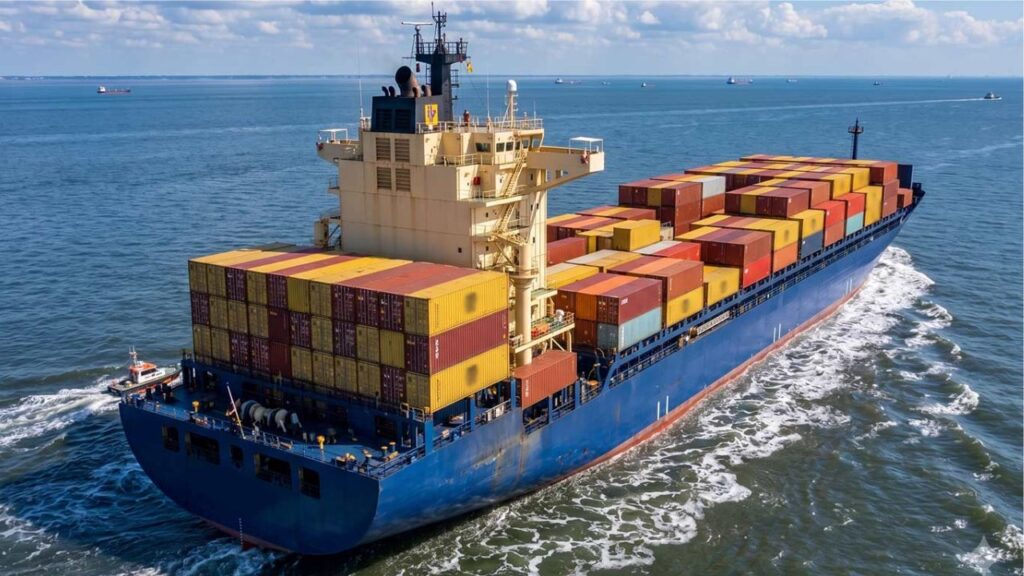

The Government has introduced a de minimis exemption from the requirement of obtaining a Registration-cum-Membership Certificate (RCMC) or Certificate of Registration for eligible export consignments valued up to ₹3 lakh. The move is aimed at simplifying export procedures and reducing the initial compliance burden faced by first-time exporters, MSMEs, artisans and small businesses.
The Directorate General of Foreign Trade (DGFT) has amended Para 2.57 of the Foreign Trade Policy, 2023 to provide the exemption. Under the revised provision, exporters will not be required to furnish an RCMC or Certificate of Registration for export consignments with a Free-on-Board (FOB) value of up to ₹3 lakh, wherever such certification would otherwise be required under the Foreign Trade Policy.
However, the existing requirement will continue to apply to export consignments exceeding ₹3 lakh, wherever an RCMC or Certificate of Registration is applicable. This ensures that the relaxation remains focused on smaller transactions while retaining the established compliance framework for larger exports.
The decision is based, in part, on the significant volume of low-value export transactions. Historical data covering the five-year period from 2021-22 to 2025-26 shows that small consignments constitute a substantial proportion of shipping bills but represent only a limited share of India’s total merchandise export value. Consignments valued up to USD 3,000, for example, accounted for around 43 per cent of shipping bills while contributing only 0.86 per cent of overall merchandise export value.
The exemption is therefore expected to simplify a large number of small export transactions without materially affecting the overall value of merchandise exports. It also seeks to make the process of entering international markets more accessible to businesses that are beginning their export journey.
Under the earlier framework, exporters generally needed to obtain an RCMC or Certificate of Registration from the relevant Export Promotion Council or Commodity Board wherever prescribed. For new and occasional exporters, obtaining the certificate could involve identifying the appropriate authority, preparing documents and completing the registration process before undertaking exports.
By removing this requirement for eligible consignments, the Government is providing small businesses with a simpler route to begin exporting. MSMEs, artisans, small manufacturers, entrepreneurs and other emerging businesses can use the opportunity to test overseas demand, serve international customers and develop an export track record without having to complete the RCMC process at the initial stage.
The measure is also expected to support e-commerce-led exports and shipments made through postal, courier and other emerging channels. These channels have increasingly enabled small businesses and individual entrepreneurs to reach customers in overseas markets without relying solely on traditional export models.
As businesses expand and begin handling consignments above the ₹3 lakh threshold, they can obtain membership of the relevant Export Promotion Councils or Commodity Boards. Such membership can provide access to export promotion programmes, market access initiatives and other institutional support available to established exporters.
The policy change may also contribute to a broader exporter base for Export Promotion Councils and Commodity Boards. By lowering the initial compliance barrier, more MSMEs and small enterprises may be able to enter international trade. As their businesses grow, these exporters can transition into the formal membership framework and participate in institutional export promotion activities.
The Government has positioned the measure as part of its broader effort to reduce regulatory compliance and make international trade more accessible. By providing relief for small-value consignments while retaining existing requirements for higher-value exports, the revised framework seeks to create a gradual pathway for new businesses to enter global markets and scale their export operations.
Also Read: Dr Jitendra Singh Inaugurates SPROUT Facility to Accelerate Climate-Resilient Crop Research

Author: Shivam
Proficient Writer Contact: [email protected]