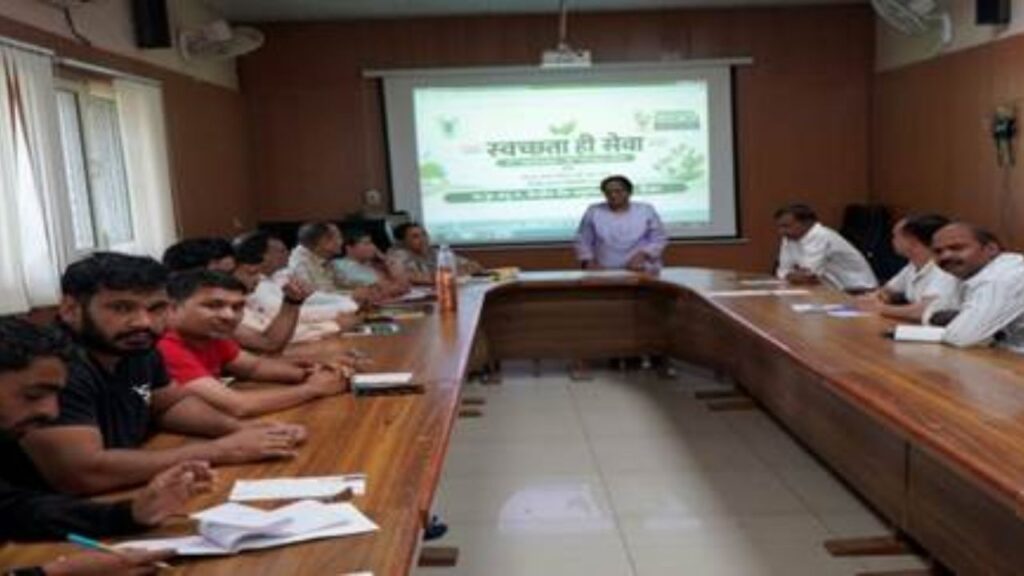

The Indian Council of Agricultural Research–Central Institute for Research on Buffaloes (ICAR-CIRB), Hisar, organised a Swachhata Samvad on 24 September 2026 as part of the ongoing Swachhata Hi Seva 2026 campaign. Conducted under the theme “Swachhta Mein Sahbhag – Swachh Bharat, Viksit Bharat,” the programme focused on strengthening awareness, participation and responsible cleanliness practices among contractual employees and Young Professionals (YPs).
The initiative was designed to encourage participants to view cleanliness as a collective responsibility rather than an activity limited to sanitation. Around 20 participants joined the interactive programme and shared their experiences and suggestions on maintaining clean and hygienic surroundings.
The Swachhata Samvad was organised in line with the Day-VIII action plan of the campaign. The action plan promotes dialogue and interaction as important tools for increasing public participation in cleanliness-related activities. Through direct discussions, participants were encouraged to identify practical challenges related to cleanliness and explore simple and sustainable solutions.
Unlike a conventional awareness programme based primarily on lectures, the Samvad adopted a participatory approach. Participants openly discussed cleanliness-related practices followed at their homes, workplaces and in their neighbourhoods. The exchange of views helped highlight the importance of individual behaviour in achieving broader cleanliness goals.
Several issues concerning waste management and hygiene were discussed during the programme. Participants exchanged views on preventing littering, ensuring proper disposal of waste, reducing unnecessary plastic consumption and improving waste segregation practices. The discussions also emphasised the need to adopt environmentally responsible habits in everyday life.
The programme highlighted that effective cleanliness efforts require regular behavioural changes and active participation from members of society. Simple measures such as avoiding littering, separating different categories of waste, reducing the use of disposable plastic and disposing of waste through appropriate channels can make a meaningful contribution to maintaining cleaner surroundings.
The interaction also underlined the significance of Jan Bhagidari, or public participation, in achieving the objectives of the Swachhata Hi Seva campaign. Participants recognised that government-led cleanliness initiatives can achieve greater impact when individuals and communities actively contribute through responsible daily practices.
The Swachhata Samvad further encouraged participants to carry the message of cleanliness beyond the workplace. By incorporating sustainable waste management practices into their personal lives and encouraging others to do the same, participants can help create greater awareness within their families and local communities.
The programme concluded with a collective commitment to promote cleanliness, responsible waste management and sustainable habits in the participants’ respective surroundings. The commitment reflected the central message of the campaign that lasting improvements in cleanliness depend on continuous participation and behavioural change.
The initiative at ICAR-CIRB, Hisar, thus reinforced the spirit of “Swachhta Mein Sahbhag” by providing a platform for dialogue, experience-sharing and collective action. Through such participatory activities, the institution aims to strengthen awareness about hygiene and sustainable waste management while encouraging employees and young professionals to contribute actively towards cleaner and healthier surroundings.
The Swachhata Samvad demonstrated how meaningful conversations and small individual actions can support wider cleanliness objectives. By promoting responsible waste disposal, reduced plastic use, waste segregation and community participation, the programme contributed to the broader vision of Swachh Bharat, Viksit Bharat.