
The Government of India has launched a focused initiative to transform the country’s toy industry into a globally competitive manufacturing and export hub. Union Minister of Commerce & Industry Shri Piyush Goyal announced the formation of a dedicated task force for the toy sector, aimed at identifying strategic interventions to help India achieve a 5 per cent share of the global toy market by 2032.
The announcement was made during the stakeholder interaction programme titled “Team Up for Toys: Driving SCALE, Innovation and Exports”, organised by the Department for Promotion of Industry and Internal Trade (DPIIT) at Vanijya Bhawan, New Delhi. The event brought together government officials, toy manufacturers, startups, artisans, designers, investors and other stakeholders to discuss the future roadmap for the sector.
Task Force to Focus on Six Key Areas
The newly constituted task force will work on six major objectives to strengthen India’s toy ecosystem. These include integrating Indian manufacturers with global value chains, enhancing production capabilities, addressing supply chain challenges, creating skilled employment opportunities, encouraging design and innovation, and improving ease of doing business.
The initiative is expected to provide a structured framework for developing a strong domestic toy manufacturing ecosystem while enabling Indian companies to compete effectively in international markets.
Toy Sector Playbook Launched for Industry Growth
During the event, Shri Piyush Goyal also launched the Toy Sector Playbook, a comprehensive guide designed to support manufacturers, startups, MSMEs, investors and entrepreneurs. The document provides practical guidance on various aspects of the toy industry, including manufacturing processes, value chain development, quality standards, compliance requirements, skill enhancement, product innovation, intellectual property protection and export opportunities.
The Playbook aims to help businesses understand market requirements and adopt strategies to improve competitiveness in both domestic and global markets.
Indian Toys Reflect Manufacturing and Cultural Strength
Addressing the gathering, Shri Piyush Goyal highlighted the significant transformation of India’s toy industry in recent years. He said the sector represents a unique combination of manufacturing capabilities, creativity, innovation and India’s rich cultural traditions.
The Minister noted that Indian-made toys are increasingly finding acceptance in global markets and called upon industry players to work towards creating a complete manufacturing ecosystem based on advanced technology, international quality standards, localisation and strong branding.
He emphasised that the focus should be on developing globally recognised Indian toy brands by promoting innovation, sustainability, design excellence and export competitiveness.
Government Support Driving Sector Expansion
The Commerce and Industry Minister highlighted the role of various government initiatives in strengthening the toy sector. Measures such as quality regulations through BIS certification, cluster development programmes and support for MSMEs and startups have contributed to improving the industry’s capabilities.
The government has been encouraging domestic manufacturers to enhance quality, adopt modern production techniques and reduce dependence on imports by building a robust local value chain.
Growing Toy Ecosystem in India
Dr. Kajal, Joint Secretary, SCALE, DPIIT, highlighted the contribution of the Steering Committee for Advancing Local Value Add and Employment (SCALE) and the RAPiD Unit in promoting the vision of Aatmanirbhar Bharat.
She stated that the toy sector was among the first industries selected for focused intervention due to its potential for generating employment, increasing local value addition and expanding exports.
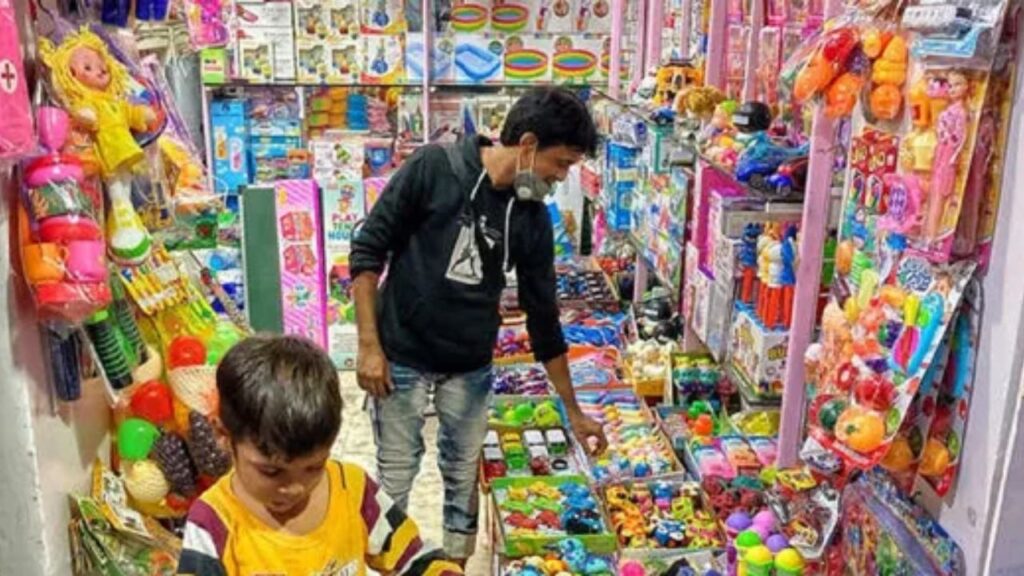
India’s toy ecosystem has witnessed substantial growth, with more than 21,000 MSMEs, over 770 DPIIT-recognised toy startups, nearly 50 toy clusters and more than 1,800 BIS license holders operating in the sector.
India Aims to Become Global Toy Manufacturing Hub
Chairman of SCALE, Dr. Pawan Goenka, highlighted the opportunity for India to emerge as a trusted global destination for toy manufacturing as international supply chains undergo diversification.
He stressed that increasing India’s share in the global toy market to 5 per cent by 2032 would require greater manufacturing scale, improved design capabilities, innovation-driven products and enhanced export competitiveness.
Industry Stakeholders Discuss Future Roadmap
The stakeholder discussions focused on strengthening manufacturing capacity, improving local supply chains, developing skilled manpower, attracting investments and increasing India’s participation in global toy value chains.
The event concluded with a renewed commitment from the government and industry to ensure that future toys are not only “Made in India” but also “Designed in India, Innovated in India and Branded in India”, positioning the country as a leading player in the global toy industry.
Also Read: Government Strengthens One District One Product Initiative to Boost Local Enterprises and Exports