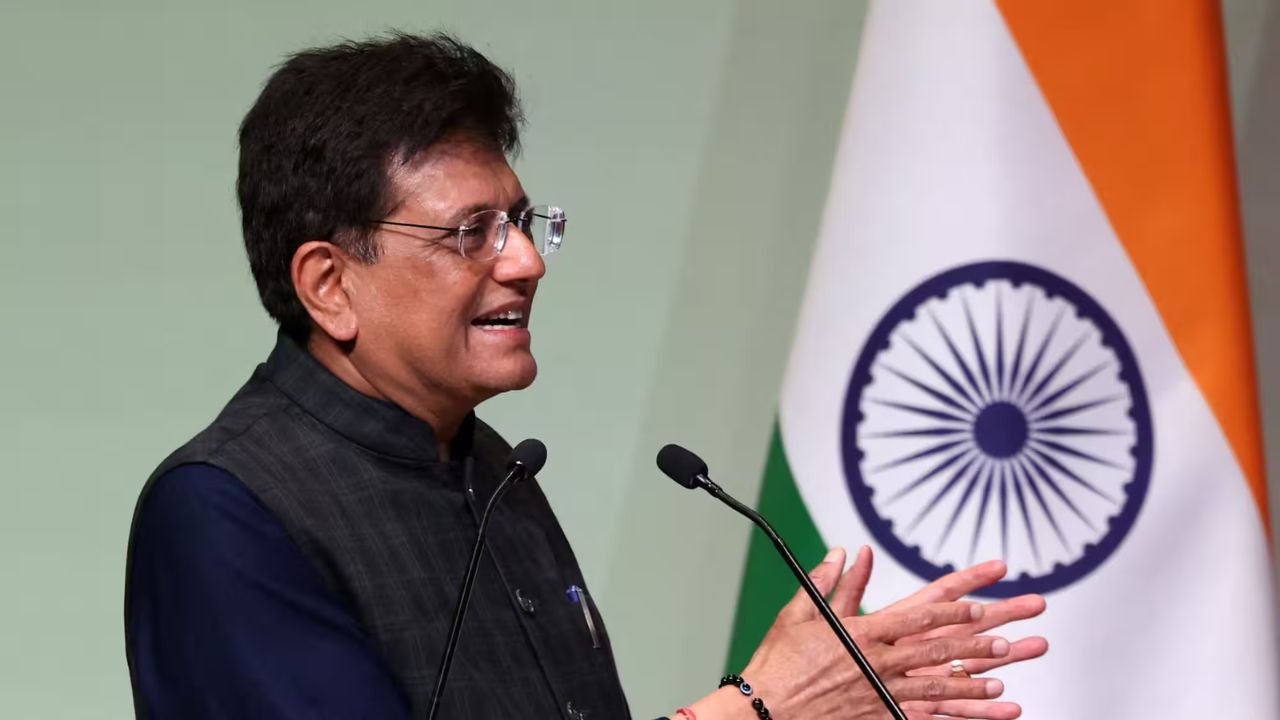

Union Minister for Commerce and Industry Piyush Goyal has underlined India’s growing engagement with the global economy, saying the country is strengthening its participation in global value chains and supply networks as it moves towards its long-term vision of becoming a $30 trillion economy.
Addressing the Leadership Dialogue at the 13th PAFI Annual Forum 2026 in New Delhi, Goyal said India’s expanding economic strength is influencing the way it approaches trade negotiations and international economic partnerships.
According to the Minister, India is currently negotiating with global partners as an economy valued at around $4 trillion. On a purchasing power parity (PPP) basis, India’s economy is estimated at approximately $20 trillion, making it the third-largest economy globally by that measure. He said the difference between the two measures is expected to narrow as India continues to expand and moves towards its $30 trillion economic ambition.
Goyal said India’s trade policy is increasingly focused on deeper integration with international markets. He highlighted the possibility of wider economic partnerships that can facilitate smoother movement of goods and services while also creating opportunities for tourism, education, sports and other areas of cooperation.
The Minister noted that India is pursuing trade and economic discussions with a wide range of countries and regional groupings. These include Canada, Chile, Peru, the Southern African Customs Union (SACU), Mexico, the Maldives, Eurasia, Central Asia, Russia, the Gulf Cooperation Council (GCC) and Israel.
These negotiations, he said, are part of India’s broader effort to create greater market access and strengthen the country’s presence in global value chains and supply chains. Greater economic integration is expected to provide Indian businesses with opportunities to expand their international footprint while improving the movement of goods and services across markets.
Goyal also pointed to the rapidly growing demand for advanced technologies in India. He said semiconductor consumption in the country is expected to exceed $150 billion annually over the next five years. The projected growth reflects the increasing importance of semiconductors across electronics, automobiles, telecommunications, artificial intelligence and other technology-intensive sectors.
Alongside semiconductor development, the Minister stressed the importance of building capabilities across the artificial intelligence ecosystem. He specifically highlighted areas such as large language models and agentic models, indicating the need for India to strengthen its technological capabilities as AI becomes increasingly important to the global economy.
India’s startup ecosystem was another key area highlighted during the address. Goyal recalled that when the Startup India initiative was launched, the country had only around 400–500 recognised startups. Since then, the ecosystem has expanded significantly, and India has emerged as the world’s third-largest startup ecosystem, with more than 120 unicorns.
The Minister said the next phase of growth should place greater emphasis on innovation and deep technology. Encouraging Indian startups to develop advanced technologies could help strengthen domestic capabilities and contribute to India’s participation in emerging global industries.
He also highlighted India’s progress in the space sector, noting that the country has become the third nation to have a rocket launched into space by the private sector. The development reflects the increasing participation of private enterprises in areas that were traditionally dominated by government institutions.
Goyal further emphasised the role of India’s young population in shaping the country’s future. He said young Indians are increasingly aware of developments and opportunities around the world. Their access to information and growing exposure to global trends, he added, can enable them to make informed choices regarding education, careers, entrepreneurship and other opportunities.
The Minister’s remarks at the PAFI Annual Forum highlighted India’s broader economic transformation, combining international trade engagement, technological development, startup innovation and youth participation. As India seeks to expand its role in global value and supply chains, these areas are expected to remain important components of its economic strategy.
Also Read: DPIIT Holds Stakeholder Workshop to Advance Ease of Doing Business and FTA Opportunities

Author: Shivam
Proficient Writer Contact: [email protected]