
Author: CA Aditya Sesh, Founder, Besiz Fund Service Private Ltd.
The global oil market is moving in precisely the direction I have consistently cautioned about: greater volatility, supply uncertainty and rising geopolitical risk. This is no longer a concern limited to India. The security of global crude supplies is increasingly vulnerable to geopolitical disruptions, sanctions and shipping constraints.
The passage of the Lindsey O. Graham Sanctioning Russia and Iran Act of 2026 has added another layer of uncertainty to global energy markets. The legislation provides for stronger sanctions against Russia and Iran and could create additional complications for countries purchasing energy from these markets.
For countries such as India, which remain heavily dependent on imported crude oil, this changing environment makes energy diversification not merely an economic objective but a strategic necessity.
The immediate question is not simply where India will buy its next barrel of crude. The larger question is how resilient India’s entire energy system will be if significant Russian or Iranian supplies face disruption, sanctions-related complications, higher insurance costs or logistical constraints.
This is also why the debate around E20 ethanol blending needs to be viewed through a wider energy-security lens. There can be legitimate discussions about vehicle compatibility, fuel efficiency, feedstock economics and implementation challenges. But opposing the broader transition to domestic alternatives without considering India’s import dependence risks looking at the issue too narrowly.
India has already demonstrated that domestic biofuel production can contribute to energy security. Ethanol blending has reached the 20% target, helping reduce crude-oil consumption and dependence on imported petroleum.
The next important area is Compressed Biogas (CBG).
The expansion of the GOBARdhan policy framework provides an opportunity to convert agricultural residue, cattle dung, press mud and other organic waste into clean fuel and organic manure. CBG production will have to be scaled up substantially if India wants to create another meaningful domestic energy source.
Yes, CBG may initially be more expensive than conventional alternatives in some applications. But energy security cannot always be measured only by the lowest immediate cost.
The real cost of imported energy becomes visible when geopolitical tensions suddenly disrupt supply chains, shipping routes, currencies and crude prices.
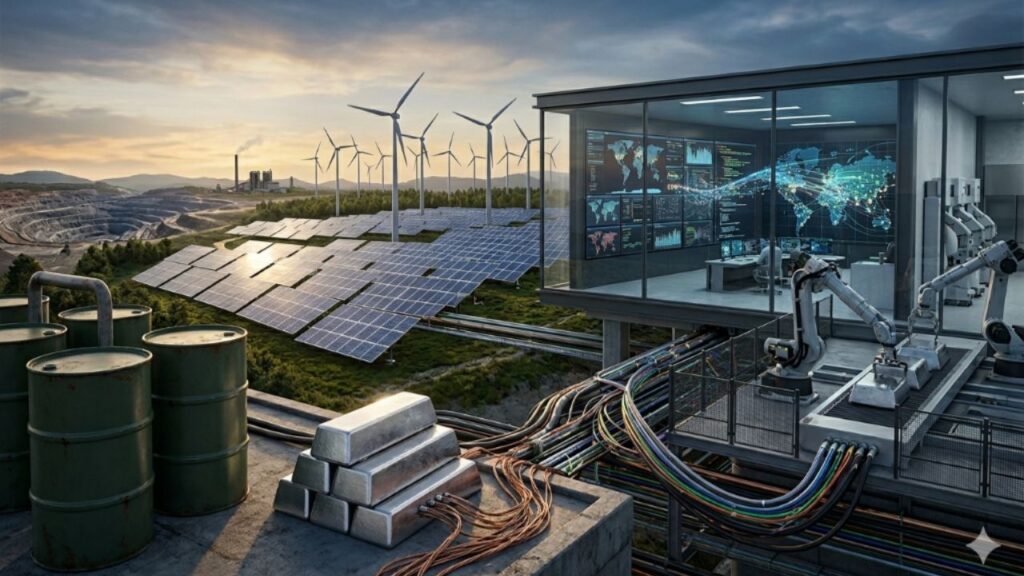
India therefore needs a diversified energy basket: crude from multiple sources, ethanol, CBG, renewable energy, electric mobility, greater efficiency and continued investment in domestic technologies.
The fact that India has managed to maintain energy supplies and economic momentum despite extraordinary global uncertainty is itself significant. But we should not mistake resilience so far for immunity from future shocks.
The energy strategy for the coming decade has to be about reducing vulnerability, not simply reducing the price of today’s fuel.
India’s challenge is therefore clear: prepare for a world in which oil remains important, but dependence on any single geography, supplier or energy source becomes increasingly risky.
Disclaimer: The views expressed are solely those of the author. The publication does not independently verify or endorse the facts stated in the article.