
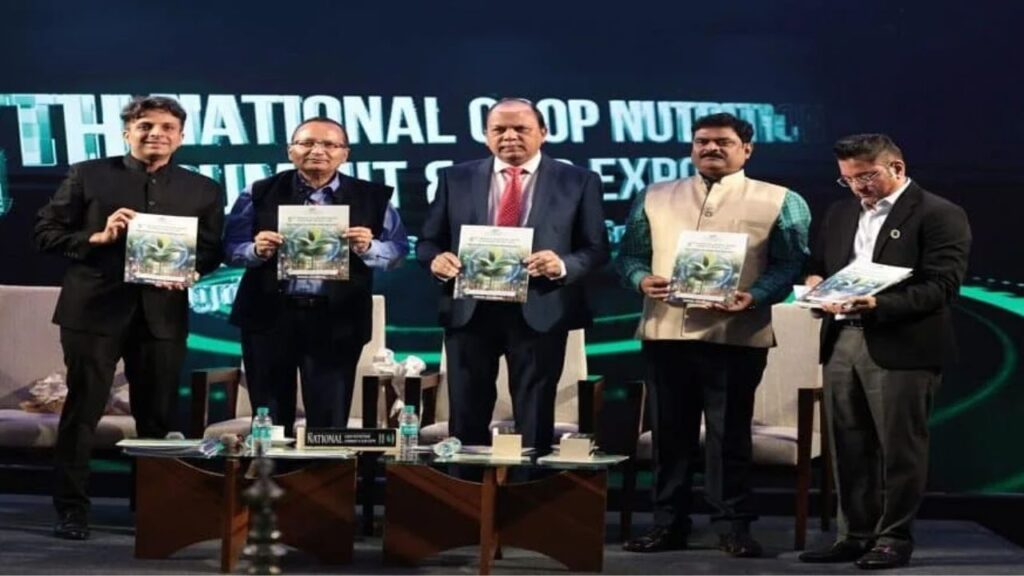

The Indian Micro Fertilizer Manufacturers Association (IMMA) has called for the decriminalisation of certain minor violations under the Essential Commodities (EC) Act, arguing that a distinction should be made between technical lapses and serious offences that warrant criminal prosecution.
Speaking after a government-industry dialogue on reforms concerning speciality fertilisers and bio-stimulants, IMMA President Rahul Mirchandani said the existing framework does not adequately differentiate between different categories of violations. According to the association, this can expose manufacturers to criminal proceedings even in cases involving relatively minor or procedural errors.
Mirchandani pointed to packaging-related requirements as an example, saying that even a small printing or punctuation error on fertiliser packaging could potentially result in criminal action under the current system. He said such provisions can create uncertainty for businesses and add to the compliance burden faced by manufacturers.
The micro fertiliser industry has therefore sought a more proportionate regulatory mechanism under the EC Act. The association wants minor and compoundable violations to be separated from serious offences, allowing less severe cases to be addressed through appropriate corrective or financial measures rather than prosecution.
At present, the EC Act does not provide a specific classification of offences based on their severity, according to IMMA. The association believes that introducing such a classification could help regulators focus enforcement efforts on deliberate or serious violations while preventing technical mistakes from escalating into criminal cases.
The demand comes amid wider discussions between the government and industry on improving the regulatory environment for speciality fertilisers and bio-stimulants. These products are increasingly being used as part of efforts to improve nutrient management, enhance crop productivity and support more efficient agricultural practices.
Industry representatives have maintained that regulatory reforms need to balance product quality and farmer protection with the practical requirements of manufacturers. They argue that compliance requirements are important for ensuring the availability of safe and effective agricultural inputs, but enforcement should also take into account whether a violation is intentional, causes harm or merely represents a technical deficiency.
The proposed differentiation between minor and serious violations could also contribute to what industry groups describe as an improved ease-of-doing-business environment. Under such a framework, procedural or documentation-related shortcomings could potentially be resolved through corrective action, while fraudulent practices, adulteration, deliberate misbranding or other serious violations could continue to attract stringent penalties.
For manufacturers, a clearer classification of offences could provide greater regulatory certainty and reduce the possibility of disproportionate action arising from inadvertent errors. It could also allow enforcement authorities to devote greater attention and resources to cases that pose a genuine risk to farmers, agricultural productivity or the quality of fertiliser products in the market.
The association’s demand reflects a broader industry push for regulatory systems that distinguish between compliance mistakes and substantive violations. Such an approach would seek to preserve the government’s ability to enforce standards while reducing the criminalisation of routine business errors.
The government-industry dialogue on speciality fertilisers and bio-stimulants provided a platform for stakeholders to discuss these and other reforms affecting the sector. As the agricultural input industry expands and product categories evolve, manufacturers are seeking regulations that provide clarity while maintaining adequate safeguards for farmers.
IMMA’s call for decriminalisation is consequently focused on creating a graded enforcement framework under the EC Act. The association has urged policymakers to consider separating minor, compoundable violations from serious offences so that enforcement is proportionate to the nature and impact of the violation.
Such reforms, if considered, could become an important part of efforts to streamline compliance in the fertiliser sector while retaining strong action against serious violations.