
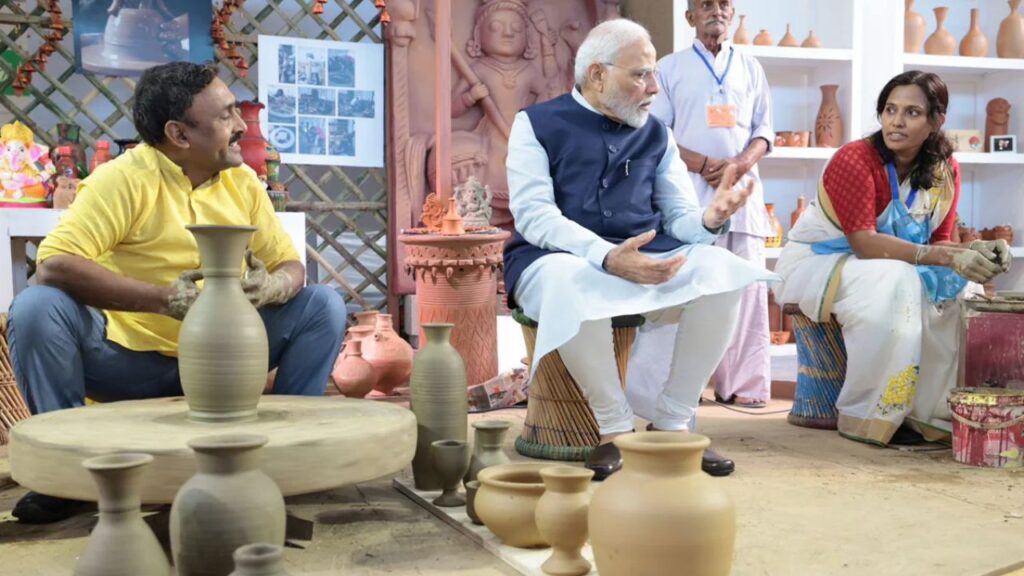

The PM Vishwakarma Scheme, launched on September 17, 2023, is emerging as a key initiative to strengthen India’s traditional artisans and craftspeople by providing comprehensive support ranging from skill development and financial assistance to marketing opportunities. The programme aims to preserve traditional occupations while improving the livelihoods of artisans through modernization, entrepreneurship and access to formal markets.
The scheme covers 18 traditional trades, including carpenters, boat makers, armourers, metal artisans, toolkit makers, locksmiths, goldsmiths, potters, sculptors and stone workers, cobblers, masons, basket and broom makers, traditional toy makers, barbers, garland makers, washermen, tailors and fishing net makers. These occupations represent a significant part of India’s rich cultural and craft heritage and support millions of livelihoods across rural and urban areas.
Holistic Support for Traditional Crafts
The PM Vishwakarma Scheme has been designed as an end-to-end support programme that extends beyond financial assistance. Eligible beneficiaries receive skill upgradation training, collateral-free credit support, modern toolkits, digital incentives and marketing assistance to help improve the quality of their products and expand their businesses.
Only artisans who successfully complete the three-stage verification process are eligible to receive the scheme’s benefits. The objective is to ensure that genuine craftspeople engaged in traditional trades receive targeted support.
A major focus of the programme is helping artisans transition into the formal economy. Beneficiaries are onboarded onto the Udyam Assist Platform, enabling them to access additional government schemes, priority sector lending and other financial services that can help modernize and scale up their enterprises.
Skill Development Driving Income Growth
Skill development remains one of the central pillars of the PM Vishwakarma Scheme. According to the government, 24.29 lakh beneficiaries have already completed basic skill training under the programme.
The training equips artisans with updated techniques, improved production methods, modern tools, innovative product designs, digital payment capabilities, entrepreneurial skills and marketing knowledge. These interventions are intended to improve both productivity and competitiveness in domestic and international markets.
The impact of these efforts is reflected in the findings of a concurrent evaluation conducted by the Indian Institute of Management (IIM) Mumbai. The study covered 11,591 beneficiaries across all States and Union Territories and also incorporated feedback from bank officials, Common Service Centres (CSCs), India Post personnel and training centres.
The evaluation found that 93% of beneficiaries reported a moderate to significant increase in their income after undergoing training, suggesting that the acquired skills have translated into tangible economic benefits and improved earning opportunities.
Expanding Market Opportunities
Marketing support is another important component of the scheme. To help artisans reach wider audiences, the government has been organizing exhibitions, trade fairs and promotional events across the country.
Beneficiaries are provided opportunities to showcase and sell their handicrafts through trade fairs and state-level exhibitions. In addition, online marketing support is being extended through multiple e-commerce platforms, allowing artisans to access customers across India as well as international markets.
These initiatives are expected to enhance product visibility, improve sales and encourage greater commercial adoption of traditional handcrafted products.
Nationwide Outreach
To spread awareness and facilitate greater participation, extensive outreach activities have been carried out across rural and urban regions.
According to the Ministry of Micro, Small and Medium Enterprises (MSME), more than 1,500 awareness programmes and camps have been organized nationwide. The government has also conducted over 50 workshops, 82 trade fairs, 37 state-level exhibitions and more than 50 flash mobs to promote the scheme and connect artisans with available benefits.
These events have played an important role in informing traditional craftspeople about registration procedures, training opportunities, financial assistance and market linkages under the scheme.
Strengthening India’s Artisan Economy
By combining traditional craftsmanship with modern skills, digital technology, formal finance and organized marketing channels, the PM Vishwakarma Scheme seeks to improve the economic prospects of artisans while preserving India’s rich craft traditions.
The government believes that by empowering artisans to expand their businesses and participate in the formal economy, the initiative will contribute to employment generation, entrepreneurship and inclusive economic growth.
The information was shared by Union Minister of State for MSME, Shobha Karandlaje, in a written reply in the Lok Sabha.

Author: Shivam
Proficient Writer Contact: [email protected]