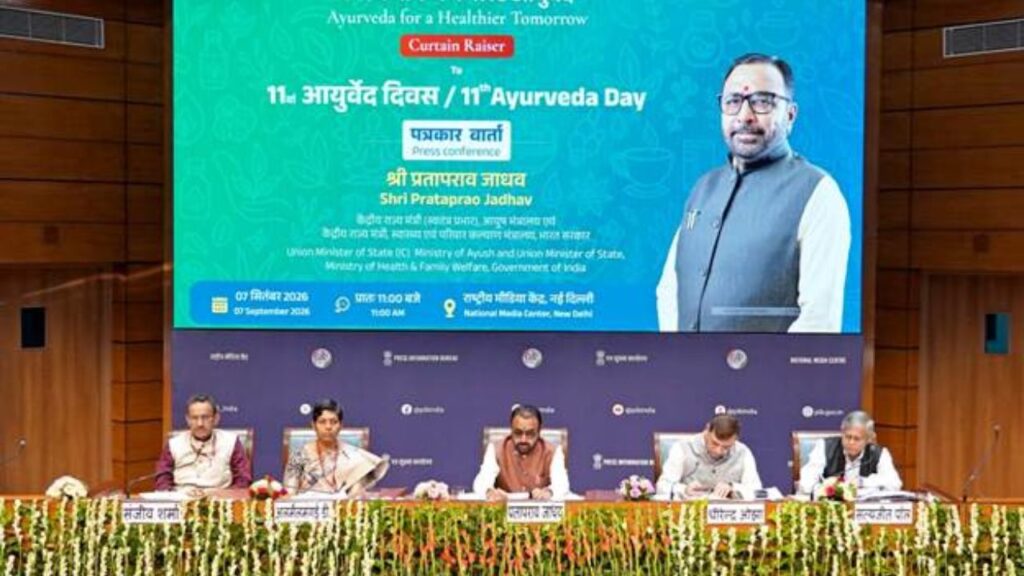

The Ministry of Ayush will host the national celebrations of the 11th Ayurveda Day in Nagpur, bringing together Ayurveda practitioners, institutions, researchers and stakeholders from across India and around the world. This year’s observance is centred on the theme “Ayurveda for a Healthier Tomorrow” (स्वस्थ भविष्य के लिए आयुर्वेद), highlighting the role of Ayurveda in promoting community wellbeing through evidence, research, innovation and wider adoption.
The national programme will serve as a platform for showcasing recent initiatives aimed at strengthening the Ayurveda ecosystem and enhancing the scientific understanding of traditional healthcare practices. A major highlight of the event will be the launch of the first-ever Report on the “Ayush Services Sector”, prepared by the Research and Information System for Developing Countries (RIS).
The report is expected to provide a comprehensive assessment of the Ayush services sector and offer insights into its development and contribution to the broader healthcare landscape. Its release marks an important step towards generating greater understanding of the services sector and supporting informed policy and research initiatives.
The celebrations will also feature the launch of Safety Dossiers on Gokshura (Tribulus terrestris) and Chandrasura (Lepidium sativum). These dossiers are part of efforts to strengthen the evidence base surrounding Ayurvedic practices and medicinal resources. Alongside these publications, the Ministry will introduce Standard Treatment Guidelines (STGs) on Skin Disorders, aimed at supporting standardised approaches to Ayurvedic care.
Several other reports and initiatives will also be unveiled during the programme. Among them will be “From Traditional Wisdom to Global Leadership: Ayush Vision 2030”, outlining a forward-looking perspective for the Ayush sector. The Status Report on Ayush-related Inventions in India will provide an overview of developments in innovation, while the CCRAS–AGNI Assessment Scale Web Portal will add another digital resource to the expanding research and knowledge infrastructure in Ayurveda.
The programme will also include two scientific sessions focusing on the future direction of Ayurveda and its potential role in addressing contemporary health challenges.
The first session, titled “Shashwatam to Vishwas – Ayurveda for a Healthier Tomorrow and the Road to 2047”, will examine the journey of Ayurveda from traditional knowledge towards greater public trust, scientific validation and future-oriented healthcare. Discussions are expected to focus on how Ayurveda can contribute to India’s long-term health objectives.
The second scientific session, “Integrating Therapies is needed to reduce NCD (Non-Communicable Diseases) Burden by 2027”, will focus on the growing challenge posed by non-communicable diseases. The session will explore the importance of integrated approaches to healthcare and the potential contribution of Ayurveda and other therapeutic systems in reducing the burden of NCDs.
Senior officials from the Ministry of Ayush, representatives of various Ayush councils and institutions, practitioners and other stakeholders will participate in the celebrations. The gathering is expected to facilitate dialogue, knowledge exchange and collaboration across different segments of the Ayurveda ecosystem.
The 11th Ayurveda Day celebrations will be observed across India as well as internationally, reflecting the growing global engagement with Ayurveda. The nationwide and worldwide programmes will provide opportunities for institutions and practitioners to promote awareness about Ayurveda and its potential contribution to healthier communities.
With its emphasis on scientific evidence, research, innovation and knowledge-sharing, this year’s Ayurveda Day is expected to reinforce the Ministry of Ayush’s focus on strengthening Ayurveda for present and future healthcare needs. The theme “Ayurveda for a Healthier Tomorrow” underscores the broader objective of connecting traditional wisdom with contemporary health priorities and advancing community wellbeing.

Author: Shivam
Proficient Writer Contact: [email protected]