
In a major breakthrough for sustainable agriculture, the ICAR–Indian Institute of Oilseeds Research (ICAR-IIOR), Hyderabad, has developed an innovative biopolymer-based Smart Seed Coating Technology that promises to improve seed quality, enhance crop establishment, and strengthen resilience against climate-related stresses. The technology is expected to play a crucial role in helping farmers tackle the growing challenges posed by climate change while improving productivity and profitability.
Agriculture in India is increasingly facing threats from erratic rainfall, prolonged droughts, temperature fluctuations, soil degradation, and the emergence of new pests and diseases. These challenges often affect seed germination and early crop establishment, which are critical stages for determining overall crop performance. Recognizing the importance of strong seed systems, ICAR-IIOR has developed a patented Smart Seed Coating Technology that transforms conventional seeds into high-performance planting material capable of withstanding adverse environmental conditions.
The technology utilizes biodegradable biopolymeric materials to create a multifunctional protective coating around seeds. This coating serves as a carrier for beneficial microorganisms, nutrients, micronutrients, plant growth-promoting substances, and crop protection agents. By delivering these inputs directly at the seed-soil interface, the coating creates a favorable microenvironment that promotes faster germination, stronger root development, improved seedling vigor, and greater tolerance to environmental stresses during the critical early stages of crop growth.
Field demonstrations conducted under real farming conditions have produced encouraging results. Trials carried out in Telangana on groundnut and soybean crops recorded yield increases of nearly 30 percent compared to traditional farming practices. Researchers noted that the technology significantly improved crop establishment and plant growth, leading to higher productivity and better economic returns for farmers.
Further validation through multi-location trials under the All India Coordinated Research Project on Seed (AICRP-Seed) demonstrated the versatility of the technology across a wide range of crops. Soybean, maize, groundnut, chickpea, cotton, mustard, and pigeon pea all showed improvements in seedling vigor, crop establishment, and final yield. Productivity gains ranging from 12 to 37 percent over untreated seeds highlighted the potential of biopolymer-based seed enhancement technologies as a scalable solution for diverse farming systems.
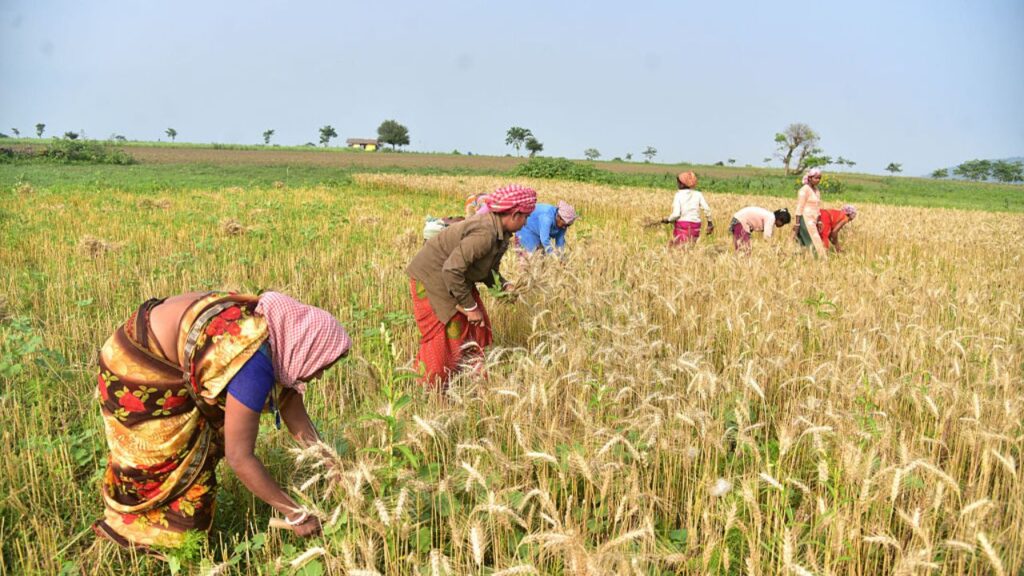
The innovation is particularly significant for rainfed agriculture, which covers a large portion of India’s cultivated land and remains highly vulnerable to climatic uncertainties. Delayed monsoons, intermittent dry spells, moisture stress, poor soil conditions, and pest infestations often result in poor seedling emergence and reduced crop yields. By protecting seeds and young plants during their most vulnerable growth stages, the Smart Seed Coating Technology can help farmers reduce production risks and improve crop resilience.
Unlike conventional seed treatments that typically address a single problem, the ICAR-IIOR platform offers a comprehensive seed enhancement solution. It can integrate multiple beneficial inputs into one coating, making it suitable for cereals, millets, pulses, oilseeds, fibre crops, fodder crops, vegetables, spices, and horticultural crops. This flexibility allows the technology to be customized according to crop requirements and regional farming conditions.
Scientists at ICAR-IIOR emphasized that future agricultural growth will depend heavily on technologies that maximize the efficiency of farm inputs while minimizing environmental impacts. Smart Seeds represent a significant advancement in this direction by delivering nutrition, biological support, and protection precisely where they are needed from the moment the seed is planted.
To facilitate large-scale adoption, ICAR-IIOR is promoting collaborations with public and private seed organizations. State Seed Development Corporations, the National Seed Corporation, cooperative seed federations, Farmer Producer Organizations (FPOs), seed processing units, seed hubs, and private seed companies are expected to play a key role in integrating the technology into seed production and distribution systems.
Researchers believe that widespread adoption of Smart Seed technologies can strengthen India’s agricultural resilience, improve resource-use efficiency, increase productivity, and contribute significantly to food and nutritional security. The innovation also holds promise for enhancing farmer incomes and supporting sustainable agricultural development in the face of evolving climate challenges.
Also Read: Centre Approves MSP Procurement of Pulses and Oilseeds Worth Over ₹1,670 Crore for Four States

Author: Shivam
Proficient Writer Contact: [email protected]