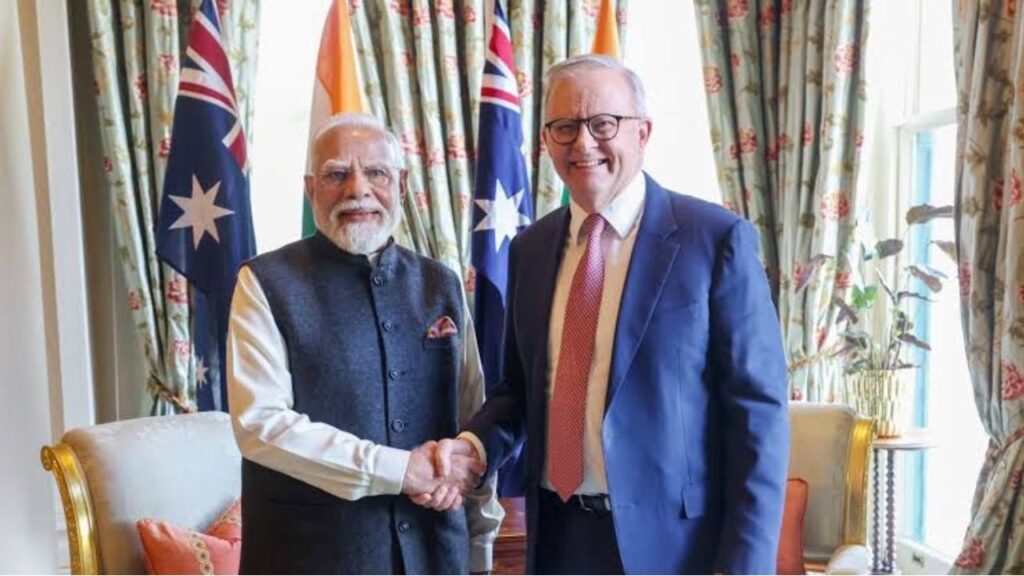

India and Australia have taken a significant step towards protecting traditional knowledge and strengthening global intellectual property rights by signing an agreement that grants Australia’s patent office access to India’s Traditional Knowledge Digital Library (TKDL). The agreement was concluded between the Council of Scientific and Industrial Research (CSIR) and IP Australia during the 3rd India–Australia Annual Summit held in Melbourne on July 9, 2026.
The agreement was signed in the presence of Prime Minister Shri Narendra Modi and Australian Prime Minister Anthony Albanese, highlighting its importance within the broader framework of bilateral cooperation. It was among the eighteen major outcomes announced during the summit, reflecting the expanding partnership between the two nations across science, technology, education, defence, energy security, cultural heritage and innovation.
Enhancing Patent Examination Through Traditional Knowledge
The agreement enables IP Australia to access the CSIR-managed Traditional Knowledge Digital Library while examining patent applications under Australian patent laws. This access will help Australian patent examiners identify existing traditional knowledge as prior art before granting patents, reducing the possibility of patents being issued for knowledge that has long existed in India’s traditional systems.
By incorporating the TKDL into its examination process, Australia aims to make patent assessments more accurate and efficient while ensuring that innovations based on documented traditional knowledge are evaluated appropriately. The arrangement also strengthens international cooperation in protecting indigenous knowledge from unauthorized commercial exploitation.
A Global Shield Against Biopiracy
India established the Traditional Knowledge Digital Library to address the growing challenge of biopiracy—the wrongful patenting of traditional medicinal practices and indigenous knowledge by entities without legitimate ownership. The digital repository serves as a comprehensive prior art database that documents centuries-old knowledge from India’s traditional healthcare systems in a format easily accessible to international patent offices.
The TKDL allows patent examiners to verify whether an invention claimed in a patent application is genuinely novel or already exists within documented traditional practices. This significantly reduces the risk of erroneous patent grants and helps preserve the rights of communities that have developed and maintained such knowledge over generations.
Shared Commitment to Indigenous Heritage
India and Australia both possess rich indigenous traditions, cultural practices and centuries-old knowledge systems that contribute significantly to their national heritage. These knowledge systems have often been vulnerable to misappropriation due to inadequate documentation and limited global awareness.
The new agreement reflects the shared commitment of both countries to preserving indigenous intellectual heritage while strengthening their intellectual property frameworks. It also demonstrates how international collaboration can support responsible innovation without compromising the rights of traditional knowledge holders.
Oversight and Implementation
The implementation of the agreement will be jointly supervised by senior officials from both countries. These include Andrew Wilkinson, Commissioner of Patents at IP Australia; Dr. N. Kalaiselvi, Director General of CSIR and Secretary, Department of Scientific and Industrial Research (DSIR); and Dr. Viswajanani J. Sattigeri, Scientist-H and Head of the CSIR-TKDL Unit.
Their collaboration will ensure that the agreement functions effectively and that access to the database remains consistent with the agreed Non-Disclosure Agreement (NDA) framework governing the use of sensitive traditional knowledge information.
About the Traditional Knowledge Digital Library
The Traditional Knowledge Digital Library was established in 2001 through a joint initiative of the Council of Scientific and Industrial Research (CSIR) and the Ministry of AYUSH. It is recognized as the world’s first digital repository created specifically for the defensive protection of traditional knowledge against wrongful patent claims.
The database currently documents more than 5.2 lakh formulations and practices drawn from Ayurveda, Unani, Siddha, Sowa Rigpa and Yoga. To facilitate global use by patent examiners, the information has been translated into five international languages—English, German, French, Japanese and Spanish.
With the inclusion of IP Australia, a total of eighteen patent offices around the world now have access to the TKDL under confidential agreements. Over the years, the database has become an important tool in protecting India’s traditional heritage, contributing to the revocation, rejection, amendment, withdrawal or abandonment of more than 375 patent applications worldwide after evidence from the TKDL established the existence of relevant prior art.
Strengthening Global Intellectual Property Cooperation
The CSIR–IP Australia agreement marks another milestone in India’s efforts to secure international recognition for its traditional knowledge systems. By expanding access to the TKDL, India continues to promote a balanced intellectual property regime that rewards genuine innovation while preventing the commercialization of centuries-old indigenous knowledge through inappropriate patents.
The agreement also reinforces the growing strategic partnership between India and Australia, demonstrating how scientific collaboration and intellectual property cooperation can contribute to the preservation of cultural heritage while supporting transparent and credible global patent systems.

Author: Shivam
Shivam Dwivedi is a senior journalist with extensive experience in research-driven journalism, policy communication, and multi-platform storytelling. His areas of interest include international relations, defence, science & technology, education, urban development, agriculture, spirituality, and environmental sustainability. His work focuses on in-depth analysis, public discourse, and impactful narratives across governance and development sectors, with a strong commitment to the Sustainable Development Goals (SDGs). Contact: [email protected]