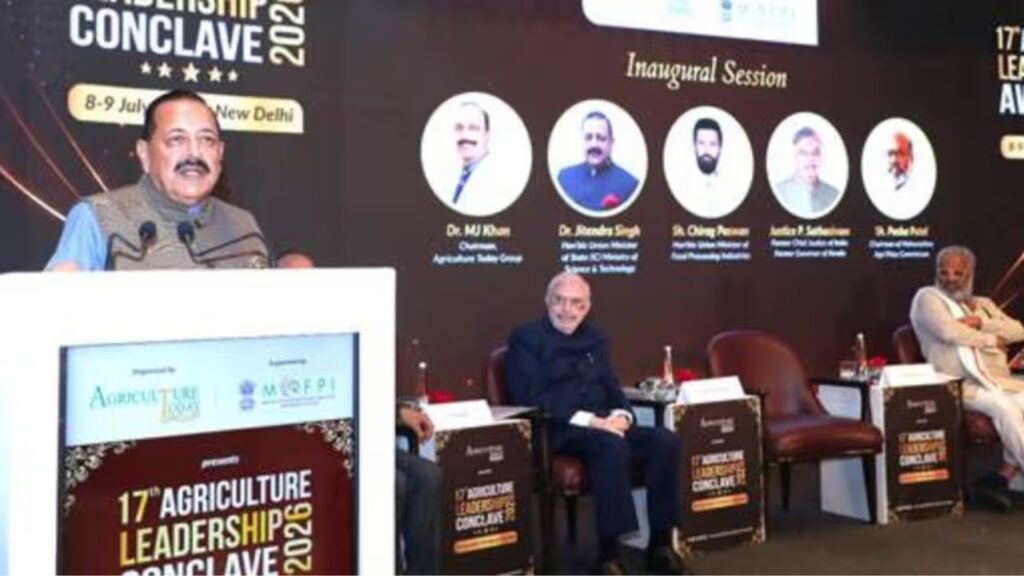

Artificial Intelligence (AI) and innovation-driven agricultural startups have the potential to significantly transform India’s farming sector, with AI alone capable of adding nearly ₹70,000 crore to the country’s agricultural economy, Union Minister Dr. Jitendra Singh said on Thursday.
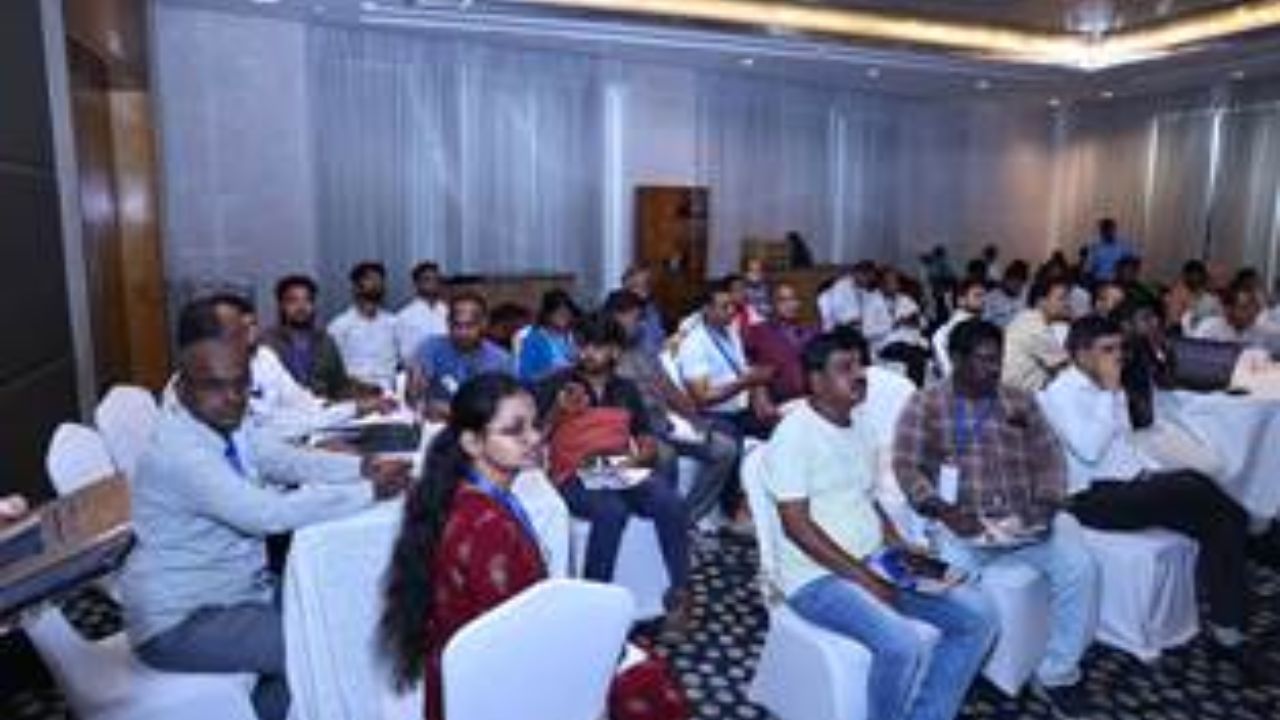
Addressing the 17th Agriculture Leadership Conclave 2026 in New Delhi, the Minister stressed that India’s next major startup revolution should emerge from its farms rather than being limited to technology hubs. The conclave, organised with the support of the Ministry of Food Processing Industries under the theme “Feeding the Future,” brought together policymakers, scientists, entrepreneurs, farmers and industry representatives to discuss the future of Indian agriculture.
Dr. Singh, who holds independent charge of the Ministries of Science & Technology and Earth Sciences, said agriculture has the potential to become a powerful engine of entrepreneurship, employment generation and wealth creation through the adoption of cutting-edge technologies.
AI to Improve Productivity and Farmers’ Income
Highlighting the growing role of artificial intelligence in agriculture, the Minister said AI-based technologies are helping farmers make informed decisions through predictive crop management, precision irrigation, weather-based advisories and efficient resource utilisation.
According to estimates cited by him, AI-enabled optimisation could help each farmer save nearly ₹5,000 annually, resulting in an overall value addition of around ₹70,000 crore to India’s agricultural economy. He noted that these technologies would not only enhance productivity but also improve resource efficiency and strengthen the country’s journey towards becoming a developed nation by 2047.
Dr. Singh observed that the agriculture sector must rapidly embrace emerging technologies as scientific advancements continue to reshape global farming practices. He said conventional methods alone would not be sufficient to ensure food security and maintain India’s competitiveness in the evolving global agricultural landscape.
Agri-Startups Seen as Drivers of Rural Growth
The Minister described agri-startups as the defining force of India’s agricultural future, emphasising that innovation in farming can create sustainable livelihoods while increasing farmers’ incomes.
He pointed out that India’s startup ecosystem has expanded dramatically over the past decade, growing from around 350 registered startups in 2015 to more than 2.3 lakh today. However, he argued that agriculture offers one of the country’s biggest opportunities for entrepreneurship, particularly for rural youth.
Dr. Singh said successful agricultural enterprises require practical knowledge, scientific innovation and market access rather than only formal academic qualifications. He added that government support, research institutions and digital learning platforms are making advanced technologies increasingly accessible in rural India.
Purple Revolution Showcases Science-Led Success
Citing the success of the CSIR Aroma Mission, the Minister highlighted how lavender cultivation in Jammu and Kashmir evolved into the widely recognised Purple Revolution.
He said the initiative has enabled nearly 8,000 to 9,000 young entrepreneurs to establish agri-based enterprises, with several reportedly earning annual incomes of ₹60-70 lakh or more. Inspired by its success, similar initiatives have been adopted in Himalayan and North-Eastern states, including Uttarakhand, Himachal Pradesh, Arunachal Pradesh and Nagaland.
According to Dr. Singh, the project’s success was made possible because scientific research was linked with industry from the outset, ensuring market access, value addition and commercial viability for farmers.
Climate-Smart Farming Becomes Essential
The Minister also underlined the growing impact of climate change on agriculture and said scientific innovations are becoming indispensable for building climate-resilient farming systems.
He highlighted the increasing use of satellite technology, weather forecasting, drone-based surveys, resource mapping and real-time advisories that enable farmers to make better decisions on sowing, irrigation and crop management.
Research institutions under the Ministry of Science and Technology, he said, are working on climate-resilient crop varieties, genomics, pest-resistant crops, precision farming and improved resource management to help farmers adapt to changing climatic conditions.
Digital Awareness Key to Technology Adoption
Dr. Singh stressed that technological innovation must be accompanied by greater awareness among farmers. He said scientific knowledge and government initiatives should be communicated through digital platforms, multilingual content and AI-powered language tools that farmers can easily access.
With nearly 70 percent of India’s population below the age of 40, he said digital communication and short-form educational content can play a crucial role in spreading agricultural knowledge and encouraging entrepreneurship among young people.
Calling for stronger collaboration between researchers, startups, industry and farmers, the Minister expressed confidence that science-led innovation would help build a globally competitive agricultural sector capable of generating sustainable economic growth, improving farmer incomes and contributing significantly to India’s vision of becoming a developed nation by 2047.