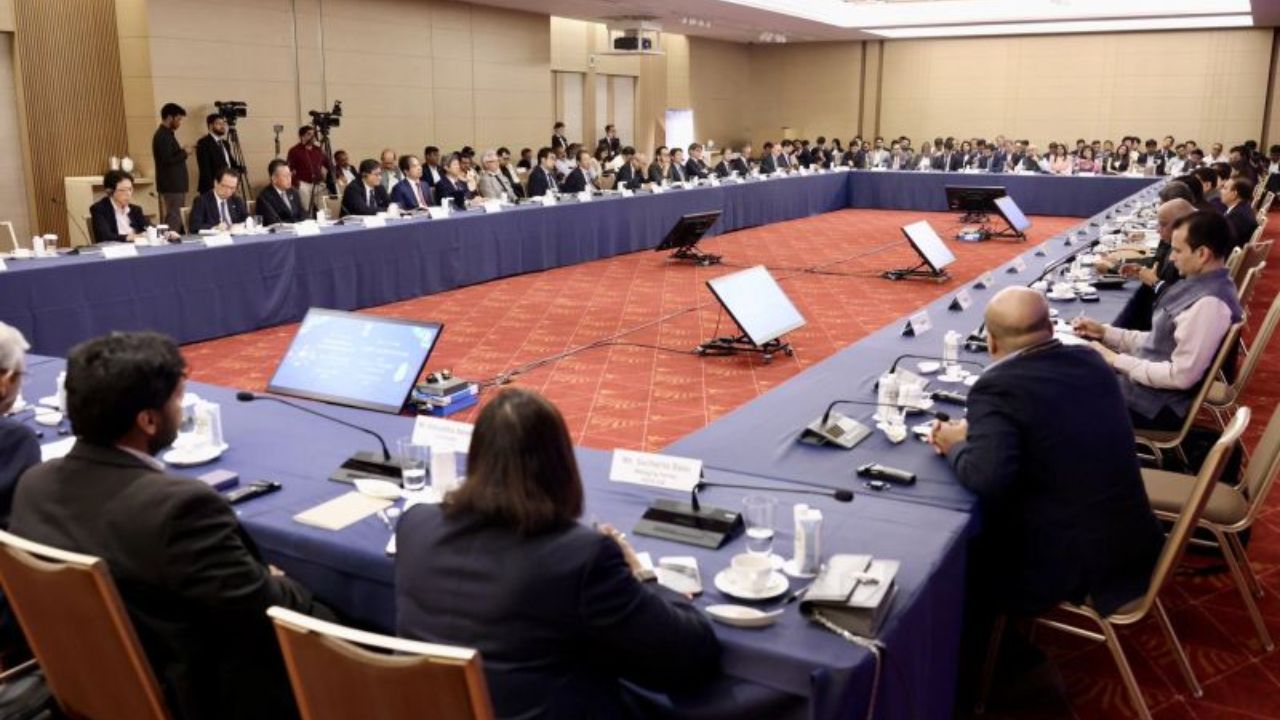
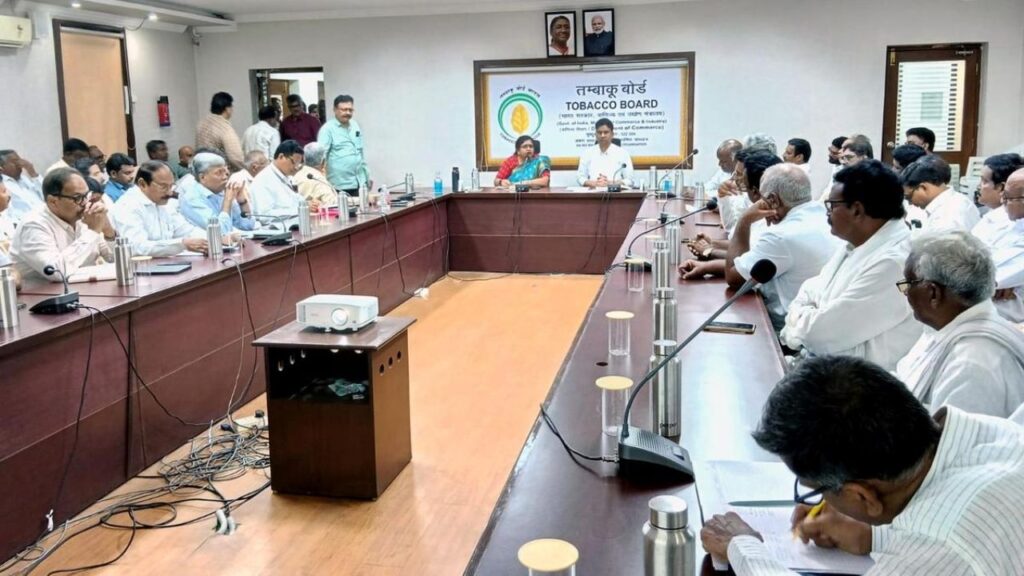

The Government of India has reaffirmed its commitment to supporting tobacco growers while enhancing the competitiveness of India’s Flue Cured Virginia (FCV) tobacco sector. A high-level review meeting, led by Additional Secretary in the Department of Commerce Shri Nitin Kumar Yadav, IAS, assessed the progress of the Andhra Pradesh FCV Tobacco Marketing Season 2025–26 and discussed measures to improve market efficiency, exports and farmer welfare.
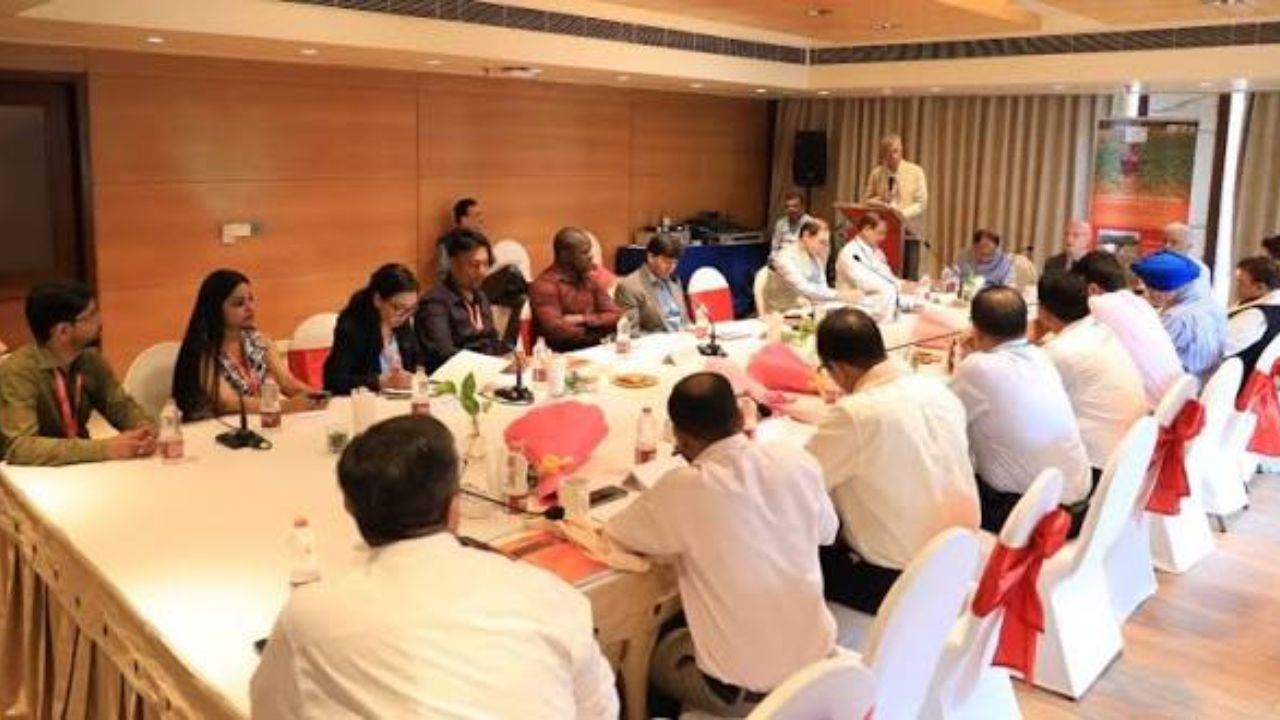
The meeting was held in Hyderabad and brought together representatives from across the tobacco value chain, including growers, manufacturers, exporters, dealers, trade associations and officials of the Tobacco Board. The discussions focused on addressing current market challenges while identifying opportunities to strengthen the sector’s long-term sustainability.
Focus on Protecting Farmers’ Interests
A key highlight of the review was the Government’s emphasis on safeguarding the interests of FCV tobacco farmers. Officials examined the prevailing market conditions and explored ways to ensure that growers receive timely procurement support and better market access.
Participants discussed strategies to accelerate the procurement process during the ongoing marketing season. Faster procurement is expected to improve liquidity for farmers and reduce delays in the sale of cured tobacco, helping growers secure better returns for their produce.
The meeting reflected the Centre’s continued focus on maintaining stability in the tobacco marketing system while ensuring that farmers remain at the centre of policy decisions.
Strengthening Exports and Market Access
Export promotion emerged as another major area of discussion. India is one of the world’s leading producers and exporters of FCV tobacco, making international demand a critical factor in determining the sector’s performance.
Officials reviewed measures aimed at facilitating exports and expanding India’s presence in overseas markets. Discussions included identifying new export destinations and strengthening trade relationships with existing importing countries.
Stakeholders also explored ways to improve the overall marketing ecosystem to enhance the global competitiveness of Indian FCV tobacco. Better coordination between growers, exporters, manufacturers and regulatory authorities was identified as an important step toward achieving sustained export growth.
Reforms in the Tobacco Board
The review meeting also examined several institutional reforms intended to improve the functioning of the tobacco sector. Among the major initiatives discussed was the restructuring of the Tobacco Board to make it more responsive to the evolving needs of growers and the industry.
The proposed reforms aim to streamline administrative processes, improve service delivery and strengthen support mechanisms for stakeholders across the tobacco supply chain.
Officials also reviewed plans to simplify registration procedures, making compliance easier for farmers and other participants in the sector. Simplified processes are expected to reduce administrative burdens while improving transparency and operational efficiency.
Technology to Modernise the Sector
Digital transformation featured prominently in the discussions, with the Government exploring technology-driven solutions to improve the efficiency and transparency of tobacco marketing.
One of the significant initiatives under consideration is the introduction of Artificial Intelligence (AI)-based grading of FCV tobacco. AI-assisted grading can help ensure greater consistency, objectivity and accuracy in assessing tobacco quality, thereby improving confidence among buyers and growers alike.
In addition, various digital initiatives were reviewed to modernise the sector, improve information flow and simplify interactions between stakeholders and regulatory authorities.
The meeting also assessed proposals to enhance benefits available under the Growers’ Welfare Fund, reflecting the Government’s focus on strengthening social and financial support for tobacco cultivators.
Promoting Crop Diversification
Recognising the need for sustainable agricultural practices, the review also included discussions on crop diversification in suitable tobacco-growing regions.
Officials examined opportunities to encourage farmers to adopt alternative crops where agro-climatic conditions permit. Crop diversification is expected to provide farmers with additional income opportunities while promoting balanced agricultural development.
The discussions highlighted the importance of adopting a long-term approach that combines market competitiveness with environmental and economic sustainability.
Coordinated Approach for Future Growth
Speaking during the meeting, Additional Secretary Shri Nitin Kumar Yadav expressed confidence that coordinated efforts among all stakeholders would help strengthen the Indian FCV tobacco sector over the long term.
He emphasised that collaboration between growers, exporters, manufacturers, trade bodies and the Tobacco Board would be essential to improving market performance, expanding exports and ensuring the sector remains globally competitive.
The review meeting underscores the Government’s broader strategy of combining policy reforms, technological innovation, institutional strengthening and farmer-centric initiatives to create a more resilient tobacco marketing ecosystem. As the 2025–26 marketing season progresses, the implementation of these measures is expected to improve market efficiency, support growers’ livelihoods and reinforce India’s position as a leading supplier of quality FCV tobacco in international markets.

Author: Shivam
Shivam Dwivedi is a senior journalist with extensive experience in research-driven journalism, policy communication, and multi-platform storytelling. His areas of interest include international relations, defence, science & technology, education, urban development, agriculture, spirituality, and environmental sustainability. His work focuses on in-depth analysis, public discourse, and impactful narratives across governance and development sectors, with a strong commitment to the Sustainable Development Goals (SDGs). Contact: [email protected]