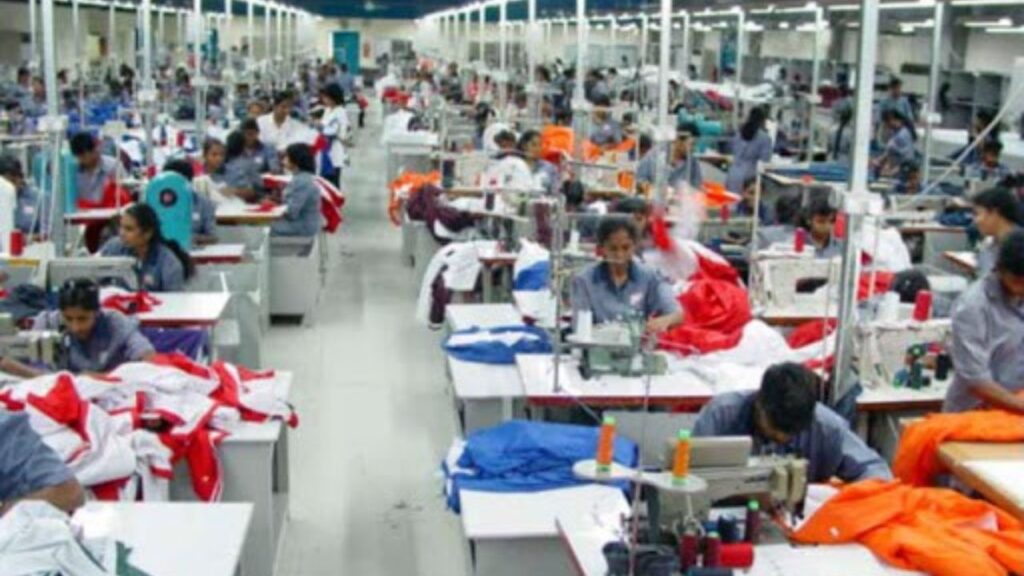

India’s textile and apparel sector, including handicrafts, recorded exports worth ₹3,25,339 crore in 2025–26, registering a growth of 1.8 per cent compared to ₹3,19,573.2 crore in the previous financial year. The sector witnessed export growth across more than 100 countries, reflecting the expanding global footprint of Indian textile products.
The information was shared by the Minister of State for Textiles, Shri Pabitra Margherita, in a written reply to a question in the Rajya Sabha. The Minister highlighted various government initiatives aimed at enhancing the competitiveness, productivity and export preparedness of the textile and apparel industry.
Government Initiatives to Boost Textile Sector Growth
The government has introduced several schemes to strengthen India’s position in the global textile market. These include the PM Mega Integrated Textile Regions and Apparel Parks (PM MITRA) Scheme, including the upcoming park at Amravati, Maharashtra, which aims to create integrated textile manufacturing ecosystems with modern infrastructure.
Other major initiatives include the Production Linked Incentive (PLI) Scheme for Textiles, designed to promote investment in high-value textile segments, and the National Technical Textiles Mission, which focuses on increasing the production and adoption of advanced textile products.
The SAMARTH Scheme for Capacity Building in the Textile Sector continues to support skill development and improve the availability of trained manpower across the industry. Additionally, the government has launched various export promotion measures, including Market Access Support and interest subvention under the Export Promotion Mission.
Measures to Support Exporters Amid Global Challenges
To address emerging challenges in international trade and strengthen exporters’ confidence, the government has undertaken several policy measures.
The Remission of Duties and Taxes on Exported Products (RoDTEP) Scheme has been extended until September 30, 2026, providing continued support to exporters. Similarly, the Rebate of State and Central Taxes and Levies (RoSCTL) Scheme, which has been operational since March 2019, has also been extended for six months up to September 30, 2026.
The RoSCTL Scheme provides rebates on embedded state and central taxes and levies for exported garments and made-ups, helping improve cost competitiveness for Indian exporters.
The government has also temporarily exempted customs duty on cotton imports under Customs Tariff Heading 5201 from June 1 to October 31, 2026. In addition, duty exemptions have been provided on key inputs in the man-made fibre value chain, including Purified Terephthalic Acid (PTA) and Mono-Ethylene Glycol (MEG).
Further, rationalisation of GST rates has been undertaken to address the inverted duty structure in the man-made fibre segment. The Resilience & Logistics Intervention for Export Facilitation (RELIEF) initiative has also been introduced to assist exporters impacted by geopolitical disruptions and challenges in maritime logistics in the Gulf and adjoining regions.
Focus on Market Diversification and Trade Agreements
The government has adopted a targeted export promotion strategy covering 40 priority countries to expand market access for Indian textile products.
India currently has 16 Free Trade Agreements (FTAs) in force, including the India–United Kingdom Comprehensive Economic and Trade Agreement (CETA). The country has also concluded negotiations for an FTA with the European Union and signed an agreement with New Zealand, creating new opportunities for textile and apparel exporters.
These trade agreements are expected to support market diversification, attract investment and strengthen India’s integration into global textile supply chains.
Strengthening Export Infrastructure and Global Branding
To improve export facilitation, the Ministry of Textiles has established six Textile Export Facilitation Centres (TEFCs), including one at Ichalkaranji, Maharashtra. These centres aim to provide guidance and support to exporters, especially small and medium enterprises.
The Ministry has also launched the India Immersive Experience Programme through the National Institute of Fashion Technology (NIFT) to showcase India’s textiles, handicrafts, culture and design capabilities to international fashion and design institutions.
The Textiles Summit held in June 2026 brought together state governments, industry stakeholders and academic institutions to discuss strategies for sectoral growth and unlocking the potential of textile-producing districts.
Bharat Tex Showcases India’s Textile Potential
The third edition of Bharat Tex 2026, held from July 14 to 17, showcased India’s complete textile value chain, including manufacturing, sustainability, innovation and design. The global event aimed to promote business partnerships and establish India as a leading sourcing and manufacturing hub for textiles and apparel.
The government has adopted a district-focused approach, identifying 100 champion and 100 aspirational textile districts to improve planning, implementation and export promotion. Textile and handicraft products from more than 500 districts were exported during 2025–26.
With continued policy support, improved market access, trade agreements and infrastructure development, India aims to further strengthen its position in the global textile industry while supporting exporters, particularly MSMEs, across the country.

Author: Shivam
Proficient Writer Contact: [email protected]