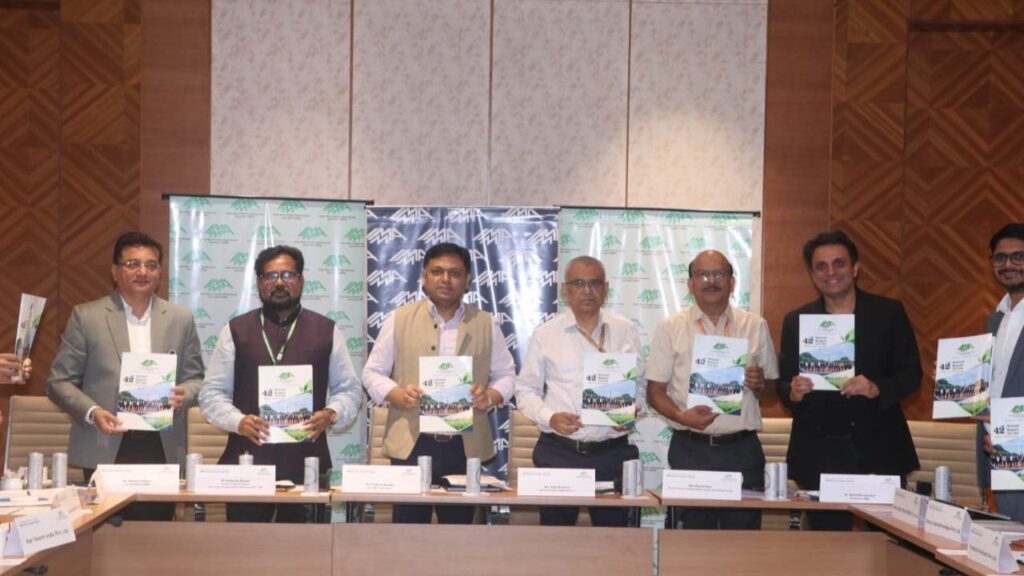

The Indian Micro-Fertilizers Manufacturers Association (IMMA) has called for a “One Nation, One License” digital framework for fertilizer licensing, freer exports of non-subsidised Made-in-India specialty fertilizers and micronutrients, and a uniform 5% GST for all FCO-notified plant nutrition products.
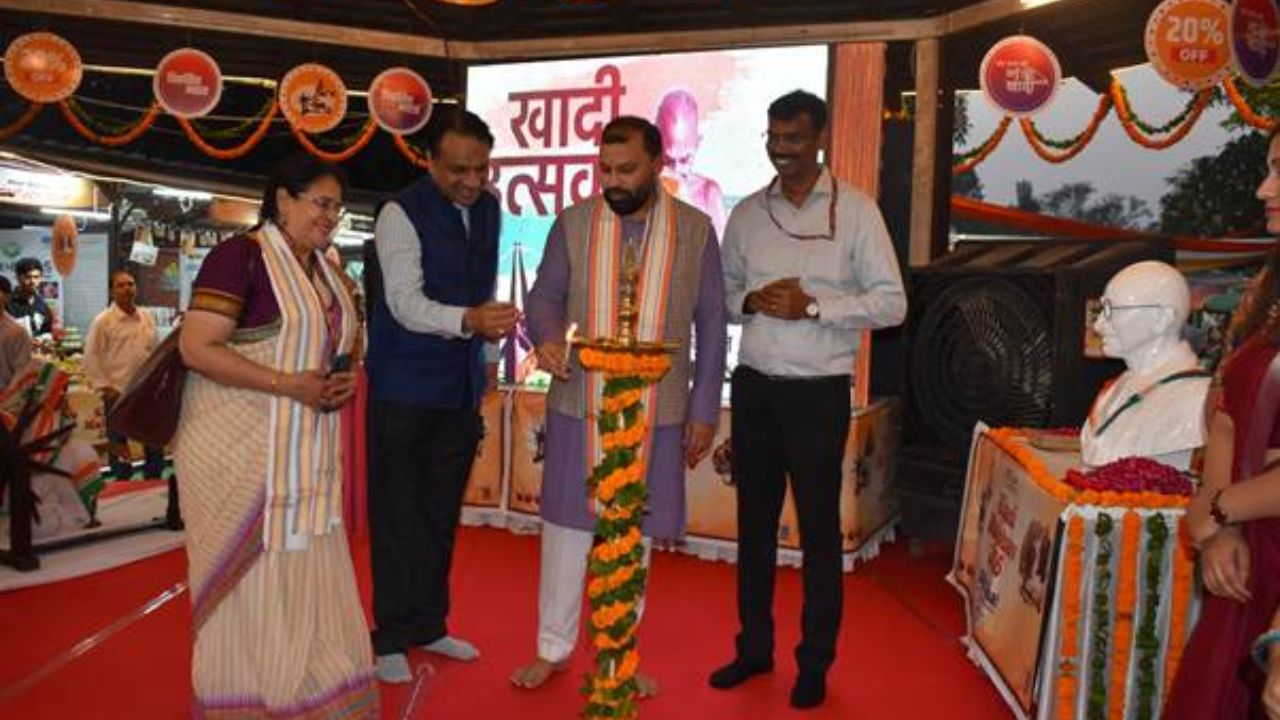
The proposals were discussed at the 3rd IMMA Industry–Government Roundtable held at Bharat Mandapam, New Delhi, which brought together senior Government representatives and stakeholders from the micronutrient, specialty fertilizer and plant nutrition industry.
The deliberations focused on ease of doing business and regulatory reforms, export facilitation and global market access, and GST rationalisation, with industry and Government representatives discussing specific measures that could be taken forward through evidence-backed submissions.
‘One Nation, One License’ digital framework proposed
Opening the first session, Dr Rahul Mirchandani, President, IMMA, urged the Ministry of Agriculture & Farmers Welfare to consider developing a national digital fertilizer licensing data stack to simplify the process of obtaining and renewing manufacturing licences and state marketing permissions.
Under the proposed framework, manufacturers could upload corporate, manufacturing, product, technical, statutory and other licence-related documents once on a secure national digital platform. After digital verification by the competent authorities, the authenticated documents could be used for applications across states instead of companies repeatedly submitting the same documents.
Drawing an analogy with digital platforms such as DigiYatra, IMMA proposed a system based on the principle of “submit once, verify once and use many times.”
“The objective should be simple: submit once, verify once and use many times. A One Nation, One License architecture need not take regulatory authority away from the states. It can give every regulator access to the same verified information and make approvals seamless, transparent, frictionless and time-bound. Digitalisation can simultaneously strengthen compliance and dramatically improve ease of doing business,” said Mr Sameer Pathare, Vice President, IMMA.
Responding to the proposal, Shri Subodh Kumar, Deputy Secretary (INM-Fertilizers), Ministry of Agriculture & Farmers Welfare, said the concept of a common digital data stack and a “One Nation, One License” framework could be considered for implementation.
Industry seeks FCO reforms
The first session also covered several issues under the Fertilizer Control Order (FCO).
IMMA members sought consideration of decriminalisation of minor and procedural offences, with a distinction between inadvertent or technical non-compliances and deliberate violations affecting fertilizer quality or farmer interests.
The industry also sought synchronisation of manufacturing and sales licence validity periods to reduce separate renewal requirements. Members further called for a review of the “reason to believe” provisions relating to inspections to improve transparency, consistency and predictability while retaining the Government’s ability to act against genuine violations.
The Roundtable also discussed technical discrepancies and implementation concerns relating to the 227 notified biostimulant products, which IMMA proposed to consolidate and formally submit to the Government.
Shri Shyam Babu, Director, Central Fertilizer Quality Control and Training Institute (CFQC&TI), advised industry to prepare a consolidated representation supported by technical information, documentation, data and specific examples.
He also encouraged manufacturers to consider voluntary adoption of anti-counterfeiting and traceability QR codes to help farmers, dealers and enforcement authorities identify genuine products and distinguish them from counterfeit or unauthorised material.
IMMA calls for freer exports of non-subsidised specialty fertilizers
The second session focused on India’s potential to emerge as a major global manufacturing base for micronutrients, customised fertilizers and specialty plant nutrition products.
Industry representatives highlighted India’s manufacturing capability and cost competitiveness but pointed to difficulties and delays in obtaining export NOCs and approvals, particularly for products falling under Chapter 31.
IMMA proposed that Made-in-India fertilizers that are neither subsidised nor facing domestic shortages should ordinarily be free to export.
The association suggested that instead of restricting an entire category of fertilizers, export controls could be based on a clearly defined negative list, limited principally to products where Government subsidy, domestic availability or strategic supply considerations require restrictions.
“Our proposition is that India should aspire to become the micronutrient and specialty fertilizer factory of the world. If a product is manufactured in India, is not subsidised and is not in domestic shortage, industry believes it should ordinarily be free to compete in global markets. Export restrictions should focus on a clearly identified negative list rather than constrain the wider specialty fertilizer ecosystem,” said Dr Rahul Mirchandani, President, IMMA.
Digital mechanism for export approvals proposed
Shri Prakash Kamble, Deputy Director, Directorate General of Foreign Trade (DGFT), said changes in the approval framework would require coordination between DGFT and the Ministry of Agriculture & Farmers Welfare.
During the discussion, he suggested examining a digital mechanism for online processing of information submitted by fertilizer exporters between the Ministry and DGFT, enabling applications to be scrutinised and approvals or decisions communicated within a defined timeframe.
Industry representatives noted that predictable and time-bound approvals are important for overseas markets where buyers operate according to fixed procurement seasons, shipping schedules and tender deadlines.
IMMA also proposed an enabling mechanism for custom-manufactured fertilizer formulations made exclusively to overseas buyer specifications.
Such products may differ from specifications prescribed for fertilizers intended for domestic sale. The association proposed permitting their manufacture and export where products are clearly labelled:
“GOODS MEANT FOR EXPORT / NOT FOR SALE IN INDIA.”
“Global customers frequently require formulations customised to their crops, soils, application technologies and national specifications. Indian manufacturers should be able to make products to those international specifications when the goods are exclusively meant for export and clearly identified as not for sale in India,” said Mr Vaibhav Kashikar, IMMA Past President and Managing Committee Member.
Shri Kamble also encouraged IMMA members to make greater use of the Government’s Trade Connect ePlatform at trade.gov.in, including its buyer-discovery and digital export-support capabilities.
Industry welcomes GST 2.0, seeks uniform 5% GST
The third session focused on GST and its impact on micronutrient and specialty fertilizer manufacturers.
IMMA members welcomed the direction of GST 2.0, particularly reductions affecting agriculture and plant nutrition, while highlighting the need for further rationalisation.
Industry raised concerns relating to the inverted duty structure, where input taxes can be higher than GST applicable to finished products, resulting in accumulation of input tax credit and additional working-capital requirements.
Members also highlighted instances where identical or substantially similar products may receive different tax treatment depending on pack size or classification, and sought clarity on GST applicable to customised fertilizers and mixtures of fertilizers.
The broad proposal emerging from the session was that:
Any product formally notified under any Schedule of the Fertilizer Control Order should attract GST at 5%.
“For the farmer, fertilizer is an input into agricultural productivity irrespective of the Schedule of the FCO under which a particular nutrient happens to be notified. The industry’s proposed end goal is therefore a simple principle — if it is an FCO-notified product, it should attract 5% GST. Simplicity and uniformity will reduce uncertainty for manufacturers, dealers and farmers alike,” said IMMA Managing Committee Member, Mr Kiran Antre.
Members also discussed demonstrating how any revenue impact arising from GST rationalisation could be considered alongside the potential increase in economic activity, exports and tax revenues generated by greater exports of non-subsidised fertilizers.
IMMA proposed engaging appropriate legal and tax experts to prepare a comprehensive representation supported by product classifications, examples of anomalies, working-capital impact and proposed amendments.
IMMA identifies priority follow-up actions
The Roundtable identified several priority actions, including development of a national digital licensing data stack, a consolidated representation on FCO reforms, wider voluntary adoption of QR-based anti-counterfeiting and traceability measures, and a framework for freer exports of non-subsidised Made-in-India micronutrients, customised fertilizers and specialty fertilizers.
Other follow-up areas include examination of a time-bound digital export approval mechanism, an enabling framework for export-only formulations, greater use of the DGFT Trade Connect platform, and preparation of a comprehensive representation seeking uniform 5% GST for FCO-notified products.
IMMA will support its recommendations with technical, legal, financial and market data to enable detailed examination by the concerned Ministries and departments.
Government–industry dialogue to continue
Concluding the Roundtable, IMMA President Dr Mirchandani said the discussions reflected the value of continuous and solution-oriented dialogue between policymakers, regulators and manufacturers.
“The industry’s objective is not deregulation; it is better regulation — regulation that protects farmers and product quality while also being digital, predictable, transparent and fast. India has the manufacturing capability to serve its farmers and simultaneously build a globally competitive specialty fertilizer industry. The opportunity now is to align regulation, taxation and export policy with that ambition,” he said.
He added that IMMA would consolidate the recommendations emerging from all three sessions and place detailed submissions before the concerned Ministries and departments.
“The Roundtable has given us a clear roadmap. Industry now has a responsibility to convert its proposals into evidence-backed recommendations, and we appreciate the willingness of Government representatives to examine constructive ideas. The next step is to translate this dialogue into implementable reforms,” Dr Mirchandani added.
About IMMA
The Indian Micro-Fertilizers Manufacturers Association (IMMA) is an industry association representing manufacturers engaged in micronutrients, specialty fertilizers and allied plant nutrition products in India. The Association works with policymakers, regulatory institutions, research organisations and industry stakeholders on matters relating to fertilizer quality, regulation, technology, farmer access, manufacturing competitiveness and market development.
Also Read: States Must Turn Agricultural Commitments into Results, Says Shivraj Singh Chouhan