
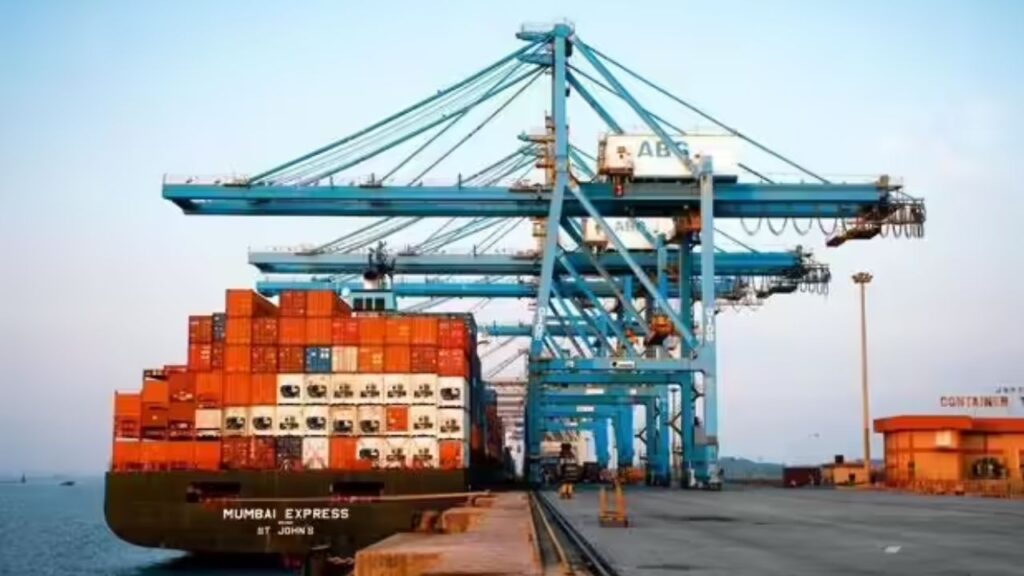

Mumbai Port Authority (MbPA) is preparing a comprehensive expansion strategy aimed at strengthening its position as a key maritime gateway by enhancing capacity across petroleum, LNG, automobile, cement and coastal cargo segments. The port is evaluating multiple infrastructure projects, including new crude oil jetties, petroleum product and chemical handling facilities, and storage infrastructure to support future growth in cargo volumes.
According to MbPA Chairperson Angamuthu, the authority has conducted an internal assessment to identify potential areas for expansion. The proposed plans focus on upgrading petroleum, oil and lubricant (POL) infrastructure to accommodate increasing refinery output from major oil companies such as Bharat Petroleum Corporation Limited (BPCL), Hindustan Petroleum Corporation Limited (HPCL), and upcoming refinery expansion projects in Maharashtra.
The port authority intends to work closely with industry stakeholders, government agencies and private partners to develop these facilities. POL cargo continues to remain the primary contributor to Mumbai Port’s overall traffic, accounting for nearly 60 per cent of its total cargo movement.
Rising Petroleum Cargo Drives Infrastructure Expansion
Mumbai Port has witnessed significant growth in crude oil handling over the years. Vessel-based crude oil movement increased to 26.24 million metric tonnes (MMT) in 2025-26, compared with 17.22 MMT in 2011-12, registering a growth of nearly 52 per cent.
The authority estimates that a 10 per cent rise in vessel-borne POL cargo could increase annual throughput by around 4.5 MMT. To support this growth, additional crude oil jetties and specialised petroleum and chemical berths are being considered as part of the port’s long-term development roadmap.
Mumbai Positioned as Future LNG Bunkering Hub
Mumbai Port is also exploring opportunities in the emerging LNG bunkering sector. With its strategic location along the major maritime route connecting the Middle East and the Far East, the port has significant potential to serve as a future LNG fuel hub.
Angamuthu highlighted that LNG adoption is gaining momentum, particularly among container vessels. Given the presence of Jawaharlal Nehru Port Authority (JNPA) nearby, Jawahar Dweep has been identified as a suitable location for developing LNG bunkering facilities.
The move aligns with global efforts to promote cleaner marine fuels and reduce emissions from shipping activities.
Automobile Handling Capacity to Receive Major Boost
Beyond energy-related cargo, Mumbai Port is also focusing on expanding its automobile handling capabilities. The port currently operates a modern Roll-on/Roll-off (Ro-Ro) facility and handled around 0.81 lakh export-import automobiles during financial year 2025-26.
Its strategic location provides a competitive advantage due to proximity to automobile manufacturing clusters in Pune, Chakan and Sanand, along with strong road and rail connectivity. The upcoming automobile manufacturing facilities in Aurangabad are expected to further increase demand for vehicle export and import services through Mumbai Port.
The port is considering the development of a dedicated automobile storage facility within its docks with a capacity to accommodate nearly one lakh vehicles. This expansion would significantly enhance its ability to handle EXIM automobile shipments.
The changing cargo profile of Mumbai Port also reflects the country’s transition towards green mobility. Recently, the port handled 861 heavy-duty electric trucks from the vessel MV GRANDE SHANGHAI in a single operation, marking a shift towards supporting the movement of electric vehicles and clean-energy equipment.
Cement Logistics and Coastal Shipping Emerge as Growth Areas
Mumbai Port is also planning infrastructure for cement storage and distribution. The proposed cement silo facilities would allow the port to handle around 2.0 MMT of domestic cement transported through railway wagons. The initiative is expected to improve supply efficiency for Mumbai’s growing construction sector.
The port is also looking to benefit from the upcoming Coastal Cargo Promotion Scheme being finalised by the Ministry of Ports, Shipping and Waterways. Coastal transportation is considered an environmentally sustainable alternative to road freight, offering lower emissions per tonne-kilometre.
According to MbPA, coastal movement of domestic automobiles and other goods can play an important role in reducing logistics costs while supporting India’s low-carbon transportation goals.
Record Cargo Performance Highlights Growth Momentum
Mumbai Port recorded its highest-ever cargo throughput of 75.15 MMT during 2025-26, rising from 53.32 MMT in 2020-21. The achievement represents a compound annual growth rate of approximately 7 per cent over five years.
With planned investments in energy infrastructure, automobile logistics, cement handling and sustainable shipping solutions, Mumbai Port aims to strengthen its role as a modern, diversified and future-ready maritime hub supporting India’s economic growth.

Author: Shivam
Proficient Writer Contact: [email protected]