
Scientists have developed a new theoretical framework that could help overcome one of the major challenges in building future quantum communication networks. The study introduces a protocol that enables stronger quantum connections without destroying existing network structures, paving the way for more efficient and scalable quantum architectures.
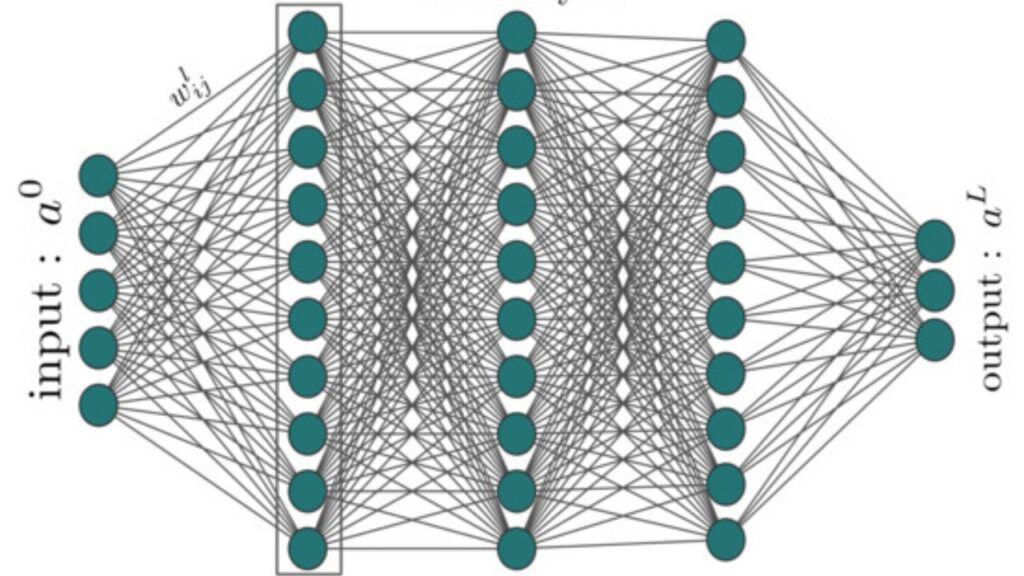
Quantum networks rely on quantum entanglement, a phenomenon in which particles remain interconnected even when separated by large distances. Establishing strong entanglement between distant network stations is essential for secure and high-speed quantum information transfer. However, achieving maximally entangled states in real-world environments remains difficult because noise and other disturbances continuously weaken quantum links.
To address this challenge, researchers have explored ways to enhance weak connections within a quantum network. A team of scientists from the Bose Institute has developed a new theoretical approach that could significantly improve the efficiency of quantum communication systems.
The research team, comprising Dr. Deep Nath and Prof. Soumen Roy from Bose Institute, Kolkata, introduced a novel protocol called General Concurrence Percolation (GCP). The study, published in the journal Physical Review A, provides a new perspective on quantum entanglement percolation by using geometric principles rather than conventional network modification methods.
Overcoming Limitations of Existing Approaches
Quantum entanglement percolation combines concepts from quantum mechanics and statistical physics to create stronger communication pathways from networks containing many weakly entangled links. Traditional methods often improved connectivity by removing or isolating certain intermediate stations, allowing stronger links to emerge across the network.
Although effective in theory, such approaches have significant limitations. Disconnecting intermediate nodes consumes valuable network resources and alters the original topology of the network. The physical structure and arrangement of connections are crucial for maintaining robust and sustainable quantum communication systems.
The newly proposed GCP framework avoids these problems by preserving network structures while improving entanglement connectivity.
Geometric Routing Enhances Quantum Links
The General Concurrence Percolation protocol follows a geometric strategy that strengthens entanglement along the shortest available paths between network stations. Instead of eliminating nodes, it optimises existing low-entanglement links and transforms a sparse physical network into a denser and more connected communication system.
According to the researchers, this method allows long-distance quantum communication to be established even when the initial level of entanglement is lower than what was previously required. This could reduce the technological demands for constructing large-scale quantum networks.
The team used computer simulations to test the effectiveness of the GCP protocol. The results showed that the approach successfully lowered the minimum entanglement threshold required to establish connectivity across an entire quantum network.
Strengthening the Future of Quantum Networks
An important finding of the study is that the GCP protocol follows the percolation universality class, a well-established concept in statistical physics that describes how large-scale connectivity emerges from smaller interactions. This connection provides a stronger theoretical foundation for quantum entanglement percolation and helps bridge quantum information science with classical statistical theories.
The researchers believe that the protocol could contribute to the development of more reliable quantum communication infrastructures by reducing resource requirements and improving network stability. As countries and research organisations work towards building quantum internet technologies, efficient methods for maintaining entanglement over long distances will become increasingly important.
Quantum communication promises unprecedented levels of security through the principles of quantum mechanics, but practical implementation depends on overcoming challenges related to noise, connectivity, and resource management. The GCP framework represents a significant theoretical step towards addressing these barriers.
By preserving network topology while enhancing quantum connections, the newly developed approach offers a sustainable model for designing future quantum communication architectures. The findings may help guide future experimental efforts aimed at creating large-scale quantum networks capable of supporting secure and efficient information exchange.
Also Read: CSIR-NIScPR Conducts Skill Training Programme on Science Communication and Emerging Trends