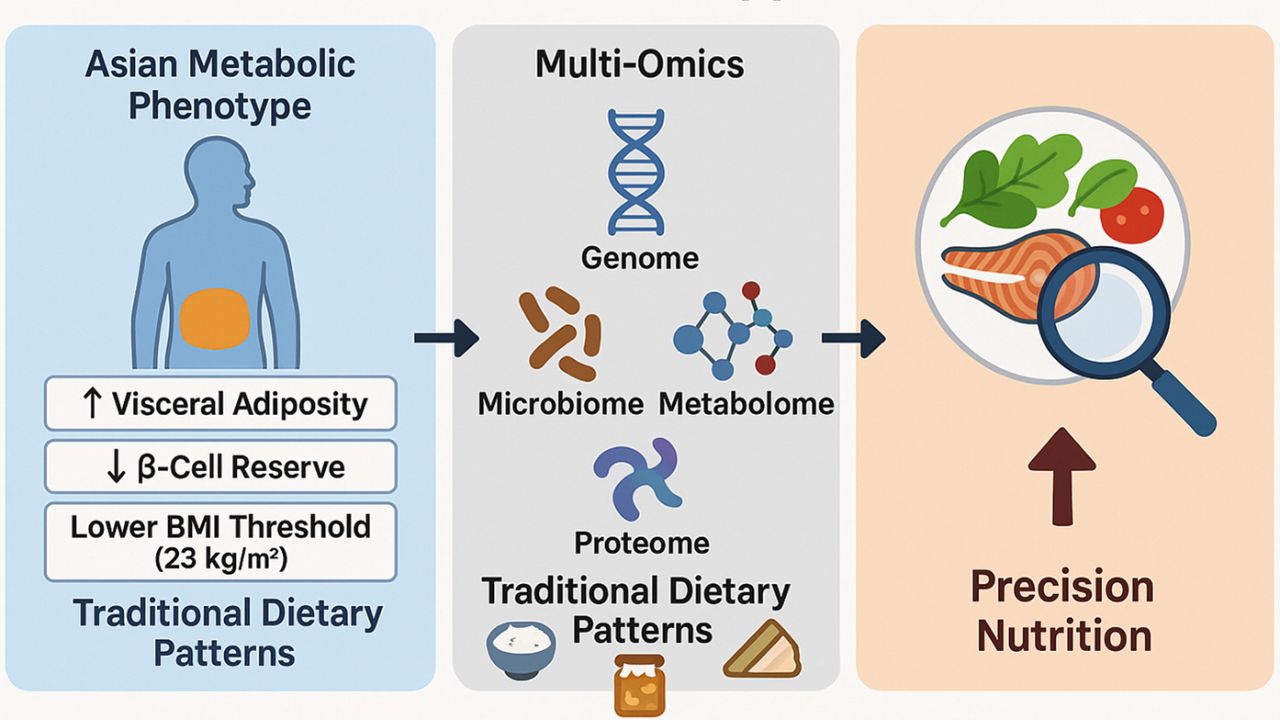

A major international study has revealed that gut microbiomes among South Asian populations are distinctly different from those documented in Western populations and are strongly influenced by local culture, dietary habits, geography and lifestyle. The findings could provide a scientific foundation for developing region-specific microbiome diagnostics, personalized nutrition and precision healthcare strategies.
The study comes at a time when South Asia is experiencing rapid urbanization alongside a growing burden of obesity, diabetes and other cardiometabolic disorders. While urbanization is known to affect the composition of the human gut microbiome, scientists have had limited evidence on whether these changes occur in the same way among South Asia’s highly diverse communities.
South Asia Remains Underrepresented in Microbiome Research
Most large-scale gut microbiome studies have traditionally focused on populations in Europe and North America. This has left South Asian populations significantly underrepresented despite the region being home to nearly one-fourth of the global population.
To address this gap, scientists from the Birbal Sahni Institute of Palaeosciences (BSIP), an autonomous institution under the Department of Science and Technology (DST), collaborated with researchers from the University of Chicago and institutions across India, Sri Lanka and the United States.
Led by Dr. Niraj Rai, Group Head of Ancient DNA at BSIP, Lucknow, the research sought to examine how changing lifestyles influence gut microbial communities across different cultural, dietary and ecological environments.
Study Covers 575 Healthy Adults
Researchers collected stool samples and detailed information on diet, lifestyle and health from 575 healthy adults representing ten culturally and geographically distinct communities across India and Sri Lanka.
The team used the South Asian MicroBiome ARray (SAMBAR), introduced in India by BSIP scientists, to examine the gut microbiomes of participants. High-throughput DNA sequencing of bacterial 16S rRNA genes was used to characterize microbial communities, followed by advanced computational and bioinformatic analyses.
The researchers compared rural and urban participants within individual communities and also assessed South Asian microbiome profiles against datasets from other parts of the world.
Each Community Shows a Unique Microbiome Trajectory
The study found that there is no single pattern through which urbanization changes the gut microbiome across South Asian populations. Instead, individual communities appeared to follow their own microbiome trajectories.
Local dietary practices, cultural traditions, geographical surroundings and lifestyle changes all contributed to differences in microbial composition. The researchers were able to identify both community-specific microbial signatures and broader microbial changes associated with urbanization and metabolic health.
The findings underline the importance of considering regional and cultural differences when studying the relationship between the gut microbiome and disease.
Implications for Future Healthcare
The research, led by Shreya L. Ramachandran, Nagarjuna Pasupuleti, Richard J. Abdill, Niraj Rai and Maanasa Raghavan, was published in the journal Gut Microbes.
Scientists said the study establishes an important baseline for understanding healthy gut microbiomes in India and could have significant medical and evolutionary implications. The findings also suggest that microbiome-based interventions should not simply rely on models developed from Western populations.
Instead, future therapies and nutritional interventions may need to be tailored to specific regional populations and their distinctive dietary and lifestyle patterns.
The SAMBAR resource is expected to support further research into diabetes, obesity, cardiovascular disease and other lifestyle-related disorders that are increasingly affecting South Asian populations. By expanding microbiome research to previously underrepresented communities, the study could help pave the way for more inclusive and population-specific approaches to precision healthcare.
Also Read: ‘Vigyan Pragati’ Completes 75 Years of Taking Science to the Masses in Hindi

Author: Shivam
Shivam Dwivedi is a senior journalist with extensive experience in research-driven journalism, policy communication, and multi-platform storytelling. His areas of interest include international relations, defence, science & technology, education, urban development, agriculture, spirituality, and environmental sustainability. His work focuses on in-depth analysis, public discourse, and impactful narratives across governance and development sectors, with a strong commitment to the Sustainable Development Goals (SDGs). Contact: [email protected]