
NPCI International Payments Limited (NIPL), the international arm of the National Payments Corporation of India (NPCI), has entered into a commercial agreement with Uzbekistan’s National Interbank Processing Centre JSC (NIPC), the operator of the country’s national payment system HUMO. Signed on August 30, 2026, the agreement will enable Indian travellers to make convenient digital payments across Uzbekistan using their existing UPI-enabled applications.
The partnership marks another step in India’s efforts to expand the international footprint of the Unified Payments Interface (UPI) and strengthen cooperation in digital payments with other countries.
Indian Travellers to Use UPI for Merchant Payments
Under the agreement, Indian tourists, business visitors and students travelling to Uzbekistan will be able to scan the country’s national interoperable QR code, known as UZQR, through participating UPI-enabled applications. This will allow them to make instant person-to-merchant (P2M) payments at participating merchants across the country.
The integration with Uzbekistan’s Unified National QR infrastructure is expected to provide broad acceptance of UPI payments across retail outlets, hospitality establishments and service businesses. Instead of carrying large amounts of cash or depending entirely on international payment cards, Indian visitors will be able to use a familiar payment method linked to their Indian bank accounts.
The facility is also expected to make overseas transactions more convenient by reducing the friction associated with currency exchange and cash management.
Regulatory Approvals Pave the Way
The commercial agreement follows formal approvals from the financial regulators of both countries. The Reserve Bank of India (RBI) and the Central Bank of Uzbekistan (CBU) have approved the arrangement, with the CBU designating HUMO as NIPL’s authorised partner for cross-border merchant acceptance.
The regulatory backing provides a framework for the two payment organisations to work together on enabling UPI-based transactions through Uzbekistan’s national QR payment infrastructure.
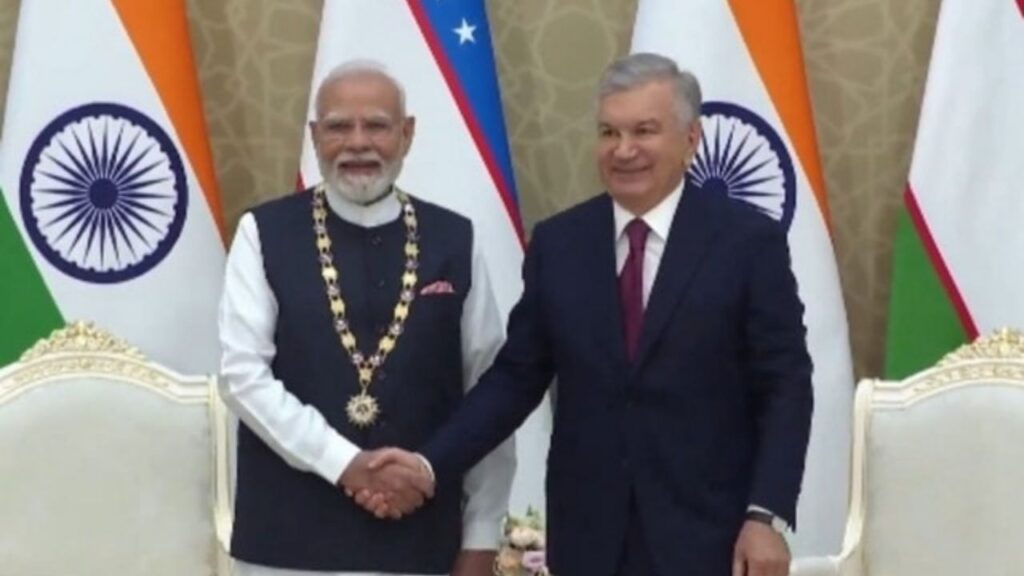
The agreement was announced during the bilateral visit of the Prime Minister of India to Uzbekistan, adding a digital payments dimension to the broader engagement between the two countries.
Boost to Digital Public Infrastructure Cooperation
The collaboration is significant beyond facilitating payments for travellers. It reflects growing cooperation between India and Uzbekistan in digital public infrastructure and financial technology.
India’s UPI ecosystem has become a major component of its digital payments landscape, while Uzbekistan has been developing interoperable national payment infrastructure. Linking the two systems could help create a more seamless payment experience for Indian visitors while supporting greater digital connectivity between the two economies.
For merchants in Uzbekistan, the arrangement could also open access to Indian consumers who prefer digital payments, potentially supporting tourism, hospitality and other visitor-facing sectors.
UPI’s International Footprint Continues to Grow
The Uzbekistan partnership adds to UPI’s expanding international presence. Indian travellers can already use UPI-based payments in ten countries: Singapore, the United Arab Emirates, France, Mauritius, Nepal, Bhutan, Qatar, Sri Lanka, Cambodia and Greece.
The internationalisation of UPI is aimed at making cross-border payments more accessible for Indian consumers while promoting interoperability between payment systems in partner countries.
With the NIPL-HUMO agreement, Indian visitors to Uzbekistan will gain another familiar digital payment option, while the partnership strengthens the broader India-Uzbekistan relationship in financial technology and digital infrastructure.
The initiative demonstrates how interoperable QR-based payment systems can facilitate international commerce and tourism while reducing dependence on cash and traditional card-based payment channels. It also highlights India’s continuing efforts to take its digital payments capabilities beyond domestic borders and build stronger links with payment networks in other economies.
Also Read: SIDBI Moves to Expand MSME Co-Lending Network with Regional Rural Banks