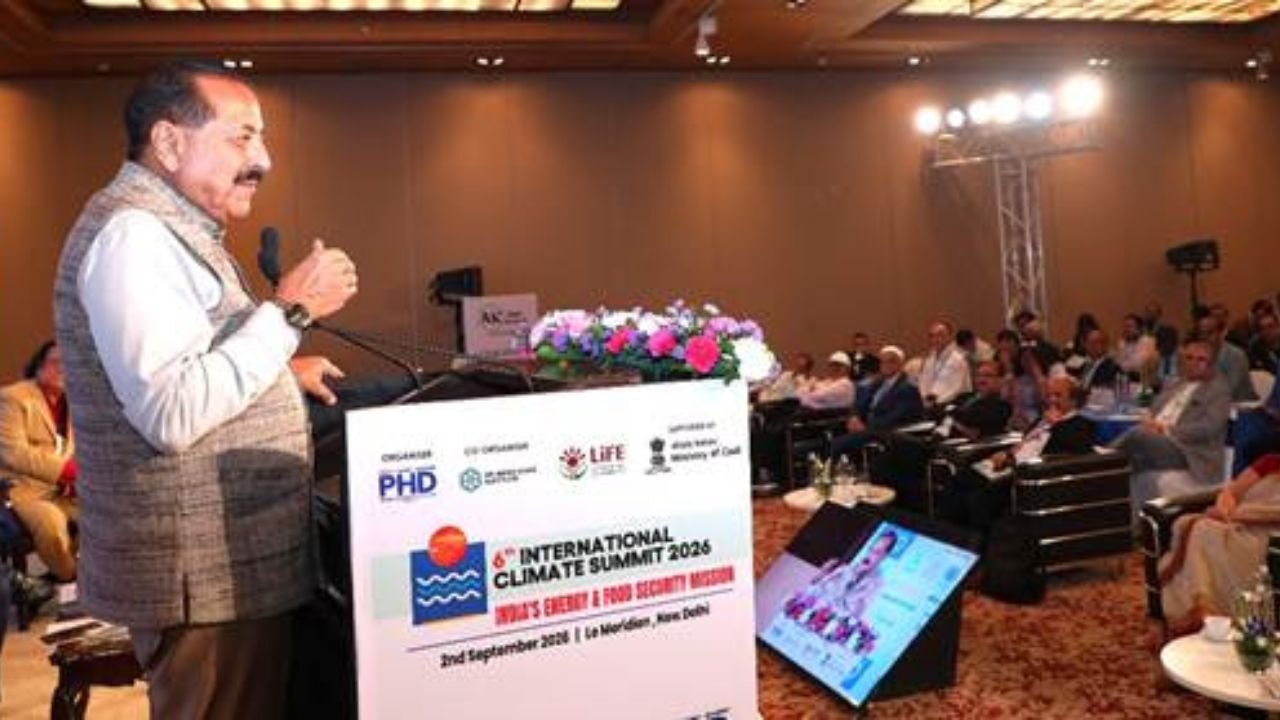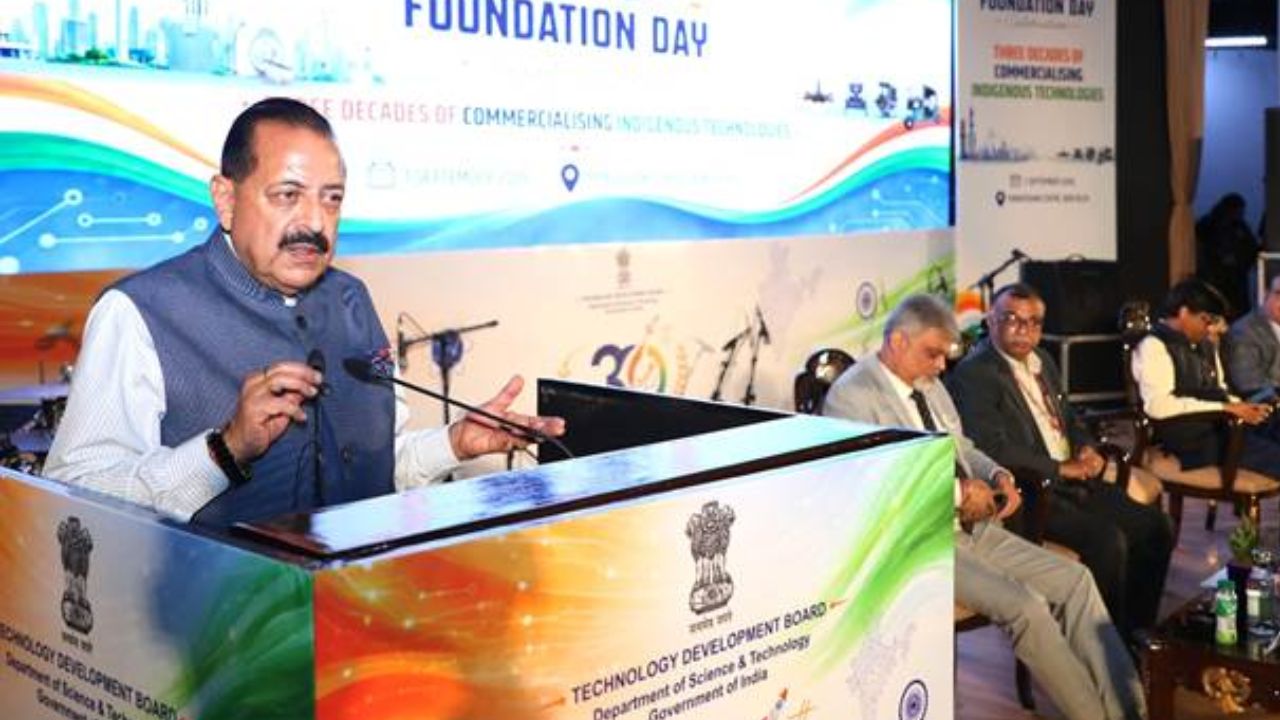
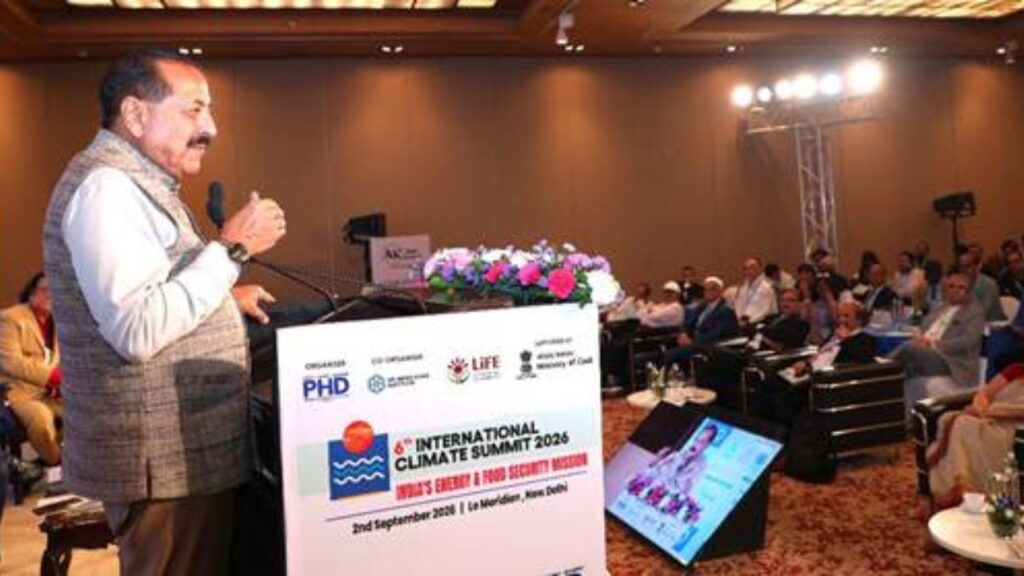

Union Minister of State (Independent Charge) for Science and Technology and Earth Sciences, and Minister of State in the PMO, Dr. Jitendra Singh, has emphasised that energy security is closely linked to India’s national security, strategic autonomy and economic resilience. Addressing the 6th International Climate Summit 2026 – India’s Energy & Food Security Mission, organised by the PHD Chamber of Commerce and Industry in New Delhi, he called for greater self-reliance, indigenous innovation and affordability in the energy sector.
Energy Self-Reliance Amid Global Uncertainty
Dr. Jitendra Singh said geopolitical tensions, supply-chain disruptions and fluctuations in global energy markets have made it increasingly important for India to strengthen domestic capabilities. He stressed that the country must pursue energy solutions that are technologically advanced, affordable and increasingly independent of external vulnerabilities.
According to the Minister, technological progress and self-reliance must advance together, while affordability remains essential to ensure that new technologies benefit society at scale. He pointed out that the rapid growth of artificial intelligence and data centres would significantly increase energy demand, making access to clean and affordable power increasingly important.
Nuclear Power at the Centre of Energy Strategy
Highlighting the Government’s multi-pronged strategy for strengthening energy security, Dr. Jitendra Singh identified nuclear energy as a key area of focus. He referred to the ambitious target of achieving 100 GW of nuclear power capacity by 2047, describing the opening of the nuclear sector to private participation as an important step.
He said that achieving such targets would require an integrated approach, wider participation and expansion of the country’s overall resource pool. The Minister also highlighted the proposed development of five Small Modular Reactors (SMRs) by 2033, noting that such technologies are expected to gain greater significance in the coming years.
Green hydrogen was another important component of India’s clean-energy transition highlighted by the Minister. He referred to the country’s ongoing initiatives in this field, including the recently flagged-off green hydrogen-powered train.
Biofuels and Circular Economy to Drive Transition
Dr. Jitendra Singh said that India’s clean-energy transition would also depend on the expansion of biofuels and the circular economy. He noted that emerging industrial and technological pathways, including biofuels, ethanol and sustainable fuels, could play a major role in shaping the next phase of industrial development.
He underlined the growing energy requirements of sectors such as agriculture, healthcare, irrigation, fertiliser production and transportation. Meeting these needs, he said, would require India to accelerate both the development and adoption of cleaner technologies.
Innovation Ecosystem and Start-up Growth
The Minister highlighted the contribution of scientific institutions, universities, teaching institutions and start-ups to India’s expanding technology ecosystem. He noted the remarkable growth of the country’s start-up landscape, from around 350 start-ups in the earlier period to nearly 2.4 lakh, placing India among the world’s leading start-up ecosystems.
Dr. Jitendra Singh also called for stronger participation from the private sector in research, innovation and emerging technologies. He said the Government alone could not undertake every aspect of the country’s technology journey and that industry must increasingly step into areas being opened to new participants.
RDI Fund to Encourage Private R&D
Referring to the ₹1 lakh crore Research, Development and Innovation (RDI) Fund, the Minister said the initiative is designed to encourage greater private-sector involvement in research and development. The fund, he said, represents an effort to incentivise businesses to invest in emerging technologies and strengthen India’s innovation capabilities.
He also highlighted the role of the Anusandhan National Research Foundation in encouraging greater participation from non-government sources. Such participation, he said, would be essential for India to maintain competitiveness in a rapidly changing global technology environment.
Government-Industry Partnership Essential
Dr. Jitendra Singh observed that the traditional hesitation between the public and private sectors has gradually diminished, with both sides increasingly recognising the importance of collaboration. He called for Government, industry, research institutions and other stakeholders to combine their capabilities to achieve India’s long-term development goals.
The Minister urged the PHD Chamber of Commerce and Industry to serve as a bridge between the Government and the non-government sector. He said industry associations and professional bodies could act as catalysts for stronger cooperation and help advance India’s journey towards the vision of Viksit Bharat@2047.
He concluded by stressing that India’s energy transition cannot be pursued in isolation. Energy security, he said, must progress alongside technological innovation, affordability, indigenous capabilities, clean energy, private investment and research. With energy demand continuing to rise, developing reliable and technologically advanced domestic solutions will remain central to India’s ambition of becoming a resilient and globally competitive economy.
Also Read: Dr Jitendra Singh Calls for Greater Awareness of ₹1 Lakh Crore RDI Fund

Author: Shivam
Shivam Dwivedi is a senior journalist with extensive experience in research-driven journalism, policy communication, and multi-platform storytelling. His areas of interest include international relations, defence, science & technology, education, urban development, agriculture, spirituality, and environmental sustainability. His work focuses on in-depth analysis, public discourse, and impactful narratives across governance and development sectors, with a strong commitment to the Sustainable Development Goals (SDGs). Contact: [email protected]