
India and the Southern Common Market (MERCOSUR) have taken a major step towards modernising trade procedures by signing the First Additional Protocol to the India–MERCOSUR Preferential Trade Agreement (PTA). The new protocol will facilitate the acceptance of electronic Certificates of Origin, supporting a transition towards paperless trade and more efficient customs processes.
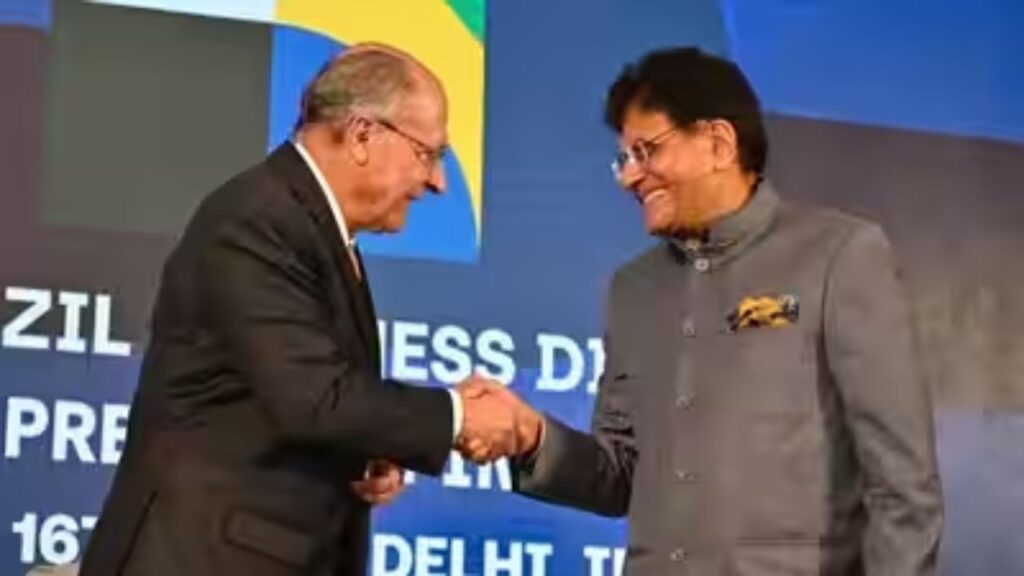
The protocol was signed by Commerce Secretary, Government of India, Shri Rajesh Agarwal, along with Ambassador of Uruguay to India H.E. Mr Alberto Guani and Ambassador of Paraguay to India H.E. Mr Fleming Raul Duarte Ramos. The signing ceremony was held in the presence of Uruguay’s Minister of Foreign Affairs, H.E. Mr Mario Lubetkin, who attended in his capacity associated with Uruguay’s Pro Tempore Presidency of MERCOSUR. Representatives of the Embassies of Argentina and Brazil were also present.
The First Additional Protocol introduces an important digital reform to the existing trade agreement. It amends Article 16 of Annex III, which deals with Rules of Origin, and establishes that Certificates of Origin issued electronically will have the same legal validity and value as certificates issued in physical form.
Under the new arrangement, electronic Certificates of Origin will have to be issued and digitally signed in accordance with the domestic laws and procedures of the respective parties. The documents will be authenticated by authorised entities and officials, ensuring that digital certificates meet the required legal and administrative standards.
The move is expected to simplify documentation requirements for businesses engaged in preferential trade between India and MERCOSUR member countries. By reducing dependence on physical paperwork, the system could lower transaction costs, shorten processing and verification times, and improve the overall efficiency of customs-related procedures.
Certificates of Origin play an important role in international trade as they establish the country in which goods originate and help importers claim preferential tariff benefits under trade agreements. Moving these documents into an electronic format is therefore expected to make it easier for exporters and importers to complete procedures associated with preferential market access.
The India–MERCOSUR PTA was originally signed on January 25, 2004, and came into force on June 1, 2009. The agreement provides preferential tariff concessions covering 450 tariff lines offered by India and 452 tariff lines offered by the MERCOSUR side.
The latest development follows sustained discussions under the Joint Administrative Committee of the India–MERCOSUR PTA. During the committee’s fourth meeting on November 27, 2025, India and MERCOSUR agreed on the importance of updating the agreement to support the use of digital Certificates of Origin. The proposal for the Additional Protocol was subsequently approved by mutual consent at the committee’s fifth meeting held on April 9, 2026.
The protocol will become operational after India and the MERCOSUR parties complete their respective internal procedures and formally notify each other of the completion of these requirements.
The signing reflects the growing emphasis placed by India and MERCOSUR on trade facilitation and the adoption of modern customs practices. Digital documentation can help reduce administrative burdens while creating more streamlined processes for businesses and government authorities involved in cross-border commerce.
The agreement also strengthens the institutional framework supporting India–MERCOSUR economic relations. By recognising electronic Certificates of Origin on an equal legal footing with paper certificates, the two sides have laid the foundation for greater use of digital processes in their preferential trade arrangements.
The latest protocol is expected to contribute to smoother implementation of the existing PTA while supporting efforts to expand commercial engagement between India and the MERCOSUR bloc. It marks another step in the continuing economic partnership between India and Argentina, Brazil, Paraguay and Uruguay and demonstrates a shared commitment to making international trade more efficient, digitally enabled and business-friendly.
Also Read: India Emerges as Global Hub for Vaccine Innovation and Epidemic Preparedness

Author: Shivam
Shivam Dwivedi is a senior journalist with extensive experience in research-driven journalism, policy communication, and multi-platform storytelling. His areas of interest include international relations, defence, science & technology, education, urban development, agriculture, spirituality, and environmental sustainability. His work focuses on in-depth analysis, public discourse, and impactful narratives across governance and development sectors, with a strong commitment to the Sustainable Development Goals (SDGs). Contact: [email protected]