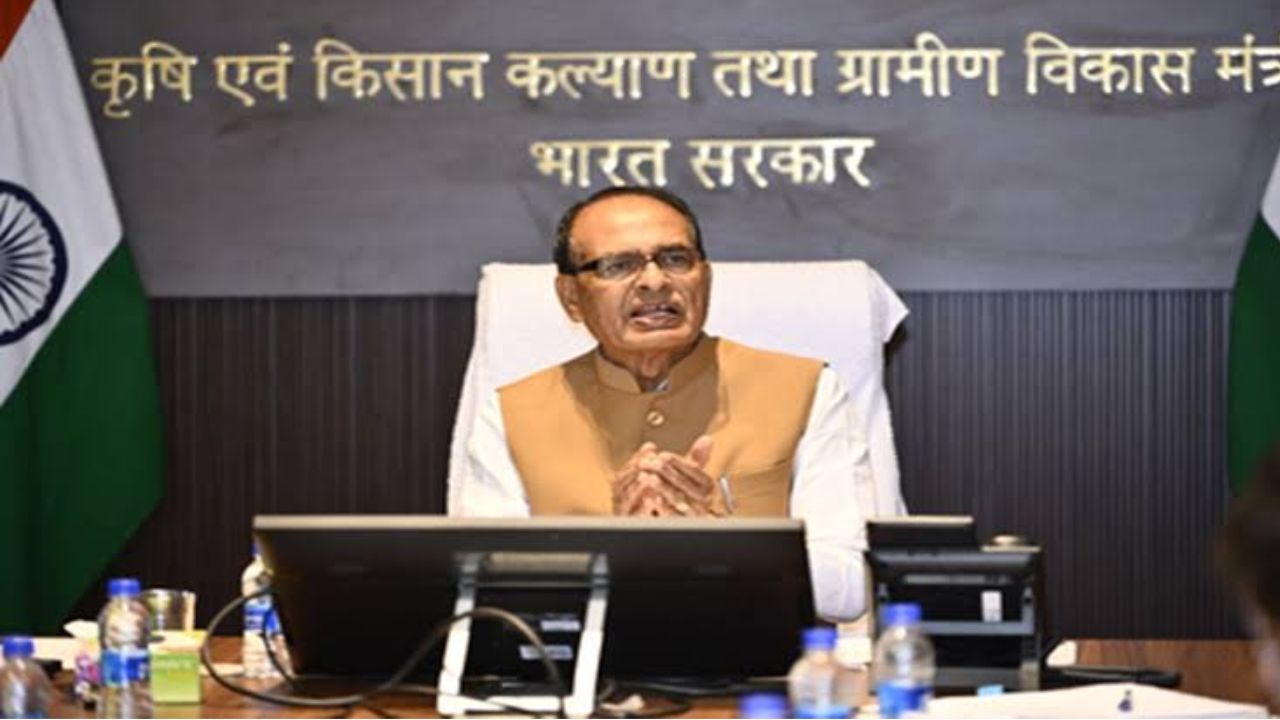

Union Agriculture and Farmers’ Welfare Minister Shivraj Singh Chouhan has called upon States to strengthen preparations for the Rabi 2026 season through scientific planning, efficient water management and continuous monitoring at the field level. Addressing the two-day National Agriculture Conference – Rabi Campaign 2026 in New Delhi, he said changing weather patterns, irregular rainfall and water shortages require agricultural planning based on reliable data and stronger Centre-State coordination.
The conference, organised by the Department of Agriculture and Farmers’ Welfare at the NASC Complex, brought together senior officials from the Centre and States, agricultural scientists, Vice-Chancellors of State Agricultural Universities, ICAR institutes, Krishi Vigyan Kendras (KVKs), ATMA representatives and other stakeholders.
Water Availability to Drive Crop Planning
Chouhan said water budgeting should be a central component of Rabi crop planning. States and districts should assess irrigation availability and soil moisture before finalising crop plans. Water-stressed regions should give greater attention to comparatively less water-intensive crops such as pulses and oilseeds, while areas with assured irrigation can plan accordingly.
He expressed concern over drought conditions in parts of Maharashtra and Karnataka and said Central teams would conduct ground assessments in the affected areas. Maharashtra, Karnataka, Telangana and Andhra Pradesh, he added, should develop crop strategies based on local water availability, soil moisture and whether the area is rainfed or irrigated.
Quality Seeds and Timely Procurement
The Minister identified timely availability of quality seed as another critical priority. States were asked to assess regional requirements, identify suitable varieties and ensure that procurement and distribution are completed before the sowing window.
He also called for greater adoption of improved varieties developed by agricultural institutions and stronger extension activities to create awareness among farmers. States should prepare detailed seed roadmaps covering demand, procurement, lifting and distribution.
Chouhan urged States to expand cultivation of pulses and oilseeds, especially in areas that remain fallow after paddy. He asked States to finalise their Rabi plans by September 29, including targets for crops such as gram, lentil and mustard. Production planning, he stressed, should be accompanied by assured procurement and market arrangements.
Procurement and Fertiliser Management
The Minister said procurement mechanisms should be prepared alongside production plans so farmers have confidence that their produce will find a market. Where States face difficulties in timely procurement, central agencies such as NAFED and NCCF can procure directly from farmers under the relevant support mechanisms.
He also advocated balanced fertiliser use, warning that excessive application increases cultivation costs and can adversely affect soil health. The ‘Khet Bachao Abhiyan’, launched during the Kharif season, should be expanded to Rabi, with scientific guidance helping farmers optimise fertiliser application.
Chouhan further emphasised timely fertiliser distribution and referred to the use of Farmer ID-based systems to improve targeting and reduce diversion and black marketing.
Natural Farming and Digital Agriculture
The Minister said growing interest in natural farming needs to be supported through better branding, certification and marketing. Experiences from States such as Andhra Pradesh, Gujarat and Himachal Pradesh could provide useful models for creating stronger markets for naturally produced farm commodities.
He also called for wider coverage of Kisan Credit Cards, particularly among small and marginal farmers. States should identify gaps in coverage and address delays in institutional credit. On Farmer ID and AgriStack, he urged States to accelerate pending work and ensure that tenant farmers and those cultivating land at multiple locations are not excluded.
Weekly Monitoring for Faster Intervention
Chouhan directed States to undertake weekly monitoring of sowing progress, germination, crop health, pest and disease outbreaks and market prices. Regular field-level information, he said, would help authorities identify emerging challenges early and take corrective measures.
Agriculture Secretary Atish Chandra highlighted the importance of diversification, climate-resilient farming, soil health, modern infrastructure, market mechanisms and digital agriculture in responding to changing weather conditions.
DARE Secretary and ICAR Director General Dr. Mangi Lal Jat identified crop diversification, climate resilience, digital agriculture and risk management as key priorities for Rabi 2026. He stressed the need for suitable varieties, quality seeds, mechanisation, biological solutions and improved seed treatment. Large-scale green ammonia demonstrations are also planned across 10,000 acres in 37 districts of six States.
The conference will conclude with discussions involving State Agriculture Ministers and senior officials. Deliberations will cover weather conditions, fertiliser availability, the Digital Agriculture Mission, Farmer Registry, pulses and edible oil missions, PM Dhan-Dhaanya Krishi Yojana, marketing reforms and the role of ATMA and KVKs. The outcomes are expected to form the basis of a coordinated action plan for strengthening Rabi production and farmer incomes.
Also Read: CSIR Launches Five New Regional-Language Science Magazines on 85th Foundation Day

Author: Shivam
Proficient Writer Contact: [email protected]