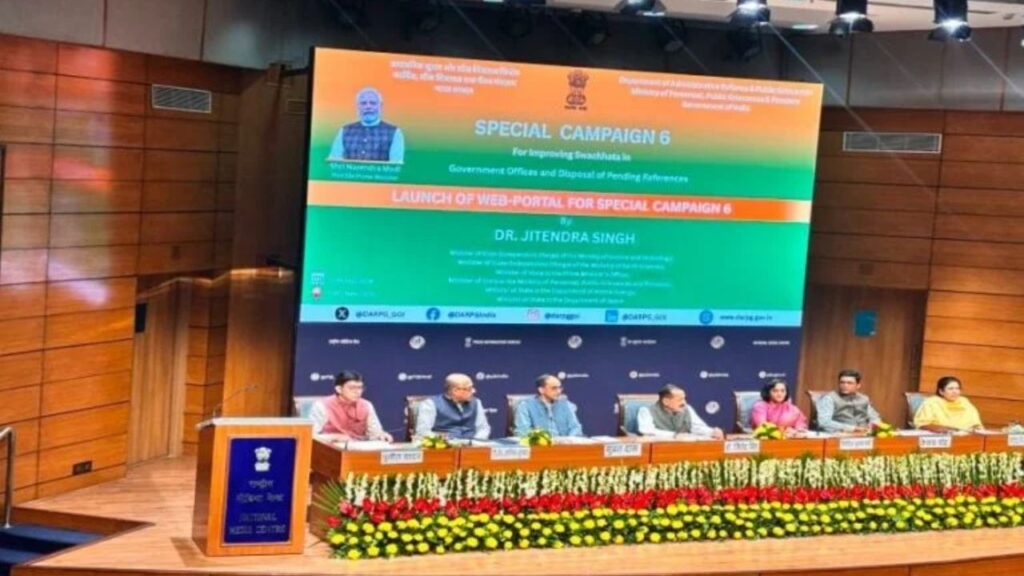

The Ministry of Textiles is set to undertake Special Campaign 6 across its organisations, subordinate offices and Public Sector Undertakings (PSUs) from October 2 to October 31, 2026. The month-long campaign will focus on improving workplace cleanliness, reducing pendency, strengthening record management and promoting the responsible handling of electronic waste.
This year, effective collection, segregation and disposal of e-waste has been given special importance under the campaign. The initiative is intended to promote more systematic management of obsolete electronic equipment while supporting broader efforts to maintain clean and efficient government workplaces.
During the preparatory phase, the Ministry of Textiles carried out a detailed assessment of pending matters, records, cleanliness requirements and electronic waste across its various offices and organisations. Specific targets have been established to ensure that the campaign delivers measurable outcomes during the implementation period.
As part of the identified targets, the Ministry plans to dispose of 57 Public Grievances and 13 Public Grievance Appeals. In addition, 55 Members of Parliament (MP) References and 26 Parliamentary Assurances have been identified for action. The exercise is aimed at reducing pendency and ensuring that important administrative matters are addressed in a timely manner.
Cleanliness activities will also form a major component of Special Campaign 6. Around 240 locations have been identified for focused cleanliness drives. These sites will undergo coordinated activities to improve cleanliness and promote better maintenance practices across offices and institutional premises.
Another important area covered by the campaign is record management. The Ministry has identified 12,519 physical files for review. In addition, 6,941 e-files have been placed for review. The assessment of these records is expected to help identify outdated or unnecessary files and contribute to more efficient management of official records.
Special attention has been given to e-waste management during the campaign. The Ministry has set a target for the systematic collection, segregation and disposal of 720 e-waste items. The identified electronic and electrical waste includes Personal Computers (PCs), Central Processing Units (CPUs), input/output devices and other equipment that is no longer required or functional.
As part of preparations for the campaign, various electronic and electrical items lying unused, obsolete or non-functional across the Ministry and its associated organisations have been identified. These items are being assessed and categorised to determine the appropriate method of disposal.
The Ministry has emphasised that e-waste will be handled through authorised channels in accordance with applicable guidelines for environmentally responsible management. Proper segregation and disposal of electronic waste can help prevent the accumulation of obsolete equipment in government premises while ensuring that such materials are managed through appropriate processes.
Special Campaign 6 is being implemented through coordinated efforts involving the Ministry’s organisations, subordinate offices and PSUs. The preparatory exercise has enabled the participating institutions to identify specific areas requiring attention and establish targets before the campaign begins.
Through the campaign, the Ministry of Textiles aims to combine cleanliness initiatives with administrative efficiency, systematic record management and responsible e-waste disposal. The coordinated approach is expected to strengthen workplace management practices and support the effective implementation of Special Campaign 6 throughout October 2026.
The campaign, beginning on October 2, will therefore cover multiple aspects of institutional functioning, ranging from cleanliness and disposal of pending matters to file review and environmentally responsible management of electronic waste.
Also Read: KVIC Chairman Highlights Lijjat Papad’s Role in Women’s Empowerment and Vocal for Local

Author: Shivam
Proficient Writer Contact: [email protected]