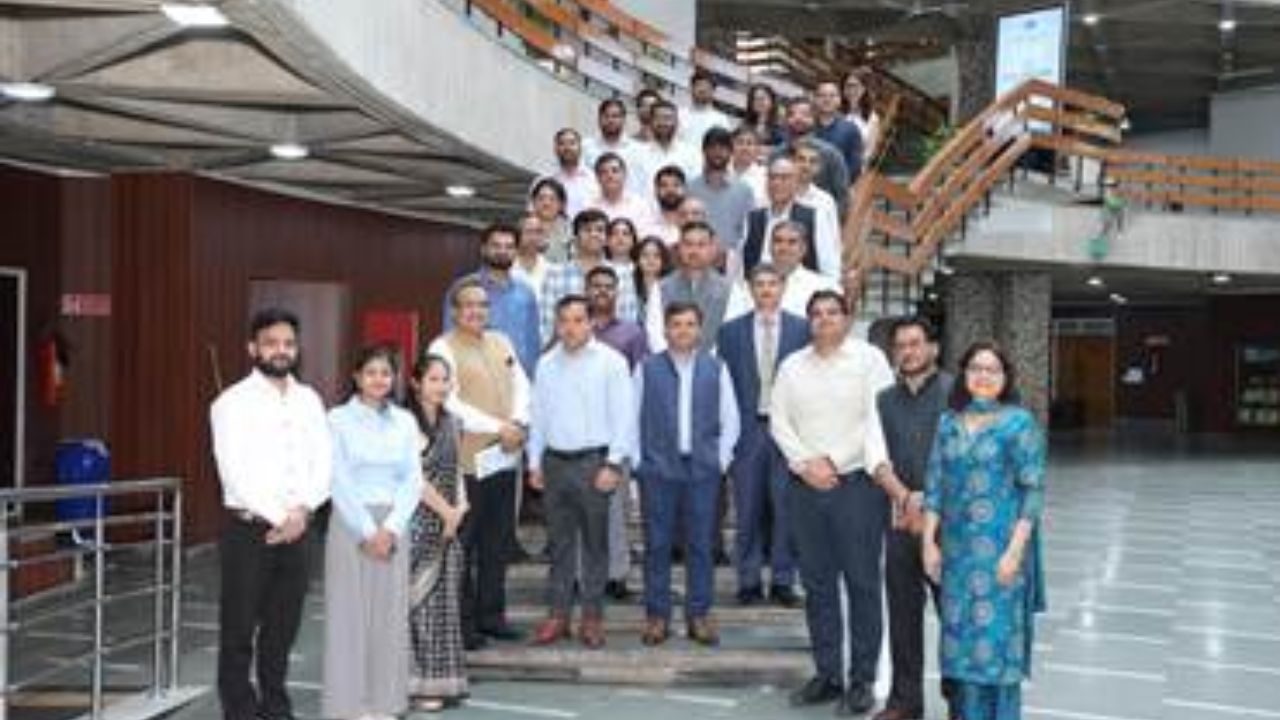

The Centre for Research on International Trade (CRIT), New Delhi, in collaboration with the Indian Institute of Foreign Trade (IIFT), organised a three-day Orientation Course on Trade Negotiations from September 28 to 30, 2026, in New Delhi. The capacity-building programme was designed to provide participants with a comprehensive understanding of international trade, the global trading system and the evolving complexities of trade negotiations.
The course brought together academic and professional perspectives on contemporary developments in global commerce. It covered fundamental concepts of trade theory and the functioning of international institutions, while also examining emerging economic, legal and policy issues that influence present-day trade negotiations.
Focus on WTO and Global Trade Developments
The academic sessions on the first day focused on the changing global trade environment and the opportunities and challenges emerging from it. Participants were introduced to basic concepts of trade theory, followed by a detailed session on the World Trade Organization (WTO). A panel discussion further examined important issues confronting the multilateral trading system.
The second day expanded the programme into legal, economic and sustainability-related aspects of international trade. Sessions addressed the relationship between labour, environment, sustainability and trade, along with legal analysis and the interpretation of trade agreements. Participants also gained exposure to trade analysis and trade databases, followed by a session on dispute settlement mechanisms.
On the concluding academic day, participants were offered specialised tracks covering different areas of contemporary trade policy. Track I focused on trade remedies, rules of origin and non-tariff measures (NTMs). Track II dealt with intellectual property rights (IPR), digital trade and services. The specialised sessions enabled participants to explore specific areas that have become increasingly significant in international trade negotiations.
Experts Highlight Changing Trade Landscape
The course concluded with a valedictory session featuring addresses by senior experts and officials. Dr. James J. Nedumpara, Professor and Head, Centre for Trade and Investment Law (CTIL), with additional charge as Professor and Head, Centre for WTO Studies (CWS), delivered the valedictory address.
Dr. K. Rangarajan, Vice Chancellor, IIFT, delivered the keynote address, while Shri Amitabh Kumar, Additional Secretary, Department of Commerce, delivered the Special Address. Dr. Murali Kallummal, Professor, CWS and Head Administration, CRIT, proposed the vote of thanks. Certificates were subsequently distributed to the participants.
During his Special Address, Shri Amitabh Kumar underlined the importance of international trade in supporting economic and GDP growth. He also pointed to the growing complexity of the global trading environment and emphasised the need for trade professionals to develop the expertise required to understand and respond to changing international trade practices.
He referred to emerging approaches such as neo-mercantilism and highlighted measures with significant implications for international trade, including the European Union’s Carbon Border Adjustment Mechanism (CBAM) and the European Union Deforestation Regulation (EUDR).
Strengthening Trade Negotiation Capacity
Shri Amitabh Kumar also reflected on India’s economic reforms since 1991 and the country’s accession to the WTO in 1995. He noted how the scope of international trade rules has expanded over the years, moving beyond traditional trade in goods to encompass services, intellectual property rights and sustainability-related considerations.
He appreciated CRIT’s initiative to organise the orientation programme, noting the importance of developing professional capacity to address the increasingly diverse dimensions of global trade.
The three-day programme provided participants with a structured overview of the international trading system and the processes involved in trade negotiations. By combining foundational knowledge with economic, legal and policy perspectives, the course offered participants an opportunity to better understand the challenges shaping contemporary global commerce.
The specialised tracks further broadened the learning experience by addressing areas such as trade remedies, rules of origin, non-tariff measures, intellectual property, digital trade and services. The programme thus served as a capacity-building initiative aimed at strengthening participants’ understanding of the rapidly evolving international trade landscape and the issues likely to shape future trade negotiations.
Also Read: Special Campaign 6 to Focus on Cleanliness, Pendency Reduction and Scientific E-Waste Disposal

Author: Shivam
Proficient Writer Contact: [email protected]