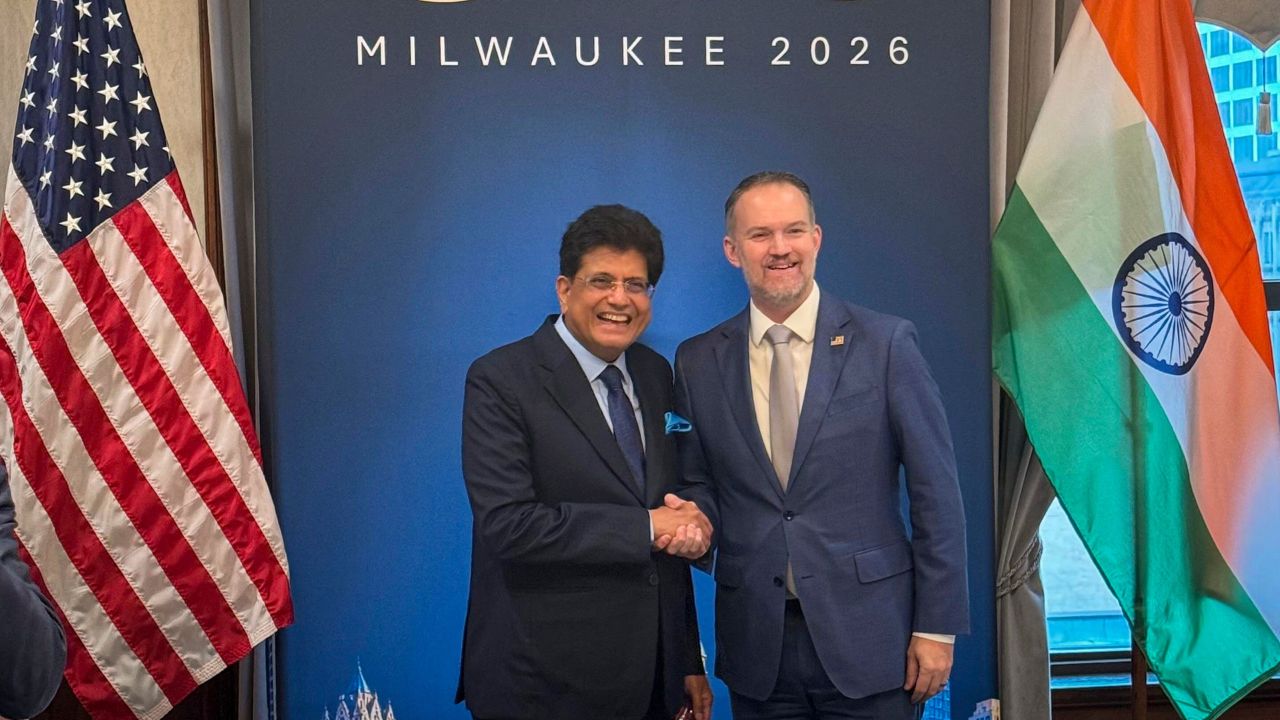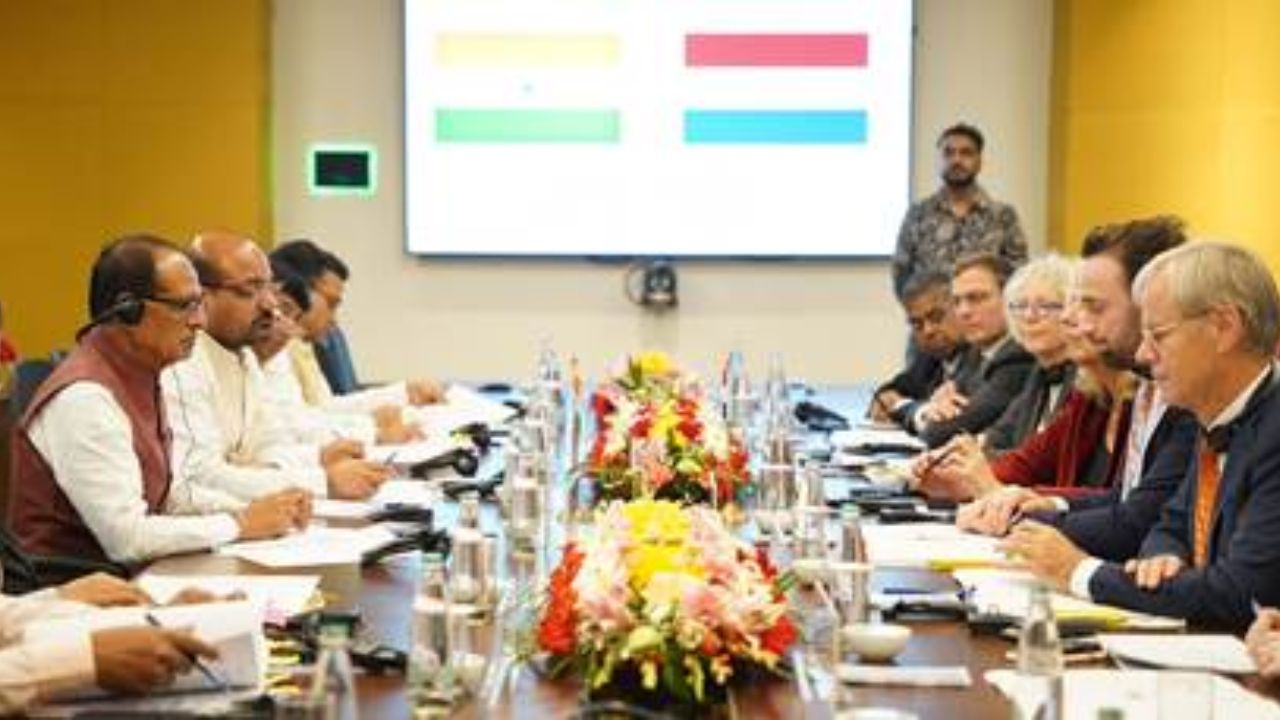
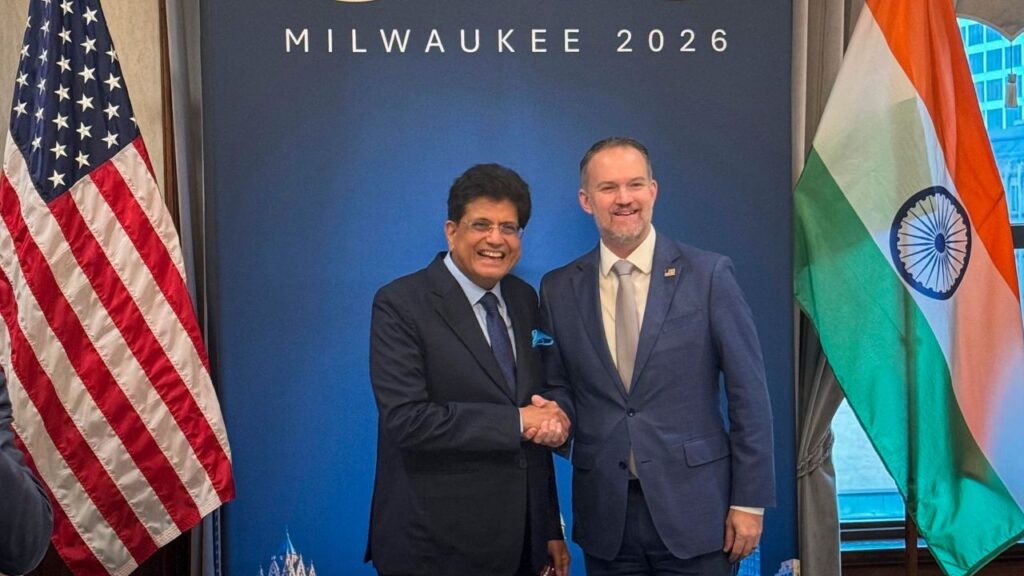

Union Minister for Commerce and Industry Piyush Goyal participated in the concluding day of the G20 Trade Ministers’ Meeting in Milwaukee, Wisconsin, where he presented India’s views on key issues shaping the global trading system. His interventions covered structural excess capacity and production, the Most-Favoured-Nation (MFN) principle, elimination of forced labour from global supply chains, and the future of multilateral trade.
During discussions on structural excess capacity, Goyal highlighted India’s position as one of the world’s fastest-growing large economies. He said India’s economic growth is primarily driven by domestic demand and serves a population of around 1.4 billion. At the same time, the country is developing manufacturing capabilities across the value chain, from design and production to finished goods, strengthening its role in global supply networks.
The Minister stated that India’s manufacturing capacity is intended to meet both domestic and international requirements and does not constitute structural excess capacity in the sectors identified by the G20 Presidency. He acknowledged concerns regarding trade-distorting support in some economies, which, according to India, can contribute to dumping and predatory pricing.
Goyal pointed out that such challenges can be addressed through WTO-compatible instruments such as anti-dumping and countervailing duties. He stressed that these measures should be evidence-based and subject to judicial review. According to him, manufacturing capacity itself should not be treated as a problem, while distortions arising from hidden subsidies and concentrated production require greater attention. He also supported diversification of global supply chains, while emphasising that it should remain consistent with WTO rules and should not place disproportionate adjustment costs on developing countries.
Addressing the session on updating the Most-Favoured-Nation principle, Goyal underlined the importance of a transparent, non-discriminatory and rules-based international trading framework. He described MFN treatment as a fundamental component of the multilateral system, ensuring that trading partners receive equal treatment under agreed rules.
He also emphasised that consensus-based decision-making remains central to the World Trade Organization. India reiterated the need to preserve special and differential treatment for developing countries so that they have sufficient policy space to pursue economic development. Goyal also called for the restoration of the WTO’s two-tier dispute settlement mechanism.
On the issue of forced labour in global supply chains, Goyal reaffirmed India’s commitment to eliminating forced labour. He highlighted Article 23 of the Indian Constitution, which prohibits forced labour, and noted that India has ratified International Labour Organization Conventions 29 and 105. He further pointed out that India amended its Foreign Trade Policy in July 2026 to prohibit imports of goods produced using forced labour.
Goyal stressed that border measures addressing forced labour should rely on specific and verifiable evidence rather than assumptions concerning entire countries, regions or sectors. He also emphasised the importance of due process and consistency with WTO obligations. India supported cooperation among G20 members and voluntary sharing of best practices, while stressing that such cooperation should not create additional obligations or facilitate unilateral trade action.
Concluding his participation, Goyal thanked the United States G20 Presidency for hosting the meeting. Referring to Prime Minister Narendra Modi’s approach of focusing on areas where countries can work together, he said India participated constructively across all four themes.
The Minister reaffirmed India’s support for a fair, equitable, transparent, inclusive and multilateral trading system with the WTO at its core. He also stressed the need to preserve policy space for developing nations while maintaining consensus-based decision-making.
On the sidelines of the meeting, Goyal held bilateral discussions with trade ministers and representatives from Australia, Saudi Arabia, France, South Korea and Canada. He also extended India’s support to the United Kingdom as it prepares to assume the G20 Presidency in 2027.
Also Read: CRIT and IIFT Organise Three-Day Orientation Course on Trade Negotiations in New Delhi

Author: Shivam
Proficient Writer Contact: [email protected]