
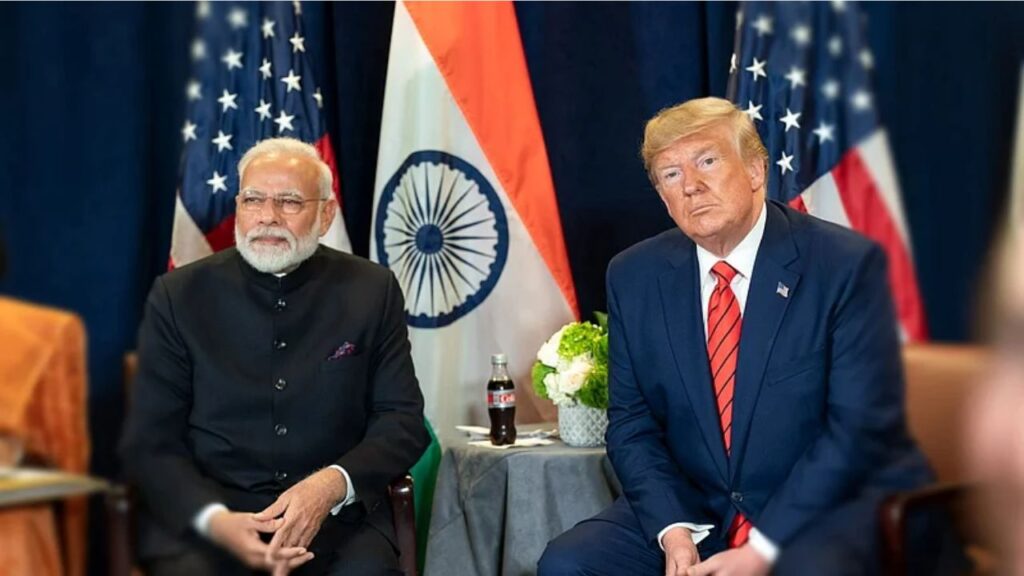

The Congress party has criticised U.S. President Donald Trump’s decision to sign legislation allowing tariffs of up to 100% on countries purchasing Russian oil, arguing that the measure could have significant consequences for India’s energy security, economy and trade.
The comments came as concerns grew in India over the implications of the Lindsey O. Graham Sanctioning Russia and Iran Act of 2026, which gives the U.S. President authority to impose tariffs of up to 100% on goods from major buyers of Russian energy. The law does not automatically impose a 100% duty, but provides the administration with the power to determine whether and at what level such tariffs would be applied.
Congress Working Committee member and former Union Commerce Minister Anand Sharma described the move as unjustified and called for India to firmly protect its economic and strategic interests.
Sharma said India’s dependence on imported crude makes the issue particularly important. Russia has emerged as a major source of India’s crude supplies, with its share approaching half of India’s oil imports amid disruptions to global energy markets.
He argued that the situation has become more challenging because geopolitical tensions and disruptions in West Asia have affected global oil and gas supplies. According to Sharma, any measure that increases the cost or restricts India’s access to competitively priced crude could have wider implications for the Indian economy.
Sharma also questioned what he described as inconsistencies in the U.S. approach. He pointed to continued American imports of products such as uranium and fertilisers from Russia and argued that exemptions and differing treatment raised questions about the application of the new legislation. His comments were also reported in connection with his demand that India reject the tariff pressure and reconsider the timing of the ongoing trade negotiations with Washington.
Meanwhile, Congress general secretary Randeep Singh Surjewala focused on India’s right to independently determine its energy sourcing strategy. He said India, as a sovereign country, should be able to purchase energy from countries that serve its national interests and provide supplies at affordable prices.
Surjewala criticised the Narendra Modi-led government for what he described as inadequate resistance to external economic pressure. He argued that maintaining access to affordable energy should remain a central national priority, particularly when international oil markets are facing disruptions.
The Congress leader also raised concerns about the potential impact on India’s export sector if the U.S. were to impose substantial additional tariffs. The United States is a major destination for Indian goods, and exporters have already expressed concern over the uncertainty created by the new law. Industry representatives have warned that very high tariffs could make Indian products less competitive in the American market.
The U.S. legislation is significant because India and China are among the largest purchasers of Russian crude. Under the law, the United States can identify the five largest importers of Russian crude oil and natural gas based on specified periods and potentially impose tariffs of up to 100% on their goods. The President also retains authority to waive tariffs under certain circumstances.
India has previously maintained that its energy policy is guided by national requirements and the need to ensure stable supplies. The government has also indicated that it will take necessary measures to protect the country’s economic and trade interests in response to developments in Washington.
The latest dispute therefore adds another layer of complexity to India-U.S. economic relations, coming at a time when both countries are also engaged in discussions on trade. For India, the challenge lies in balancing its energy requirements and diversified sourcing strategy with the importance of maintaining access to major international export markets.
The Congress has urged the government to protect India’s economic interests while resisting external pressure over its energy procurement decisions. The ultimate impact will depend on whether Washington chooses to exercise the new tariff authority, the level of tariffs imposed, and the products and countries ultimately covered by any such measures.

Author: Shivam
Proficient Writer Contact: [email protected]