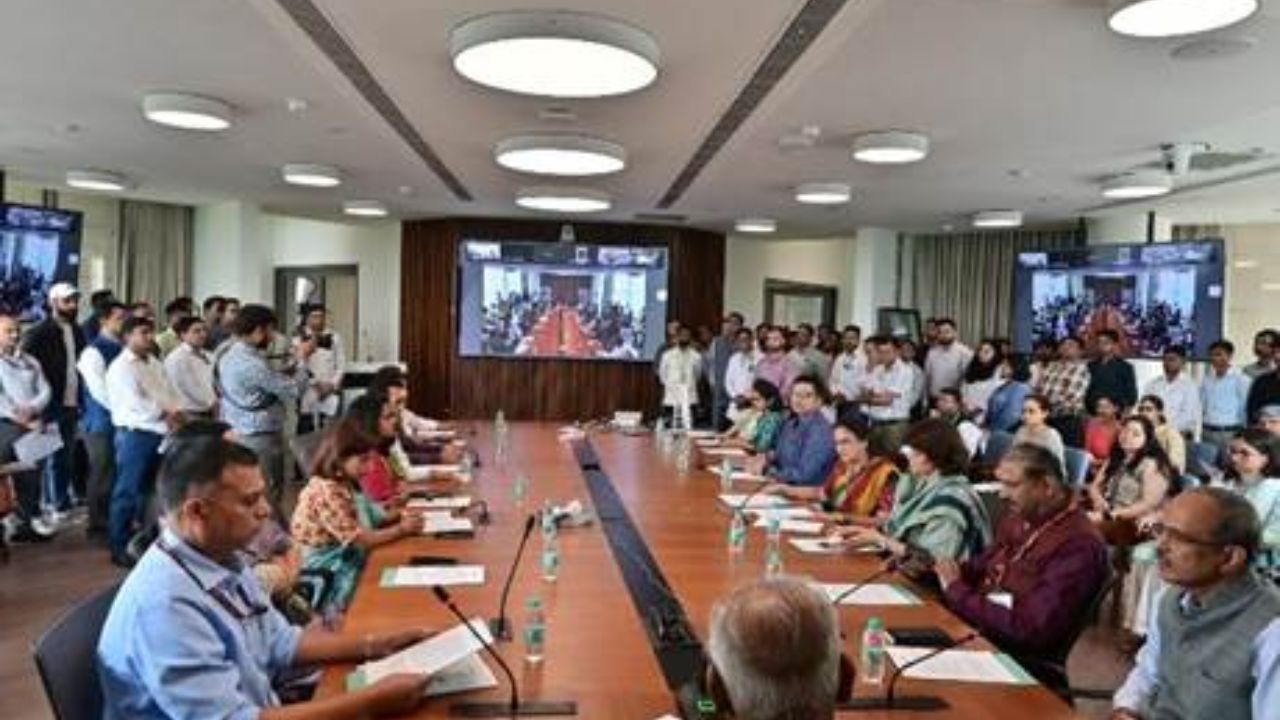
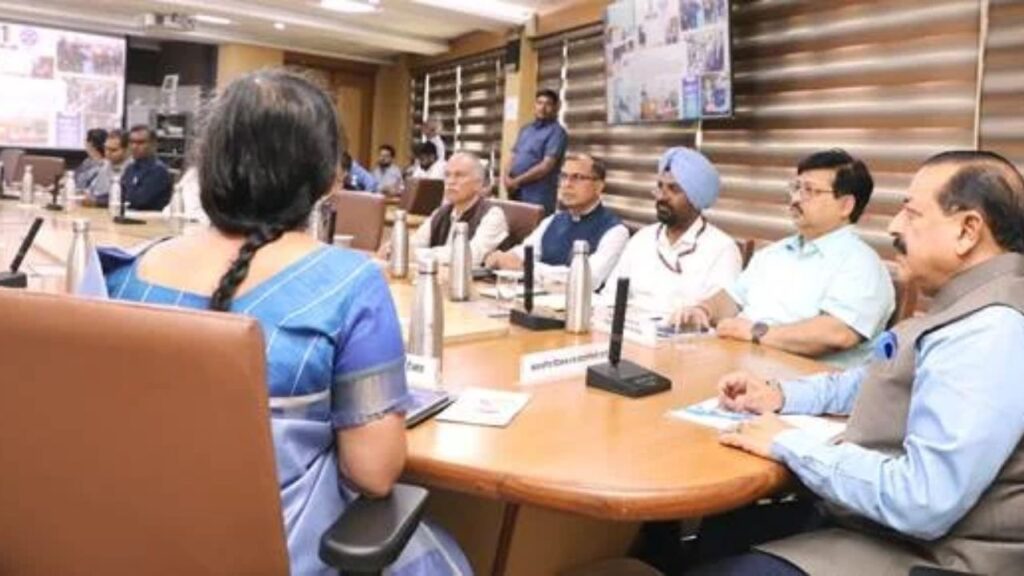

Reinforcing its commitment to advancing women-led scientific research in India, the Council of Scientific & Industrial Research (CSIR), through its Human Resource Development Group (CSIR-HRDG), organised “ASPIRE-SHAKTI: Celebrating Women in STEM & Initiating Project Review Sessions” at the CSIR Headquarters, Anusandhan Bhawan, New Delhi.
The event brought together Principal Investigators (PIs) supported under the CSIR-ASPIRE scheme, research scholars, and members of the ASPIRE Subject Area Committees from across the country. The programme celebrated the achievements of women scientists while marking the beginning of a comprehensive review of research projects funded under the initiative.
ASPIRE-SHAKTI Compendium Released
The event was presided over by Dr. N. Kalaiselvi, Secretary, Department of Scientific & Industrial Research (DSIR) and Director General of CSIR. On the occasion, she released the ASPIRE-SHAKTI Compendium, a publication documenting the scientific achievements and progress made under the CSIR-ASPIRE programme since its launch.
Addressing the gathering, Dr. Kalaiselvi recalled that the idea of creating a dedicated research programme exclusively for women scientists was envisioned by Union Minister of Science & Technology Dr. Jitendra Singh. The initiative was subsequently implemented by CSIR-HRDG and formally launched on International Women’s Day in 2023 to promote greater participation of women in scientific research and innovation.
Call for Wider Regional Participation
While appreciating the overwhelming national response received by the programme, Dr. Kalaiselvi highlighted the need to improve participation from the North-Eastern states and Ladakh, where the number of applications has remained relatively low.
She stressed that future editions of the programme should focus on expanding outreach to universities and colleges located in Tier-2 and Tier-3 cities, ensuring that talented women researchers from every region of the country have equal opportunities to access research funding and mentorship.
According to her, broader inclusion will help create a more representative scientific ecosystem and strengthen India’s research capabilities.
From Research Labs to Market
Sharing her vision for the next phase of the ASPIRE initiative, Dr. Kalaiselvi said CSIR plans to identify around 20 to 30 high-performing research projects with strong commercial potential. These projects would receive additional support to facilitate technology transfer and commercialisation.
She noted that CSIR intends to connect promising researchers with start-ups, industry partners, and innovation ecosystems so that laboratory discoveries can be transformed into market-ready products and technologies capable of delivering social and economic impact.
The Director General also acknowledged the contribution of the ASPIRE Research Committee members for ensuring a rigorous evaluation process and praised the efforts of CSIR-HRDG in conceptualising and successfully implementing the programme.
Strong National Footprint Since Launch
Since its launch in 2023, the CSIR-ASPIRE scheme has emerged as one of the country’s significant initiatives dedicated to empowering women researchers.
The programme received 2,878 research proposals from 969 institutions representing nearly every state in India. Following a competitive selection process with an acceptance rate of nearly 10 per cent, 301 women researchers were selected as independent Principal Investigators.
The selected projects span a broad range of scientific disciplines, including Life Sciences (152 projects), Engineering Sciences (54), Interdisciplinary and Transdisciplinary Sciences (37), Chemical Sciences (34), and Physical Sciences (25).
The research supported under the scheme has already generated impressive outcomes. More than 253 papers have been published in SCI-indexed journals, over 15 patent applications have been filed, and researchers have delivered more than 20 presentations at international scientific conferences.
In addition, the initiative has helped train over 300 Junior Research Fellows (JRFs), Senior Research Fellows (SRFs), and Research Associates, contributing to the development of a strong pipeline of women scientists equipped for advanced research careers.
Review Sessions to Strengthen Outcomes
Earlier in the programme, Dr. R. Parthasarathi, Head of CSIR-HRDG, highlighted the organisation’s long-standing role in developing India’s scientific talent over the past eight decades. He also referred to the Capacity Building and Human Resource Development (CBHRD) framework approved by the Union Cabinet in 2025, under which ASPIRE has become an important component of CSIR’s human resource development strategy.
Dr. Shweta Pant, Nodal Officer for the ASPIRE scheme, presented an overview of the programme’s progress and achievements. Senior scientists including Dr. Annapurni Subramaniam, Director of the Indian Institute of Astrophysics, Bengaluru, and Prof. Sharmila A. Bapat of Savitribai Phule Pune University also addressed the gathering, appreciating the transparency and scientific rigour of the peer-review process.
The celebration concluded with the launch of Project Review Sessions, during which subject expert committees will evaluate the mid-term progress of funded projects, provide scientific guidance, and help steer promising research towards practical applications and societal impact.
Also Read: Science Ministries Step Up Coordination Ahead of Nationwide Coastal Cleanliness Campaign