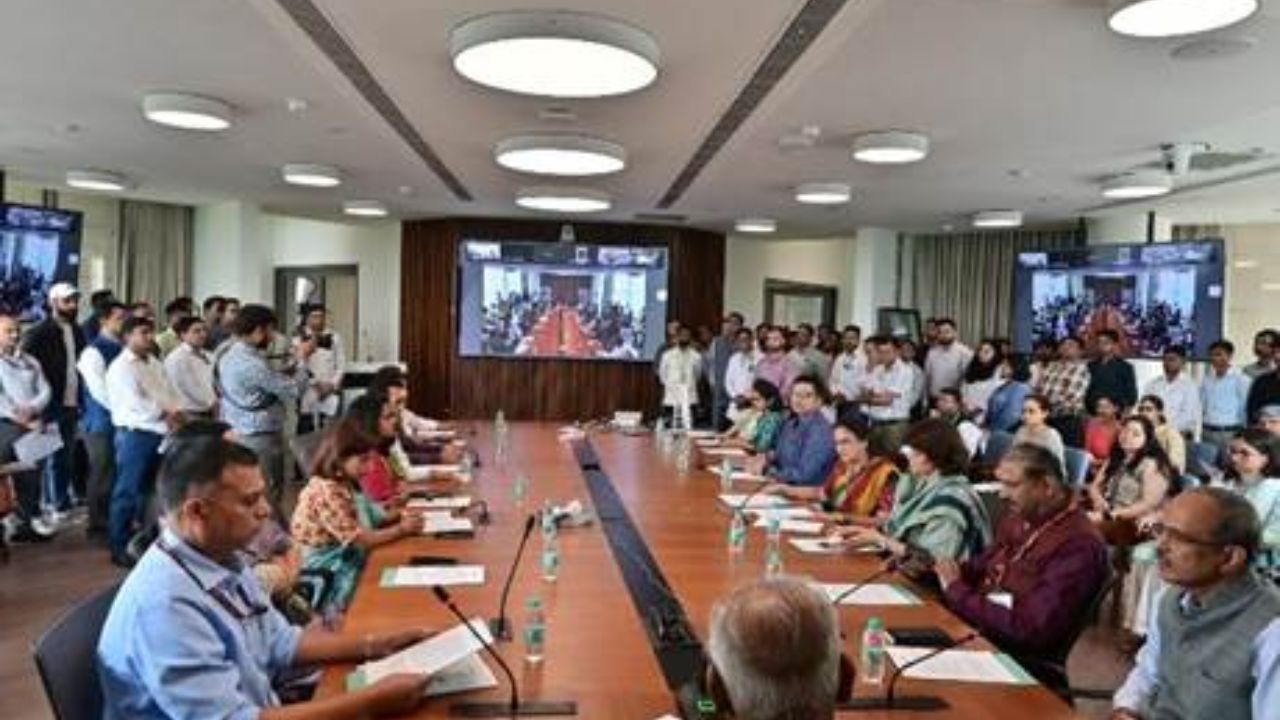
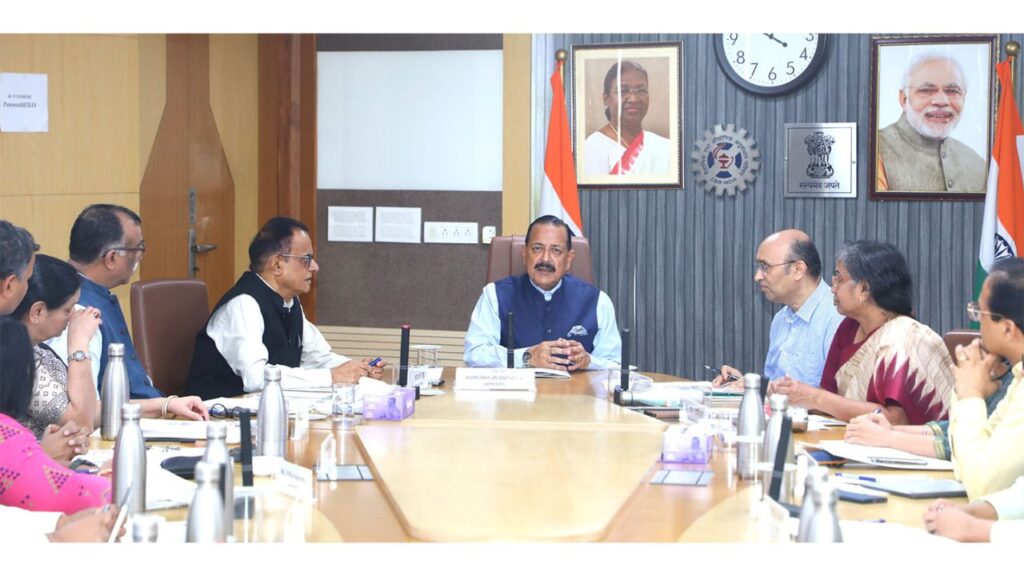

Union Minister of State (Independent Charge) for Science & Technology, Earth Sciences, and Minister of State in the Prime Minister’s Office, Personnel, Public Grievances & Pensions, Atomic Energy and Space, Dr. Jitendra Singh has called for stronger coordination among India’s scientific institutions to ensure faster implementation of national priorities. Chairing a high-level review meeting of Secretaries and senior officials from various science ministries and departments in New Delhi, the Minister stressed that collaboration, innovation and public participation must work together to deliver meaningful outcomes.
The meeting, held at the CSIR-Science Centre, focused on strengthening cooperation among scientific organisations while reviewing progress on ongoing initiatives and preparations for major national programmes. Senior officials, including Principal Scientific Adviser to the Government of India Prof. Ajay Kumar Sood and Secretaries of key science departments, participated in the discussions.
Focus on ‘Swachh Sagar, Surakshit Sagar’ Campaign
A major agenda of the meeting was the upcoming ‘Swachh Sagar, Surakshit Sagar‘ nationwide coastal cleanliness campaign, scheduled to be conducted from September 10 to 19, 2026. The initiative aims to mobilise scientific institutions, government agencies, educational organisations, volunteers and local communities for one of India’s largest environmental awareness and coastal conservation drives.
Dr. Jitendra Singh said scientific institutions should play an active role in combining technological solutions with community participation to maximise the campaign’s impact. He underlined that environmental protection requires coordinated efforts involving science, governance and public engagement.
Integrated Scientific Ecosystem
Reviewing the progress made since the previous coordination meeting, the Minister urged departments to function as an interconnected scientific ecosystem instead of working independently. He noted that regular interaction, knowledge sharing and joint implementation of projects would accelerate innovation while ensuring that research outcomes directly benefit citizens.
According to the Minister, better institutional coordination would also improve governance, reduce duplication of efforts and help scientific organisations respond more effectively to national challenges.
Stronger Public Outreach
The meeting also examined communication strategies aimed at increasing public awareness about India’s scientific achievements. Officials discussed plans to expand digital outreach through documentaries, short films, infographics, thematic campaigns and success stories highlighting the country’s advances in research and technology.
The Department of Science and Technology (DST) presented its outreach roadmap covering flagship initiatives such as the Anusandhan National Research Foundation (ANRF), the National Quantum Mission, the National Mission on Interdisciplinary Cyber-Physical Systems and the Research Development and Innovation Scheme. A phased communication strategy has been prepared to maintain sustained public engagement and improve awareness of these programmes.
Showcasing Scientific Achievements
The Department of Scientific and Industrial Research (DSIR) informed the meeting that the Council of Scientific and Industrial Research (CSIR) is preparing a comprehensive publication documenting its achievements over the past twelve years. The publication is expected to be released during the upcoming CSIR Foundation Day celebrations.
Officials also highlighted the ongoing “Innovation in Action” lecture series and regular dissemination of research success stories through digital platforms to encourage collaboration and showcase India’s growing scientific capabilities.
Meanwhile, the Department of Biotechnology (DBT) shared details of its thematic publications focusing on public health, biotechnology research, genomics, agricultural biotechnology, bioeconomy and biotechnology startups. The department is also expanding public engagement through the nationwide #DBTQuest campaign, which promotes scientific awareness through interactive activities and coordinated social media outreach.
Expanding Collaborative Research
The review meeting also assessed progress on collaborative programmes involving organisations such as CSIR, ISRO, DST, DBT and BARC. Discussions covered technology development partnerships, biomedical research, innovation platforms and joint initiatives for the North Eastern Region.
Officials also reviewed mechanisms for encouraging regular interaction among scientists, researchers and academic institutions to facilitate knowledge exchange across disciplines.
Progress Under ANRF
The implementation of the Anusandhan National Research Foundation also received attention during the meeting. Discussions focused on expanding the use of the SARAL_AI platform, increasing researcher participation across institutions and improving public access to information related to research projects through digital platforms.
Departments outlined measures to strengthen awareness and encourage greater participation in ANRF-supported research initiatives.
Preparing for Major Scientific Events
The Minister also reviewed preparations for several upcoming national science events, including ESTIC-2026, the India International Science Festival (IISF) 2026 and National Space Day 2026. Departments presented updates on institutional readiness, outreach plans and collaborative activities aimed at attracting researchers, startups, industry representatives, students and the general public.
Concluding the meeting, Dr. Jitendra Singh said India’s scientific ecosystem is entering a new phase where research excellence, technological innovation, institutional coordination and public engagement must advance together. He also reviewed administrative performance, institutional capacity building and governance reforms, urging departments to continue sharing best practices to build a more integrated and impactful scientific ecosystem aligned with the country’s development goals.