
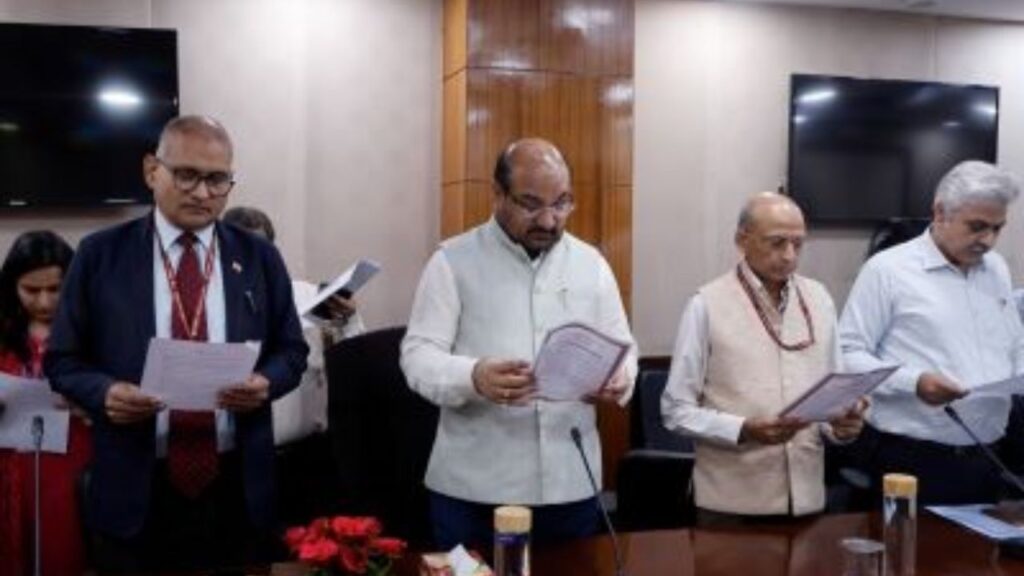

The Department of Agricultural Research and Education (DARE) and the Indian Council of Agricultural Research (ICAR), along with its network of institutes and field centres across the country, are stepping up efforts to promote cleanliness, sanitation and environmental responsibility under the Swachhata Hi Seva Campaign.
The campaign activities are aimed at taking the message of cleanliness beyond government and institutional premises and encouraging active participation from communities, students and citizens. A key focus of the initiatives is to create awareness among school children about maintaining clean surroundings, responsible waste management and the importance of protecting the environment.
In the North-Eastern Region, DARE-ICAR institutes have undertaken a range of activities involving educational institutions and local communities. These programmes seek to introduce children and residents to practical approaches towards cleanliness while highlighting the importance of collective action in maintaining a healthy and sustainable environment.
One of the initiatives was identified by a team of experts from the ICAR-Agricultural Technology Application Research Institute (ATARI), Guwahati, in North Sikkim. As part of the outreach effort, an exposure visit to the Krishi Vigyan Kendra (KVK), North Sikkim, was organised for students.
The visit provided students with an opportunity to learn about cleanliness practices and sustainable waste management. Particular attention was given to vermicomposting, a method that uses earthworms to convert organic waste into nutrient-rich compost. Through practical exposure, students were encouraged to understand how biodegradable waste can be put to productive use instead of being discarded indiscriminately.
The initiative also sought to connect cleanliness with everyday environmental responsibility. By introducing young students to simple and sustainable waste-management techniques, the programme encouraged them to develop habits that can contribute to cleaner schools, homes and communities.
In another initiative, Krishi Vigyan Kendra, Ri Bhoi, functioning under the ICAR Research Complex for North Eastern Hill Region in Meghalaya, organised a cleanliness drive in nearby villages and roadside areas. Employees of the organisation joined hands with local residents to participate in the activities.
The community-led effort highlighted the importance of public participation in achieving the objectives of the Swachhata Hi Seva Campaign. The participation of residents alongside institutional employees demonstrated how cleanliness drives can become more effective when local communities take collective responsibility for their surroundings.
Such activities also underline the broader connection between cleanliness, sanitation and environmental conservation. Maintaining clean public spaces, managing waste properly and reducing environmental pollution require sustained involvement from individuals as well as communities.
Through its institutes and field-level extension network, DARE-ICAR is using the Swachhata Hi Seva Campaign to promote awareness and encourage behavioural change at the grassroots level. Engagement with schools and rural communities is helping extend the campaign’s message to a wider section of society.
The initiatives in North Sikkim and Meghalaya demonstrate the importance of combining awareness-building with practical activities. While students are being introduced to sustainable practices such as vermicomposting, local residents are being encouraged to participate directly in keeping their surroundings clean.
DARE-ICAR’s efforts thus contribute to strengthening the culture of Swachhata while promoting environmentally responsible practices. By involving young people, farmers, rural communities and other stakeholders, the campaign aims to encourage sustained public participation and reinforce the idea that cleanliness and environmental protection are shared responsibilities.
Also Read: Scientists Reveal How Common Preservatives Destroy Bacteria from Within

Author: Shivam
Proficient Writer Contact: [email protected]