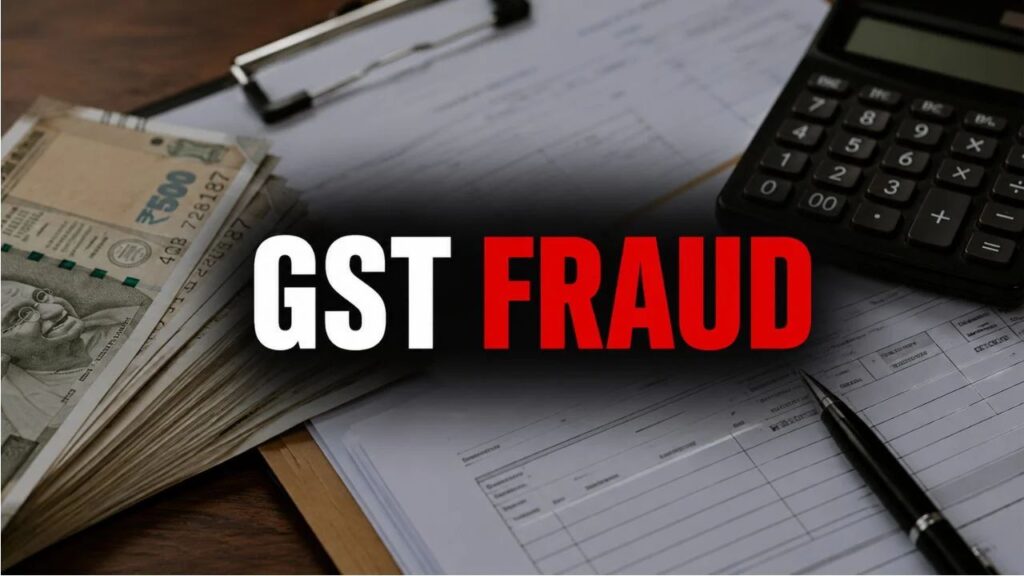

The Anti-Evasion Branch of the Central Goods and Services Tax (CGST), Delhi South Commissionerate, has arrested a partner of an iron and steel trading firm in connection with an alleged fraudulent Input Tax Credit (ITC) racket involving inadmissible ITC of more than ₹15.78 crore.
The investigation pertains to the alleged issuance and use of bogus invoices with a cumulative value of approximately ₹87.67 crore. According to the tax authorities, the invoices were used to avail, utilise and pass on Input Tax Credit without corresponding genuine supplies of goods.
The arrest is part of the CGST authorities’ continuing enforcement action against fraudulent ITC claims and transactions involving fictitious or non-operational businesses.
Investigation Reveals Bogus Invoice Network
During the investigation, officers of the Anti-Evasion Branch examined the transactions undertaken by the firm and the suppliers from whom it had purportedly received invoices. The inquiry reportedly found that the firm had claimed ITC on the strength of invoices issued by several entities.
Field verification conducted by the department raised serious concerns about the authenticity of a number of these suppliers. Some of the firms were found to be non-existent, non-functional, suspended or cancelled, while verification at certain declared business premises indicated that there was no genuine commercial activity being carried out there.
The findings indicated that the transactions recorded in the firm’s books and tax documents did not correspond with actual movement or receipt of goods.
ITC Availed Without Receipt of Goods
According to the investigation, the firm allegedly availed inadmissible ITC despite there being no actual receipt of the goods mentioned in the invoices. The investigation further established that the credit was allegedly utilised and passed on to other recipients through invoices that were issued without any corresponding supply of iron and steel goods.
Under the Goods and Services Tax framework, ITC is subject to prescribed conditions, including the actual receipt of goods or services. Transactions supported only by invoices without genuine underlying supplies can therefore attract action under the applicable provisions of the CGST Act.
The authorities gathered documentary and other evidence during the course of the investigation. Statements of the persons concerned were also recorded under Section 70 of the CGST Act, 2017, as part of the proceedings.
Arrest and Judicial Custody
Based on the evidence collected during the investigation, the accused partner was arrested on 14 September 2026 under Section 69 of the CGST Act, 2017.
Following his arrest, he was produced before the Patiala House Court in New Delhi. The court subsequently remanded him to judicial custody for 14 days.
The arrest represents another enforcement action by the CGST authorities against alleged misuse of the GST system through fictitious invoicing and irregular ITC claims. Such investigations are aimed at identifying entities that allegedly create or use invoice chains without actual supply of goods, resulting in wrongful availment or transfer of tax credit.
Investigation Continues
The department has stated that the investigation in the case is still underway. Further examination of the financial records, invoices, supplier entities and recipients of the allegedly irregular ITC is expected as the proceedings continue.
The case highlights the role of field verification and transaction-level investigation in identifying suspected fraudulent ITC claims. Verification of business premises, scrutiny of supplier registrations and examination of the actual movement of goods are among the measures used by tax authorities to determine whether transactions reported in GST records represent genuine supplies.
With the alleged fraudulent ITC exceeding ₹15.78 crore and the associated invoices valued at around ₹87.67 crore, the case underscores the scale of the suspected irregularities being investigated by the Delhi South CGST Commissionerate.
Further developments will depend on the outcome of the ongoing investigation and the findings that emerge from the examination of the entities and transactions connected with the case.