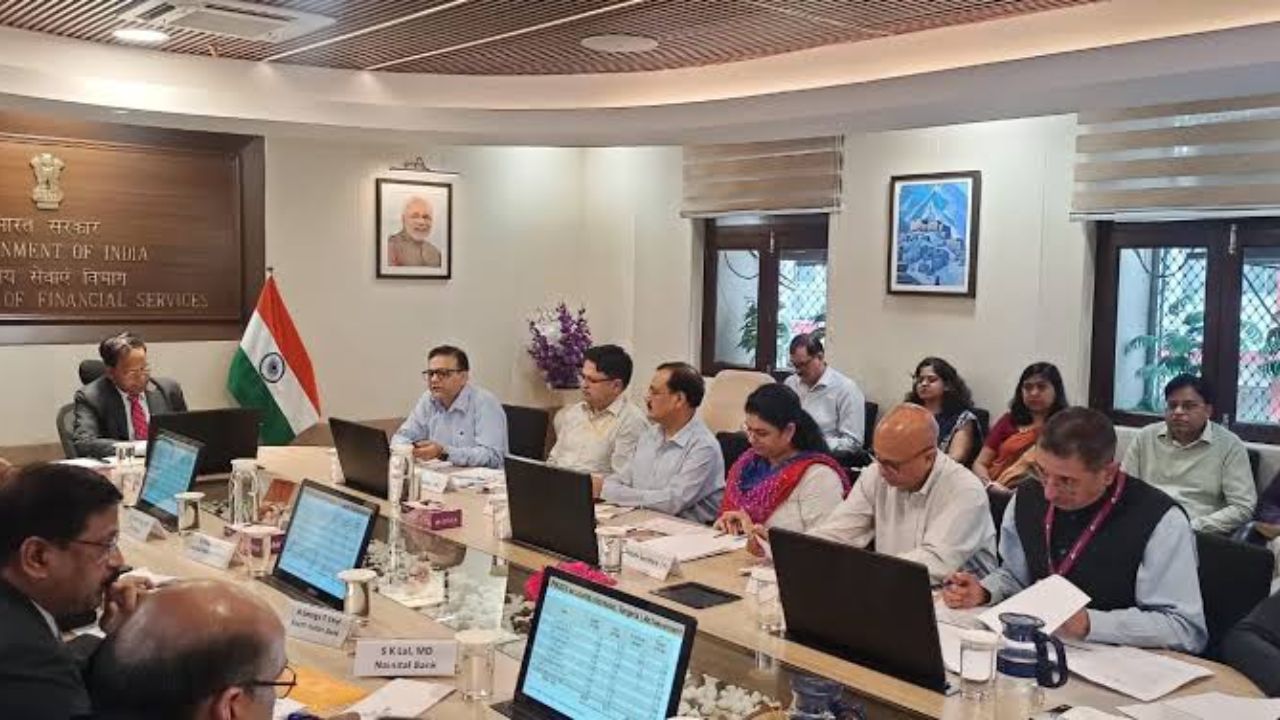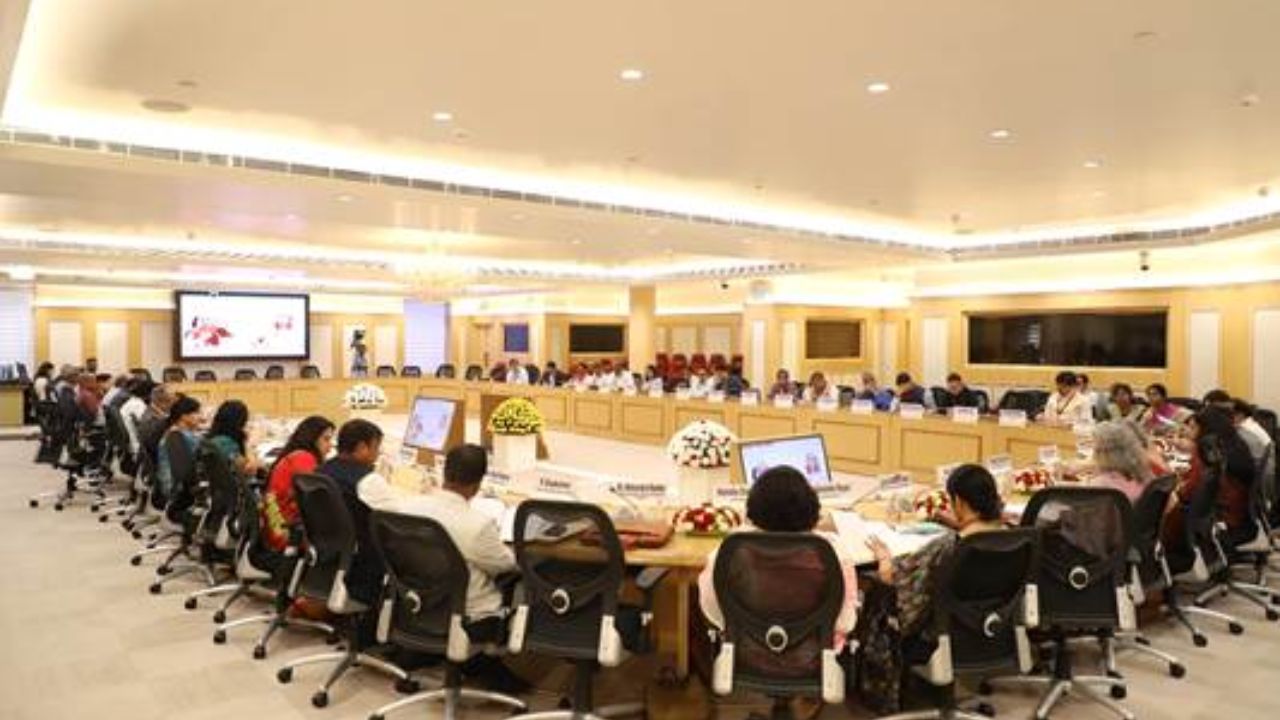
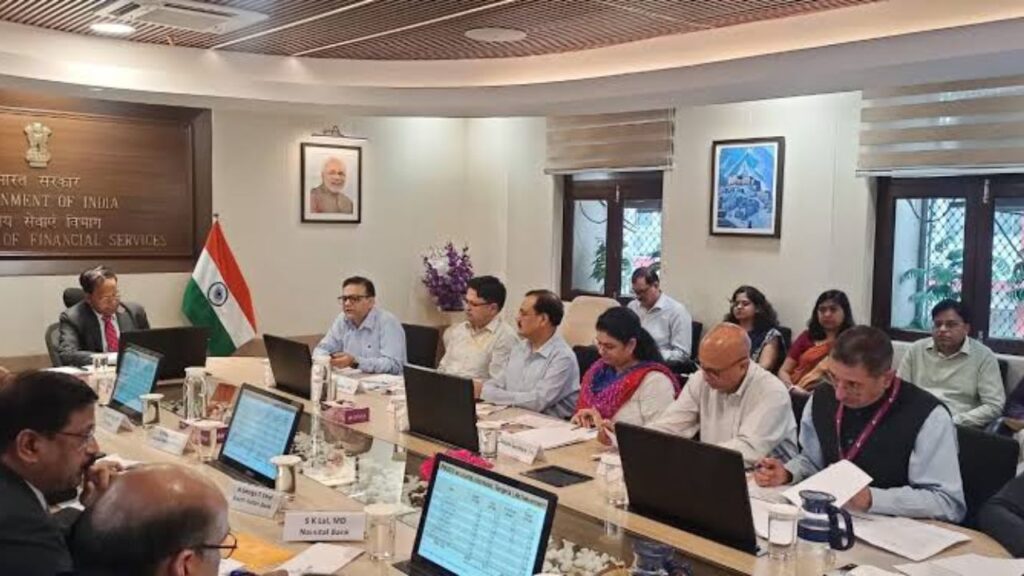

The Department of Financial Services (DFS), Ministry of Finance, reviewed the progress of financial inclusion initiatives and urged banks to strengthen digital banking services, expand outreach and improve access to credit for underserved sections of society.
Secretary, Department of Financial Services, Shri Sanjay Lohiya, chaired a review meeting in New Delhi with the heads of all Public Sector Banks (PSBs) and Executive Directors of major Private Sector Banks (PVBs). Senior officials from the Department of Financial Services also participated in the meeting.
The meeting focused on the implementation and progress of several flagship financial inclusion programmes aimed at extending banking, insurance, pension and credit facilities to citizens across the country. The review covered schemes including the Pradhan Mantri Jan Dhan Yojana (PMJDY), Pradhan Mantri Jeevan Jyoti Bima Yojana (PMJJBY), Pradhan Mantri Suraksha Bima Yojana (PMSBY), Atal Pension Yojana (APY), Pradhan Mantri Mudra Yojana (PMMY), Stand Up India and PM Street Vendor’s AtmaNirbhar Nidhi (PM SVANidhi).
Other initiatives discussed included PM Vishwakarma, PM Surya Ghar, the Kisan Credit Card (KCC) and measures aimed at widening access to formal financial services. The expansion of brick-and-mortar bank branches and deployment of Business Correspondents (BCs) in unbanked villages were also reviewed as part of efforts to strengthen the last-mile banking network.
During the meeting, Secretary DFS highlighted the considerable progress achieved in advancing financial inclusion through government programmes. However, he emphasised the need for banks to accelerate digital outreach and make banking services more accessible and convenient for citizens.
Particular emphasis was placed on end-to-end digital processing of loans. Shri Lohiya also discussed the importance of expanding working capital facilities for micro and small businesses through emerging digital channels. Credit lines on the Unified Payments Interface (UPI) and credit cards for micro-enterprises (CCME) were among the mechanisms highlighted during the discussions.
The Secretary also called upon Private Sector Banks to increase their participation in government-led financial inclusion programmes. Greater involvement of private lenders, alongside Public Sector Banks, is expected to help broaden the reach of financial services and ensure that more beneficiaries can access credit, insurance, pension and other banking facilities.
Another key issue discussed during the meeting was awareness about claims under the Jan Suraksha insurance schemes. Shri Lohiya directed banks to intensify awareness efforts regarding claim eligibility under PMJJBY and PMSBY so that nominees of beneficiaries can receive eligible insurance benefits following the death of the insured person.
Banks were further advised to handle grievances related to insurance claims with greater sensitivity and ensure timely attention to beneficiary concerns. The Secretary also instructed banks to enrol all new PMJJBY and PMSBY beneficiaries through the Jan Suraksha portal. The portal is expected to be integrated with banks and insurance companies, which will help improve data quality and streamline operational processes.
The meeting also examined measures to improve the persistency ratio under the Atal Pension Yojana. Sustained participation in the pension programme remains important for strengthening long-term social security coverage, particularly among workers in the unorganised sector.
Looking ahead, Shri Lohiya urged banks to participate actively in the upcoming Financial Inclusion (FI) saturation campaign scheduled from October 21 to December 31, 2026. He called for greater focus on marginalised and financially underserved sections of society and stressed the need to address their banking and financial requirements effectively.
The review meeting underlined the government’s continued focus on deepening financial inclusion through a combination of physical banking infrastructure, digital services, affordable credit, insurance and pension coverage. Banks have been encouraged to strengthen their outreach and ensure that the benefits of financial inclusion schemes reach eligible citizens across the country.
Also Read: NABKISAN Lists India’s First WASH-Focused Social Bond on NSE, Raises ₹180 Crore

Author: Shivam
Proficient Writer Contact: [email protected]