

The Government of India has reiterated its commitment to fostering scientific talent and innovation through the Department of Science and Technology’s (DST) flagship Innovation in Science Pursuit for Inspired Research (INSPIRE) Programme. Over the past five years, the programme has supported more than 3.75 lakh students and young researchers across the country through its four key components, helping build a strong pipeline of future scientists, researchers and innovators.
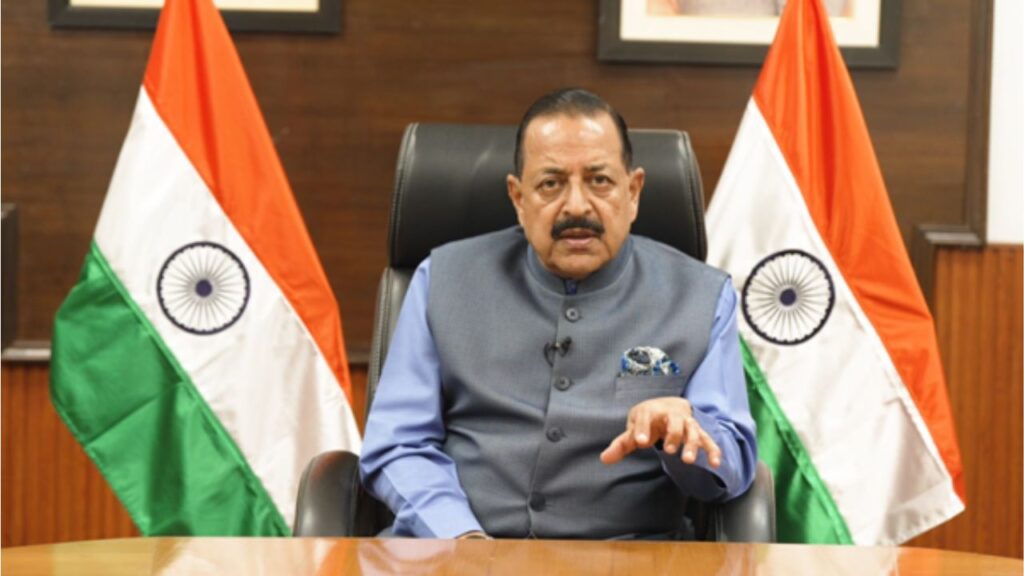
The details were shared by Union Minister of State (Independent Charge) for Science and Technology, Dr. Jitendra Singh, in a written reply in the Lok Sabha, highlighting the government’s sustained efforts to strengthen science education, research and innovation from the school level to advanced research careers.
Four-tier approach to nurture scientific talent
The INSPIRE Programme has been designed to identify and support talented students at different stages of their academic and research journey. Its four major components—INSPIRE-MANAK, INSPIRE Scholarship for Higher Education (SHE), INSPIRE Fellowship, and INSPIRE Faculty Fellowship—collectively encourage scientific curiosity, academic excellence and research leadership.
INSPIRE-MANAK focuses on students from Classes VI to XII, encouraging them to develop original ideas and innovative solutions to real-world problems. The initiative seeks to cultivate scientific thinking at an early age by providing opportunities for young minds to transform creative ideas into practical innovations.
The INSPIRE Scholarship for Higher Education (SHE) supports meritorious students pursuing undergraduate and postgraduate studies in natural and basic sciences. Every year, 12,000 scholarships, each worth ₹80,000, are awarded to deserving students, enabling them to continue their scientific education without financial constraints.
For aspiring researchers, the INSPIRE Fellowship provides financial assistance for doctoral studies for up to five years, while the INSPIRE Faculty Fellowship enables outstanding postdoctoral researchers to establish independent research careers by offering fellowship support along with research grants.
Thousands benefited during 2025–26
According to the Minister, the programme continued to make significant progress during the 2025–26 financial year.
A total of 49,805 students received support under INSPIRE-MANAK, while 24,276 students benefited from INSPIRE-SHE scholarships. In addition, 3,364 doctoral researchers were supported through the INSPIRE Fellowship, and 477 postdoctoral researchers received assistance under the INSPIRE Faculty Fellowship.
Collectively, these initiatives have supported more than 3.75 lakh beneficiaries over the last five years, reflecting the programme’s expanding reach and impact across India.
Expanding opportunities in rural and remote regions
The government has introduced several targeted measures to make the INSPIRE Programme more inclusive, with a special focus on students from rural, remote and aspirational districts.
To increase awareness, programme information is disseminated through State Education Departments, District Education Officers, schools and digital platforms. Awareness campaigns, orientation programmes, webinars and teacher capacity-building workshops are also organised regularly to ensure that eligible students are informed about available opportunities.
These efforts are aimed at reducing regional disparities in access to quality science education and encouraging wider participation from underserved communities.
Mentorship and innovation support
Beyond financial assistance, the programme also offers structured mentoring to help students refine and develop their innovative ideas.
District, State and National Level Exhibitions and Project Competitions are organised under INSPIRE-MANAK to identify promising student innovations. Selected participants receive mentorship from premier institutions such as the Indian Institutes of Technology (IITs), National Institutes of Technology (NITs), Indian Institutes of Science Education and Research (IISERs) and other leading scientific organisations.
This guidance enables students to develop prototypes, improve their technical skills and gain exposure to advanced research environments, preparing them for future careers in science and technology.
Strengthening India’s scientific workforce
Dr. Jitendra Singh said that the sustained implementation of the INSPIRE Programme has helped promote scientific temper, encourage grassroots innovation and expand equitable access to science education across the country.
The programme has also improved representation of talented students from diverse geographical regions, ensuring that young innovators from rural and remote districts receive opportunities to showcase their ideas at national platforms while benefiting from mentoring and innovation grants.
The Minister further informed Parliament that Odisha and Rajasthan have recorded notable participation across various INSPIRE components, reflecting the programme’s growing acceptance in different parts of the country.
As India seeks to become a global leader in science, technology and innovation, the INSPIRE Programme continues to play a pivotal role in identifying, nurturing and supporting young scientific talent. By creating opportunities from school education through postdoctoral research, the initiative is helping build a robust scientific workforce capable of driving future discoveries, technological advancement and sustainable national development.

Author: Shivam
Proficient Writer Contact: [email protected]