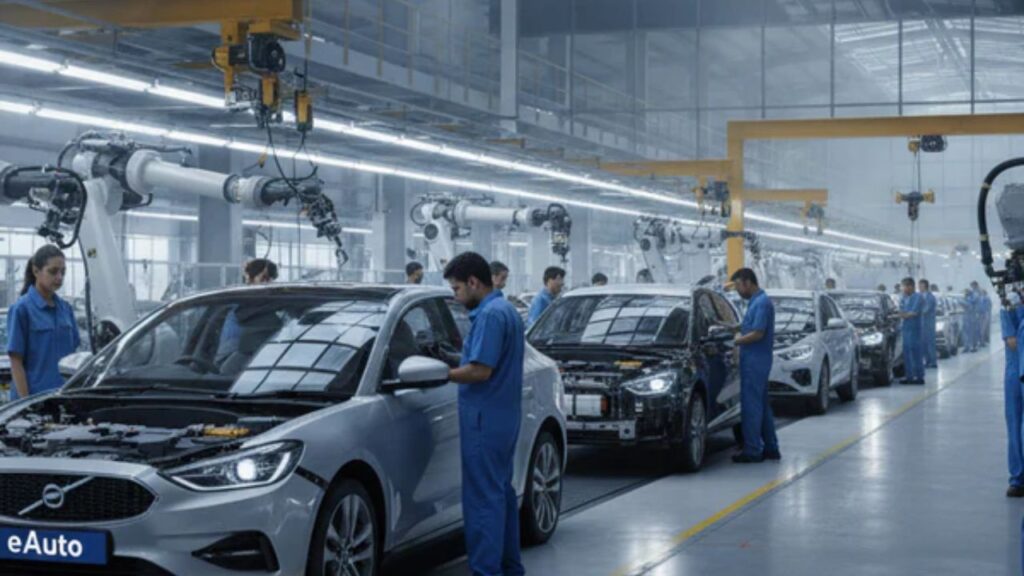

Haryana is positioning itself as a major player in the global electric vehicle (EV) industry, leveraging its well-established automotive ecosystem to attract investments in clean mobility, battery technologies and advanced manufacturing. As the world rapidly shifts towards sustainable transportation, the state is seeking to transform itself into a comprehensive EV manufacturing and mobility hub.
For decades, Haryana has been a cornerstone of India’s automobile sector. The Gurugram-Manesar-Bawal industrial corridor has emerged as one of the country’s most significant automotive manufacturing clusters, housing major vehicle manufacturers, component suppliers and engineering firms. This strong industrial foundation now provides Haryana with a distinct advantage in the race to lead India’s electric mobility transition.
Unlike many regions that must build industrial ecosystems from the ground up, Haryana already possesses a mature network of automobile manufacturers, vendor bases, logistics providers and skilled professionals. These existing strengths can help the state accelerate EV production and attract companies looking to establish operations in a business-friendly environment with established infrastructure.
However, Haryana’s ambitions extend beyond merely assembling electric vehicles. The state is focusing on developing an integrated EV ecosystem that encompasses battery packs, electric motors, power electronics, charging infrastructure, software development, testing facilities and research centres. Industry experts believe that long-term success in the EV sector will depend not only on vehicle manufacturing but also on securing investments across the entire value chain.
The strategy reflects a broader understanding of how value is created in the modern automotive industry. Components such as batteries, electronics and intelligent mobility systems account for a significant share of future growth opportunities. By attracting investments in these areas, Haryana hopes to establish itself as a critical supplier hub for both domestic and international markets.
Another important factor supporting Haryana’s vision is its long-standing relationship with Japanese businesses. The state hosts numerous Japanese manufacturing and industrial enterprises, particularly in the automotive sector. This connection could become increasingly valuable as global companies seek new destinations for investments in electric mobility, automation, green technologies and precision manufacturing.
Japanese firms possess extensive expertise in vehicle engineering, battery technologies, hybrid systems and industrial automation. Haryana’s efforts to strengthen industrial partnerships and develop dedicated manufacturing zones may encourage fresh investments from these companies, further enhancing the state’s competitiveness in the EV sector.
At the same time, Haryana is working to stimulate local demand for electric vehicles through public transport electrification and cleaner mobility initiatives. Plans are underway to introduce electric buses in major cities such as Gurugram, Faridabad, Panipat, Karnal and Rohtak. Ambala has already taken a significant step by operating a fully electric air-conditioned local bus fleet.
The state has also introduced cleaner-fuel requirements for cab aggregators, delivery operators and e-commerce fleets operating within the National Capital Region. These measures are expected to gradually increase the adoption of electric and cleaner-fuel vehicles, creating a robust local market that can support manufacturing growth.
Fleet electrification is particularly significant because commercial vehicles typically cover greater distances than private vehicles, making them ideal candidates for electric mobility solutions. Increased adoption of electric buses, taxis and delivery vehicles is also likely to drive demand for charging stations, maintenance services and battery support infrastructure.
Despite its advantages, Haryana faces several challenges in achieving its goal of becoming a global EV hub. Competition among states is intensifying, with Tamil Nadu, Gujarat, Maharashtra, Karnataka and Uttar Pradesh all actively pursuing investments in electric mobility and battery manufacturing.
To remain competitive, Haryana will need to ensure timely land availability, efficient regulatory approvals, reliable power supply and long-term policy stability. Developing a skilled workforce will also be essential, as EV manufacturing requires expertise in electronics, software systems, battery technologies and advanced engineering disciplines.
If the state successfully addresses these challenges, Haryana could emerge as a key driver of India’s transition towards cleaner, connected and technology-driven mobility. Its combination of industrial experience, strategic location and growing focus on innovation places it in a strong position to shape the future of the country’s electric vehicle ecosystem.