
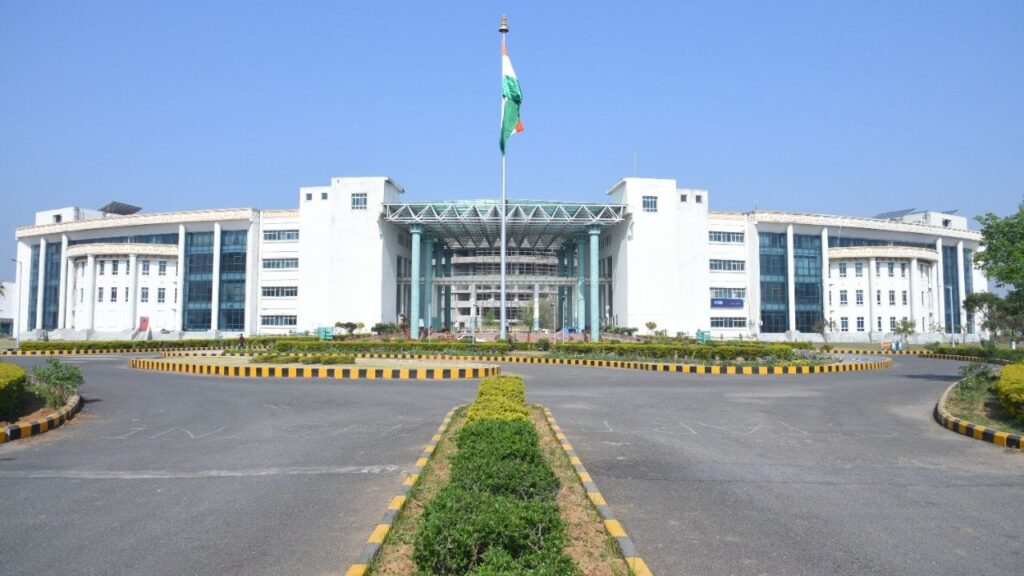

Scientists from the Indian Institute of Technology (IIT) Patna have developed an innovative hybrid magneto-rheometer capable of accurately analysing the performance of magneto-rheological (MR) fluids under complex operating conditions. The newly designed device is expected to support advancements in smart material technologies with applications across healthcare, aerospace, defence, automation, and several industrial sectors.
MR fluids are a class of intelligent materials that can rapidly alter their mechanical properties when exposed to a magnetic field. When stimulated by a magnetic field, these fluids increase their viscosity and can transform from a liquid-like state into a viscoelastic solid within seconds. This unique ability allows them to transmit and control force through electromagnetic systems, making them highly valuable for adaptive engineering applications.
These smart fluids are already being explored for use in advanced braking systems, clutches, vibration control devices, shock absorbers, dampers, actuators, and medical equipment. However, understanding their behaviour under real-world working conditions has remained a major scientific challenge.
One of the least explored areas has been the performance of MR fluids in compression and shear modes simultaneously. This combined operating condition is critical because many practical devices experience both types of mechanical forces at the same time. Limited understanding of this mixed-mode behaviour has restricted the wider adoption of MR fluids in several advanced applications.
To address this challenge, researchers at IIT Patna prepared nano iron powder-based MR fluids and designed a hybrid magneto-rheometer capable of studying their flow, deformation, friction, and wear characteristics. The research team developed a customised testing system that can evaluate both rheological and tribological properties of MR fluids under compression and shear conditions.
The project was led by Professor Chiranjit Sarkar from IIT Patna with support from the Nano and Advanced Materials programme of the Department of Science and Technology (DST), Government of India. The team fabricated a specialised rheometer that can measure the behaviour of MR fluids at different normal loads, both in the presence and absence of a magnetic field.
Unlike conventional testing methods that mainly focus on individual properties, the newly developed hybrid rheometer provides a comprehensive assessment of MR fluid performance. The system allows researchers to examine how these fluids respond when subjected to combined mechanical forces and magnetic stimulation.
A key feature of the developed technology is its ability to create a uniform and high-intensity magnetic field across the entire MR fluid sample region while requiring relatively low electrical current. This enables precise evaluation of iron-based MR fluids under compression-plus-shear, or mixed-mode, operating conditions.
The advanced testing capability of the prototype provides deeper insights into the viscoelastic behaviour and mechanical performance of smart fluids. Such detailed understanding can help researchers and industries design more efficient MR fluid-based systems with improved reliability and energy efficiency.
Beyond MR fluids, hybrid rheometer technology can contribute to the study of various advanced materials. The ability to analyse viscoelastic properties is important for sectors including polymers, pharmaceuticals, food processing, cosmetics, and petrochemicals, where material behaviour under different forces plays a crucial role in product development.
The findings of the research have been published in the scientific journal Rheologica Acta. The study highlights the importance of advanced measurement technologies in accelerating innovation in smart materials and developing next-generation adaptive systems.
With growing demand for intelligent and energy-efficient technologies, tools such as the hybrid magneto-rheometer could play an important role in bridging the gap between laboratory research and industrial applications. The development is expected to help engineers and scientists create high-performance MR fluid-based devices for future applications in multiple sectors.
Also Read: TDB Backs RoadGrid to Boost Indigenous Manufacturing of Universal EV Chargers

Author: Shivam
Proficient Writer Contact: [email protected]