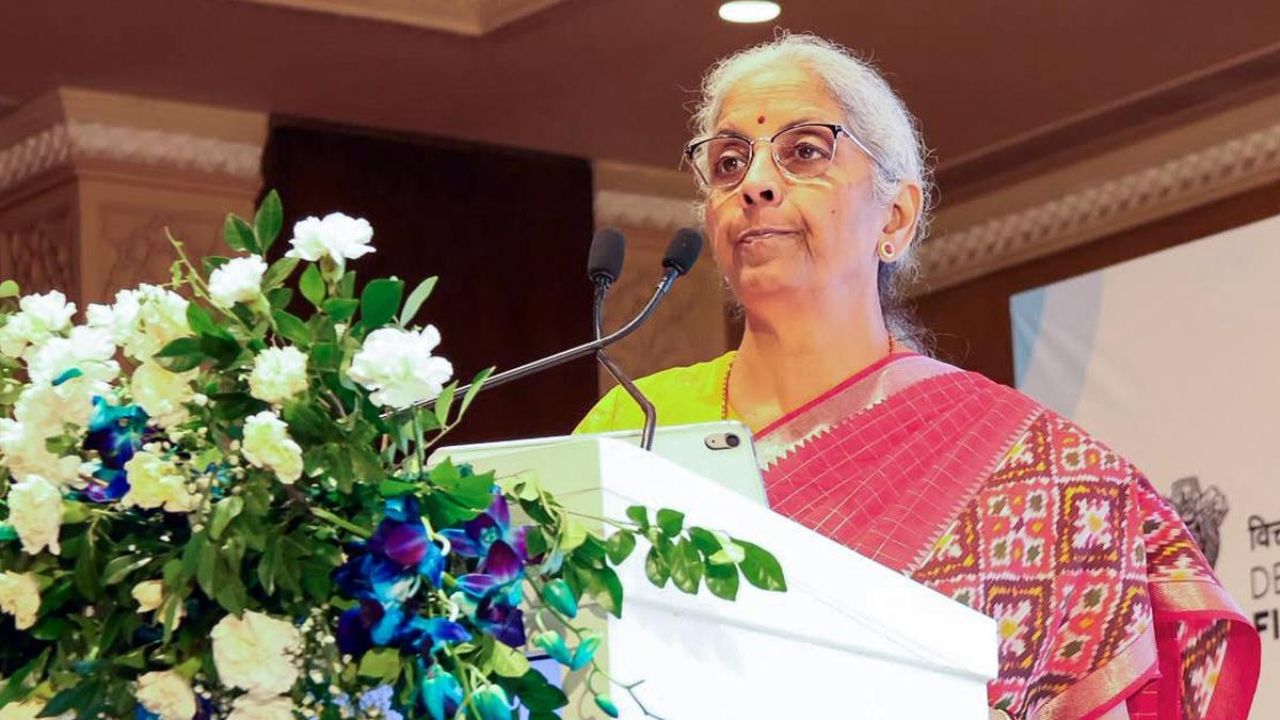
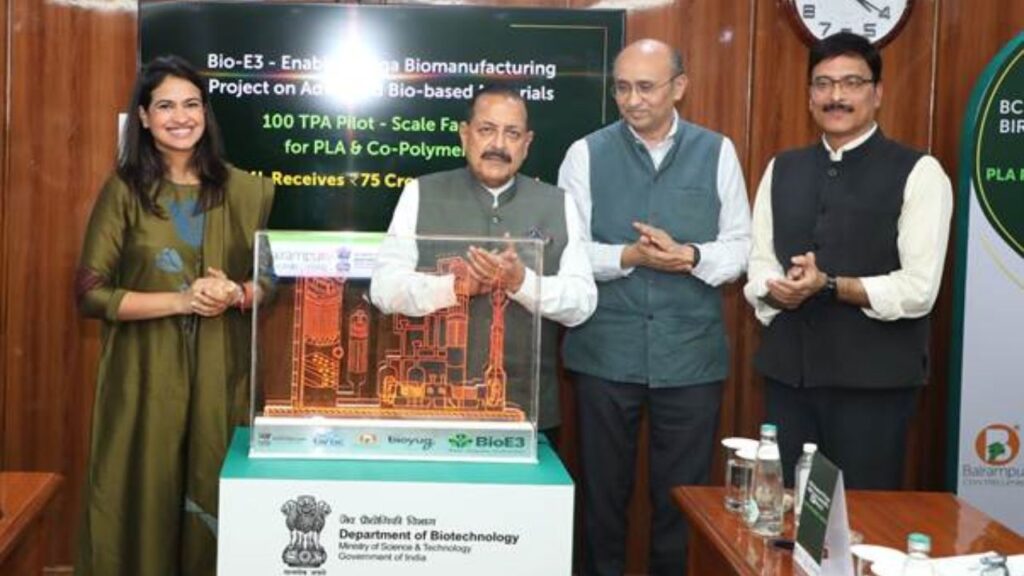

India has taken a significant step towards sustainable manufacturing with the formal launch of the commercial use of bio-based biodegradable plastic made from Polylactic Acid (PLA). The initiative was launched by Union Minister of State (Independent Charge) for Science & Technology, Earth Sciences and MoS PMO, Personnel, Public Grievances, Pensions, Atomic Energy and Space, Dr. Jitendra Singh.
The initiative is being implemented by Balrampur Chini Mills Limited (BCML) under the Government’s BioE3 framework, which focuses on Biotechnology for Economy, Environment and Employment. It seeks to connect biotechnology research with industrial production while promoting environmentally sustainable materials and creating new employment opportunities.
A ₹75 crore grant from the Biotechnology Industry Research Assistance Council (BIRAC), under the Department of Biotechnology (DBT), is supporting the development of a 100-tonne-per-annum (TPA) pilot-scale research and development facility for PLA and its co-polymers. The facility will be established at BCML’s integrated manufacturing complex at Kumbhi in Uttar Pradesh.
The pilot plant will focus on developing specialised PLA grades and advanced PLA co-polymers for high-value applications. It will also generate techno-economic information, process expertise and product development capabilities required to support commercial-scale production. The facility is expected to facilitate technology indigenisation, customer validation and collaboration between industry, academia and research institutions.
Addressing the gathering in New Delhi, Dr. Jitendra Singh described the initiative as an important development in India’s growing bioeconomy. He highlighted the rapid expansion of the sector, noting that India’s bioeconomy has grown from around US$10 billion in 2014 to nearly US$195 billion.
The Minister emphasised the need to move scientific discoveries beyond laboratories and towards commercially viable products. According to him, pilot-scale facilities such as the PLA project can help bridge the gap between research and manufacturing by providing opportunities for validation, technology development, skilled workforce training and industrial scale-up.
A key theme of the Minister’s address was the conversion of waste and biological resources into valuable products. He stressed the importance of a “waste to wealth” approach, pointing out that different regions of India possess diverse forms of biomass and agricultural resources that can be converted into useful materials through suitable technologies.
The PLA initiative provides one such pathway by using renewable sugar-based feedstock to produce lactic acid and subsequently manufacture bio-based polymers. This creates opportunities to diversify the use of agricultural resources beyond conventional products and establish new value chains based on biological materials.
Dr. Jitendra Singh also called for greater public awareness about biotechnology through simple and relatable communication. He suggested that examples such as converting sugarcane into sustainable materials could help people better understand the practical applications of biotechnology and the potential benefits of indigenous technologies.
The initiative also aligns with the Government’s emphasis on “Vocal for Local and Global”, with a focus on developing domestic manufacturing capabilities and taking successful Indian technologies to international markets. The BioE3 framework is intended to integrate economic growth, environmental sustainability and employment generation through biotechnology-driven manufacturing.
Dr. Rajesh Sudhir Gokhale, Secretary, DBT, Director General, BRIC and Chairman, BIRAC, said the project represents a move towards an integrated biomanufacturing ecosystem involving validated technologies, pilot facilities, skilled manpower and commercial production.
The initiative is expected to strengthen India’s capabilities in advanced bio-based materials and support the development of next-generation PLA products. By linking agricultural resources, biotechnology research and industrial manufacturing, the project could contribute to the expansion of India’s sustainable materials sector and further strengthen its emerging bioeconomy.